


Don’t Miss Part 2 : She’s Never Missed a Single September- A 9/11 Tribute
Part 1:
I’ve known veteran event pro Jaclyn Bernstein of Empire Force Events since before I started BizBash, which means longer than I can actually pin a year to. Everyone in this industry has a version of that sentence about her. She’s the kind of person a room decides it already knows within about ninety seconds, loud, warm, unmistakably from Brooklyn, the sort of relatable that makes strangers tell her things they wouldn’t tell their own coworkers. I’d have described her that way myself for twenty-five years without thinking twice about it.
What I didn’t know, until I sat down to actually report this piece, is that underneath all that easy warmth is one of the most relentless overachievers I’ve ever interviewed. Honor Society president in high school. Class president all four years of college. A founding sister of her sorority. A camper captain by the time she was a teenager. The woman everybody feels like they already know turns out to have spent her entire life quietly (maybe not that quietly) outworking the room she was busy making everyone feel comfortable in. That contrast, brash enough to seem like an open book, driven enough to have never actually stopped showing her passion, the real subject of this profile.
Some clients have written her into the contract by name. Not the company, not the service, her, insisting that Jaclyn Bernstein personally show up to work a reception, a dinner, or any event at all, three time zones from Manhattan, because what they’re actually buying isn’t logistics. It’s a New York state of mind exported intact, an accent, a pace, a refusal to say no. In an industry where a chatbot can generate a plausible-looking event itinerary in under a minute, Bernstein has spent thirty-two years building a business on the one thing still worth paying for once the plan is free: a person who believes in what she’s promoting more than she believes in almost anything else.
Why this story, why now
This is not a story about an anniversary. It’s a story about a product, and about the woman who figured out, decades before anyone had a word for it, that the product was herself. Jaclyn Bernstein does not promote events, meetings, conferences, galas, and everything in between, not the way a vendor sells a service. She sells New York, the actual DNA of the place, the pace and the refusal to say no and the specific hustle that can’t be extracted from her and bottled separately. She also sells judgment, the kind that only accumulates over decades of doing the same thing well, paired with something harder to fake alongside it: staying current, knowing which new restaurant or warehouse space or bar just opened before a client ever thinks to ask. Consistency and relevance aren’t usually the same skill. Bernstein has spent thirty-two years insisting they are, using a tool with a name usually reserved for statecraft, not seating charts. In an era when a piece of software can generate a plausible-looking event itinerary in under a minute, the only thing left worth paying for is a person who believes in what she’s promoting more than she believes in almost anything else, and who has spent her entire adult life proving that belief true.
Bernstein is the president and owner of Empire Force Events, a destination management company based in New York City. A destination management company, in plain terms, is a business that gets paid to hold information in its head so a client doesn’t have to. A corporation flying two hundred people into New York for a conference does not want to spend its own attention figuring out which venue can actually deliver on a Tuesday in October, which caterer is reliable, which vendor will show up with the permit already filed. Bernstein already knows the answer, because she was doing that homework before the client’s phone call came in. That is the actual product. Not the event itself, the conference or the gala or the parade of vendors setting up chairs. The years of standing knowledge that let a client stop thinking about the hundred small decisions in front of them.
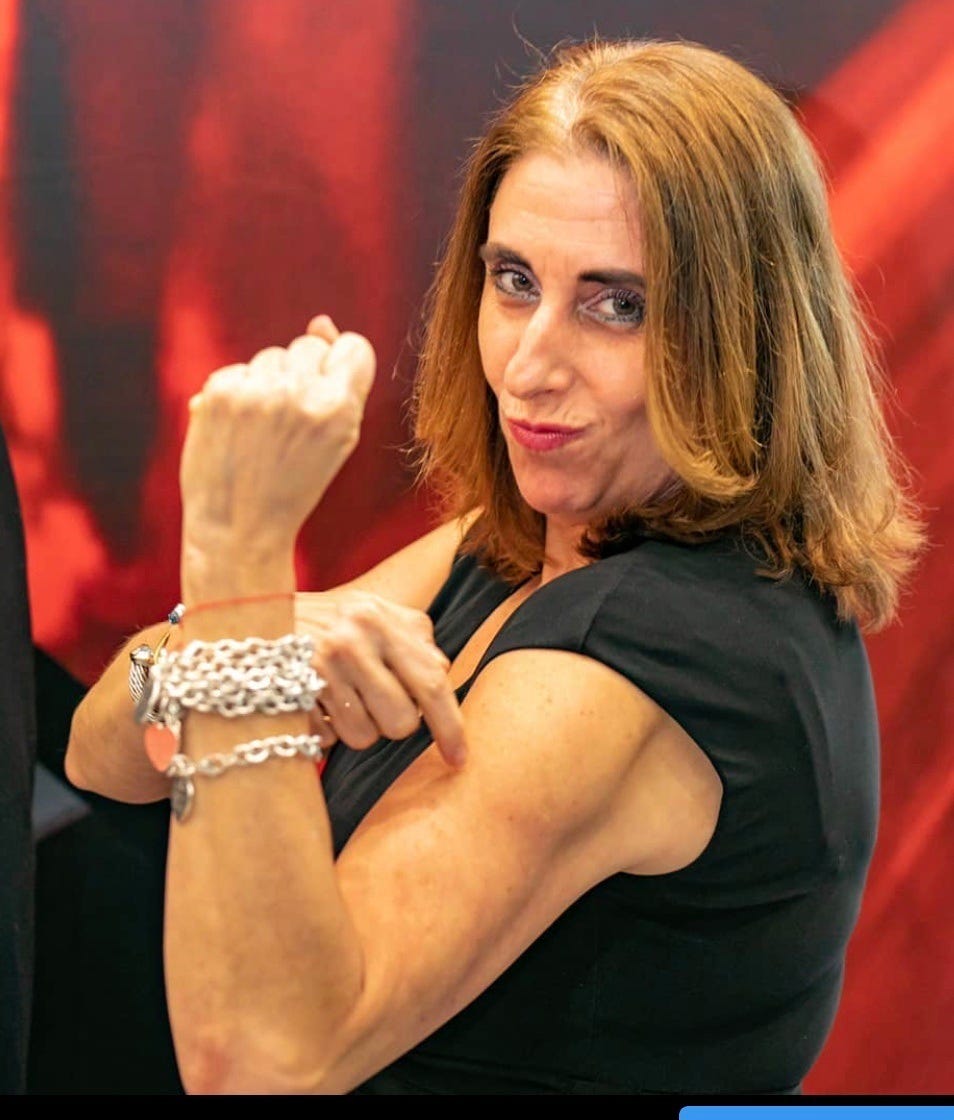
But removing friction is only half of what she’s selling, and it’s the smaller half. The whole premise of an event, any event, is that it produces a shared experience nobody in the room forgets, and a trip to New York has always worked the same way. People don’t remember the itinerary. They remember the boat, the skyline, the stranger they ended up talking to at two in the morning. That kind of memory can’t be generated by a prompt, because it isn’t logistics, it’s judgment, the accumulated instinct for what will actually move a room of strangers, and it’s the one thing every version of Bernstein’s career, corporate events, harbor cruises, twenty-four years of a memorial service, has been built entirely around manufacturing.
She doesn’t only sell that knowledge inside New York City limits, either, and this is where the DNA claim stops being a metaphor and starts being a line item. Clients have flown Empire Force to receptions in other cities entirely, and some have written her into the contract by name, insisting she personally show up to work the room, because what they are buying at that point isn’t local trivia about wherever the event happens to be. It’s her. An operating method that isn’t tied to a zip code, one that apparently travels intact wherever she’s flown in to run it. That is the product being sold, priced, and delivered on an invoice.
I put this to her directly, on a call in August. You represent the DNA of New York, I told her, and the DNA of New York is something you cannot fake. She didn’t pause. “That’s exactly it,” she said. She has clients who have written that exact idea into contracts without ever using the phrase.
Welfare, food stamps, and a one-bedroom apartment
Bernstein is an only child. Her parents, Isidore “Izzy” Bernstein and Marilyn “Lynn”, split when she had just turned ten. Both were big personalities in the way that strain of old Brooklyn produced them. Her mother was loud, funny, thin, fashionable, the kind of woman people called the life of the party. Her father worked in the fashion district, tended bar, and ran as a bookie on the side, a man who’d walk into a room and announce that drinks were on him.
After the separation, Bernstein and her mother went on welfare and food stamps and moved into a one-bedroom apartment, where she lived until she moved out for good. She still wanted the same jeans the other kids wore, so her mother made an arrangement with a small corner grocery, one with only two aisles, where she could cash the food stamps for actual money rather than groceries. That was how Jackie got her jeans. Bernstein calls it, now, the historical approach that got her where she is, and she means it literally: the sacrifice that let her look like everyone else is the same instinct, scaled up, that now lets a stranger walk into a room she’s produced and feel like they belong there.
She went to James Madison High School in Brooklyn, the same public school that produced Ruth Bader Ginsburg, Chuck Schumer, and Bernie Sanders, and she was never quiet about being there. She was president of her school’s Honor Society, gave a speech on stage at her own graduation, and sat next to Schumer while she did it. By her own account she had the longest list of activities printed next to her name in her high school yearbook of anyone in her class. College at State University of New York, Albany carried the pattern further: class president all four years, another graduation speech, and the honor of being first into the ceremony carrying the American flag. A founding sister of her national sorority. A founding little sister of a national fraternity on top of that. Somewhere underneath it there was also a sleepaway camp in the Poconos, Camp Lindenmere, where her mother worked as the camp mother because that was the only way the family could afford to send her, and where Bernstein became camper captain.
Bernstein describes this pattern of hers plainly, without much interest in softening it: “I can’t not be involved.” Whatever the room was, elementary school, junior high, high school, college, camp, she needed a hand in running it. Her campaign style, even then, wasn’t about tearing anyone else down. She’d tell voters what she was going to do for them and leave it there, a habit that reads now less like youthful idealism and more like an early draft of how she still sells a room today, on what she’ll do, never on what someone else won’t. She wanted to be a lawyer at first, then discovered, almost by accident, a single paragraph in an advertising textbook describing a corporate event and decided on the spot that a job like that had to exist somewhere.
How she got the only job she’s ever had
There was no internet to search for it, so Bernstein found her way into the industry through a stack of trade magazines a friend’s father handed her, flipping through Meetings and Conventions until she landed on an article with a woman named Pamela Tudor, who ran a company called Tours de Force Events. Bernstein decided that was the job she wanted, and the company she wanted it from.
The path to Tudor ran through a coincidence that reads like something out of a screenplay. Two weeks after meeting Tudor briefly at an industry gathering of her first ever Meeting Planners International ( now Meeting Professionals International MPI), Bernstein showed up, invited by one of the organizers but pointed there by a kosher caterer boyfriend, to the first organizational meeting of the International Special Events Society (ISES) now the International Live Events Association in, New York, held at Lincoln Center. She arrived carrying a fake leather-bound folder with a two-page resume inside it, longer than anyone had told her a resume should be, because she’d refused to leave off a single activity. At the front desk, the organizer woman named Janet Lee asked for her business card. Bernstein didn’t have one. She was a college kid. She thought, right there, that she was already a failure at this. Tudor was there too, one of what Bernstein calls the Dirty 30, the founding cohort who built the organization alongside Joe Jeff Goldblatt. So was a technical production company owner named Rob Hulsmeyer, sent to the meeting to run audio by a colleague named Richard Aaron. Hulsmeyer, a stranger to Bernstein that night, took her under his wing and started introducing her around the room to Jack Toomey, who ran events at the Intrepid at the time, to a widening circle of people whose names would define the New York events industry for the next three decades such as Robert becoming her best friend from that first organizational event. Bernstein talked to every one of them anyway. Marcy Blum and Liz Neumark were both in the room too, names that would go on to anchor the same industry Bernstein was only just entering. She was, by her own description, probably the only student there talking to everybody.
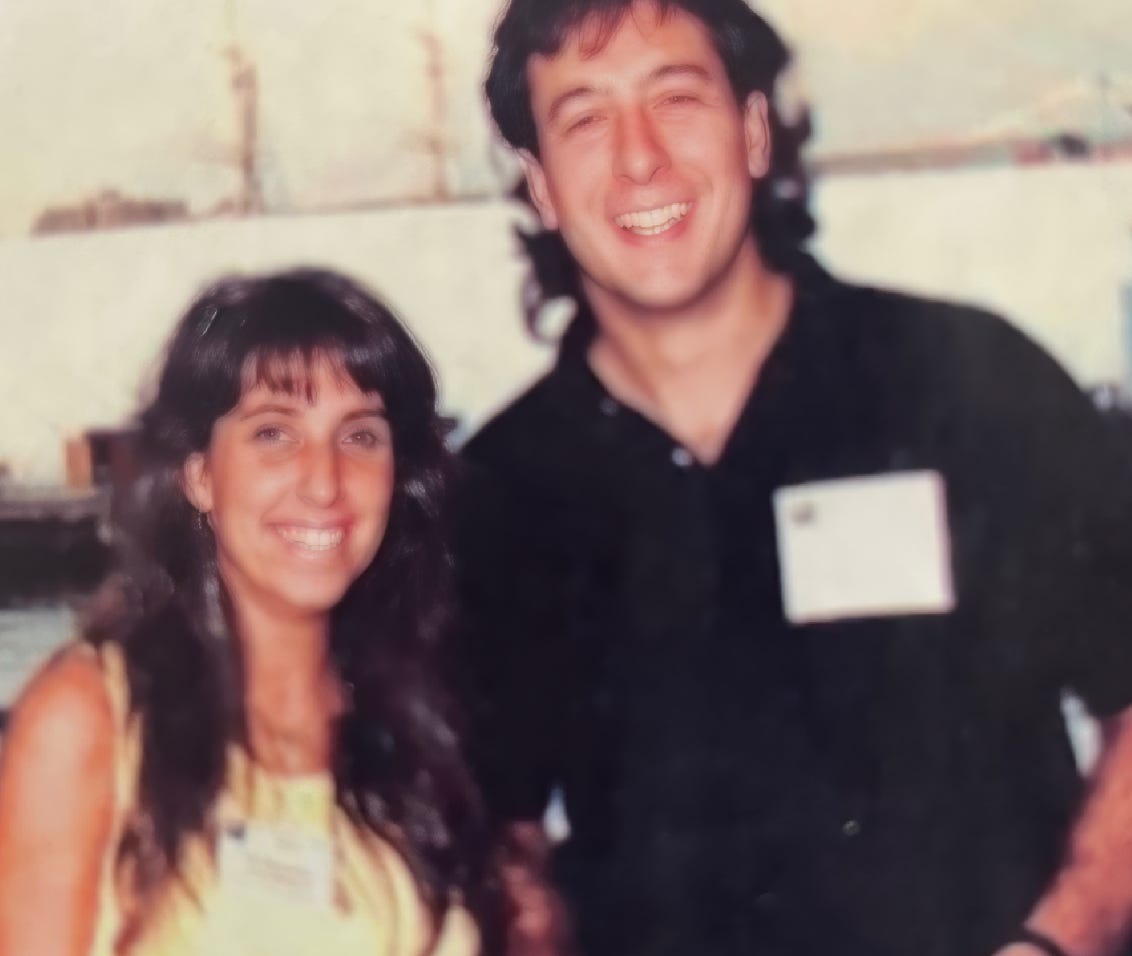
Tudor hired her, but not right away, and not for money at first. Bernstein worked for free for a month before Tudor started paying her eighteen thousand five hundred dollars a year. During the interview, conducted at Tudor’s house on a Saturday of a holiday weekend with Tudor’s cat asleep in Bernstein’s lap, Tudor asked where she saw herself in ten years. Bernstein, with nothing to back it up but nerve, said she wanted equity in the company.
A few years later, she and Hulsmeyer got it. They bought Tudor’s business with money borrowed from vendors, friends, and clients willing to extend credit against a down payment, not a dollar of it from the immediate family. That was thirty-two years ago. Empire Force Events has been the only company Bernstein has ever worked for, and the only job she’s ever had.
What survives when the industry consolidates
The destination management industry Bernstein entered has changed many into private equity since then. PRA sold first. Two rival brands, 360 Destination Group and CSI, merged last year and were absorbed by a private equity buyer under a new name, COHERA. Global Events Partners, one of the industry’s oldest brands, folded in 2013 after forty years in business with the Krisam Group. Empire Force did none of that. It is represented nationally and internationally by Hosts Global, a privately held alliance, and Empire remains locally owned and operated in New York (the longest independent and locally owned in the New York metropolitan area), one of a shrinking number of firms in its category that never took the money and sold the name.
Bernstein has never called what she and Hulsmeyer do sales, even when other people in the industry told her she needed a sales team. “We’re the best salespeople, we’re the best promoters,” she said, recalling a conversation with a fellow caterer who suggested otherwise. “I hate the word sales.” What she has instead, by her own account, is an instinct for showing up in the right rooms and talking to whoever happens to be standing in them, not because it will generate business that day, but because it might, eventually, generate something better: a vendor who picks up the phone at midnight, a favor returned a decade later, a network dense enough that when a company in another city calls needing help, someone can vouch for her by name.
How she actually runs a room
Clients are often surprised Empire Force does more than they thought to ask for. Bernstein has told the story enough times that it comes out practiced: a client will describe what they want, a venue, an evening, and never think to ask whether Empire also handles the unglamorous part, getting two hundred executives from the airport to the hotel without anyone standing around confused. “Do you need us to pick up all your guests at the airport before and after your event?” she’ll ask, and the answer is usually surprise that the question needed asking at all. She calls Empire Force “the eventy DMC,” a company clients often don’t even think of as a destination management company because what they experience feels like full event production, not logistics with a party bolted onto the end of it.
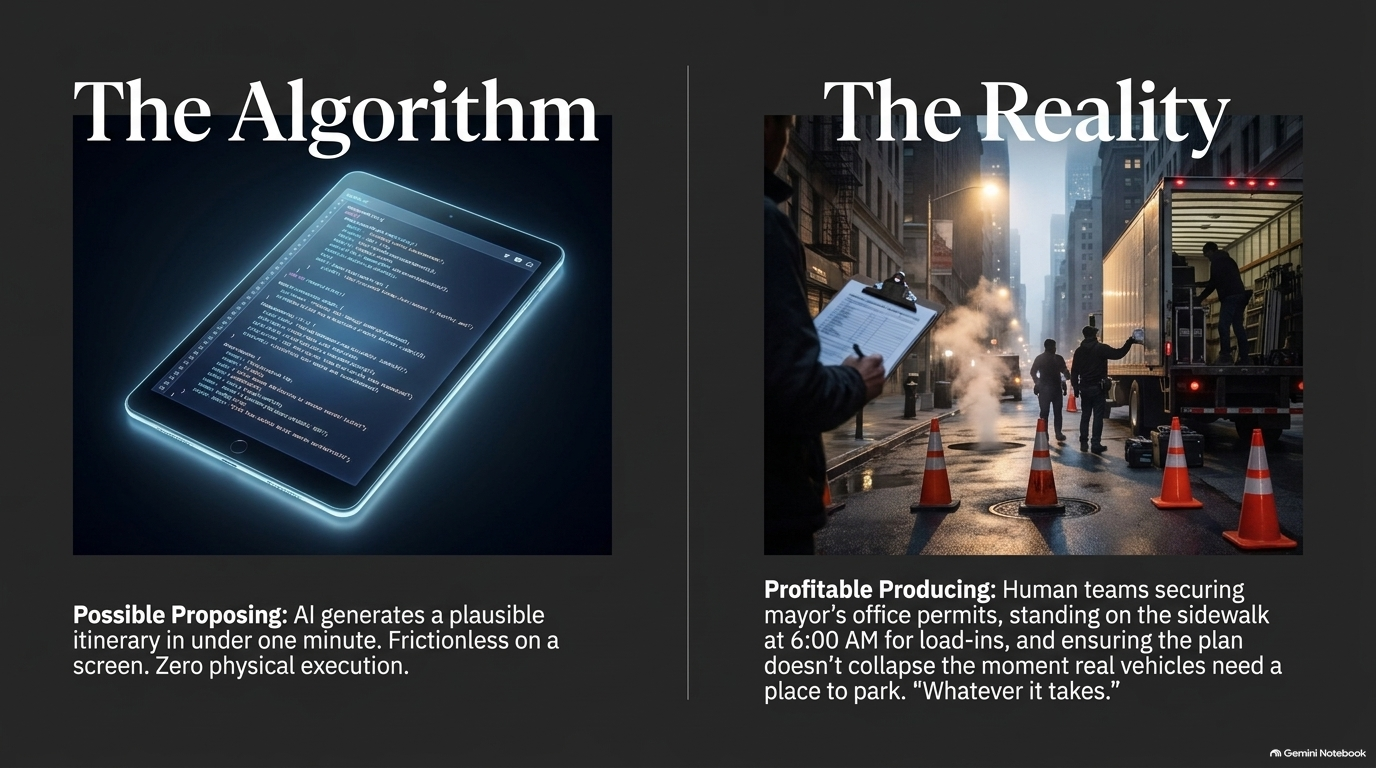
Her contempt for a certain kind of proposal is sharp and specific. She’s tired of language that promises a client “a very enriching New York experience” and then never says what that means, boilerplate she says has to be edited out and replaced with the real reason an experience matters. And she’s unbothered by the idea that a client could type a request into an AI tool and get something back that looks like a plan. The plan was never the hard part. “It’s one thing to spit it into AI and it comes out,” she said. “We are going to produce it. Our mantra here is whatever it takes, make it happen.” She has a saltier, off-the-record version of that line too, one that isn’t fit to print but that anyone who’s worked with her would recognize instantly, and it amounts to the same thing: someone still has to be standing on the sidewalk at six in the morning making sure the right permit is in hand before the cones go out, or the whole plan an algorithm generated collapses the moment real vehicles show up looking for a place to park.
That, to her, is the whole argument. A client recently asked whether Empire could cut costs by putting fewer staff on site. Bernstein’s answer was essentially no, not without losing the thing being paid for: the advance staff who load in before dawn, the people holding the signage, the people who’ve already secured the mayor’s office permit so a street can legally be blocked off for a fleet of cars that would otherwise get towed. “That’s where the investment is,” she says, “and also where AI cannot replace that.” She has her own tidy way of summarizing the whole business philosophy, delivered near the end of the interview like she’d been saving it: “We are into profitable producing versus possible proposing.” Anyone, she says, can go online and find a lower bid. Nobody can buy the passion of showing up and actually delivering it.
What she’s actually engineering
There’s a term for what Bernstein does that has nothing to do with event planning at all. Soft power is a phrase usually reserved for statecraft, the State Department’s toolkit for influence that doesn’t come from force, and it means things like choosing the right chef for the right room, or rearranging where people are seated so a specific conversation happens instead of a different one. I put the term to her directly, mid-interview, and watched her recognize it instantly as a description of her own job. The moment in a night that feels like serendipity, two strangers ending up deep in conversation, an unplanned toast that lands perfectly, isn’t actually unplanned. Someone decided where the bar would go, who would be standing near whom, which detail in the room would give two people something to talk about. “That’s called soft power,” I told her. “That soft power and that effort to do that,” she agreed, and kept going: her staff read every email from clients and partner vendors for a stray detail worth acting on, a daughter’s graduation, a delayed flight, so that when someone finally shows up, the room already seems to know them.
She pushed back gently on one part of it, though. It isn’t only the emotional engineering that matters, she said, it’s making sure the people executing it don’t drown a client or vendor partner in information they didn’t ask for. Bullet points, not paragraphs, for the server, the chauffeur, the AV technician standing next to a nervous speaker. The feedback that tells her whether an event worked rarely comes from the client who signed the contract. It comes from the driver, the bartender, the person meeting a plane at six in the morning, the ones closest to the moments the client will remember without ever knowing why.
The range of who’s buying
Empire Force is a business-to-business operation, not a consumer one, and its clients are corporate, mostly companies flying in employees or partners for a conference, an incentive trip, a product launch. Some relationships go back to 1997, long enough that Bernstein says the value isn’t finding new accounts so much as knowing the old ones cold: what worked at last year’s event, what didn’t, which client wants pink balloons and which wants something quietly elegant, without ever needing to ask twice. Others are new enough that Empire is still learning the shape of what they want.
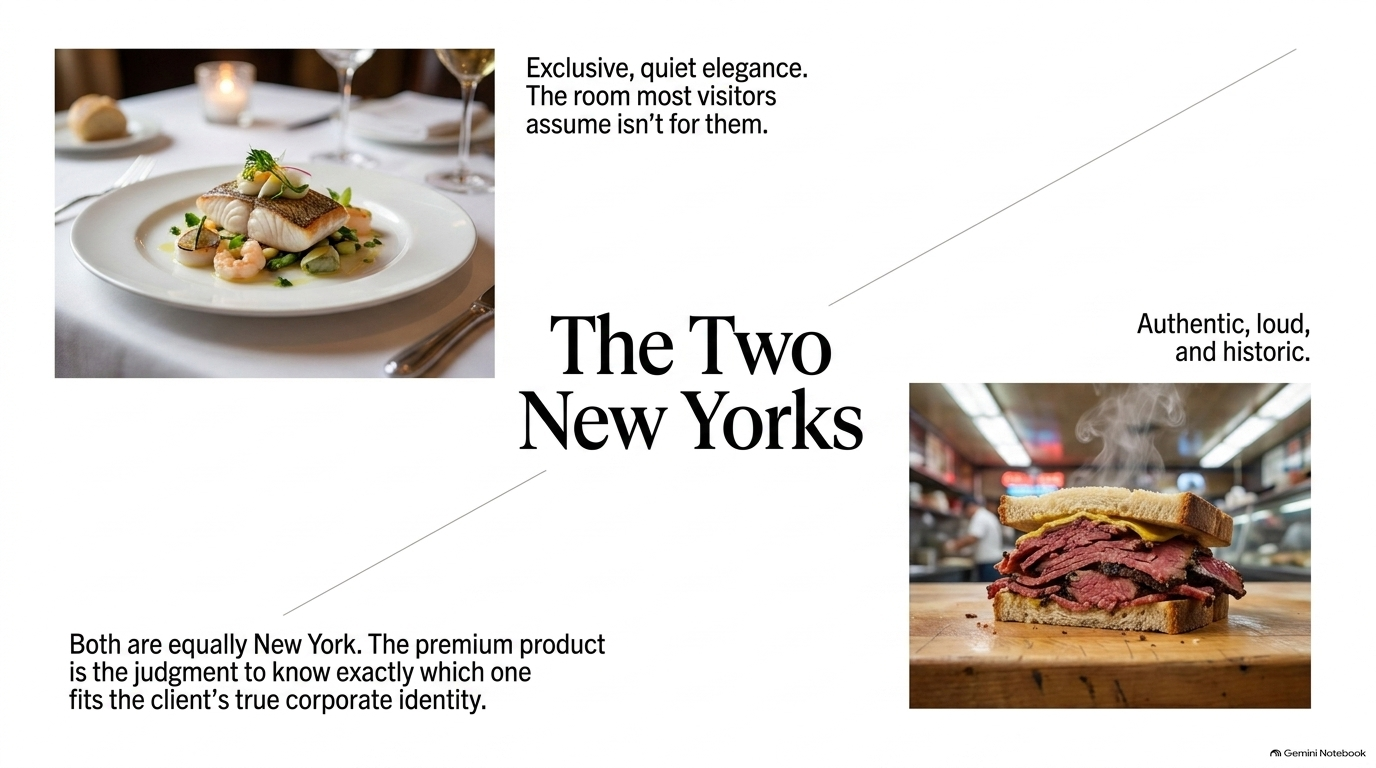
What unites them is that almost none of them want the version of New York only including what a tourist would book. Some clients want the tried-and-true room, the venue every planner already trusts. Others want a warehouse in Brooklyn nobody’s heard of yet, and Bernstein makes it her business to have already walked through it before they ask. Some want the high end of the city on full display, a dinner at Le Bernardin, the kind of room most first-time visitors assume isn’t for them. Others want Katz’s Delicatessen, pastrami under fluorescent light, and Bernstein’s argument is that both are equally New York, a few subway stops of assumption apart, and that a good chunk of her job is simply telling a client which one actually fits who they are. It’s not scripted, and it isn’t inexpensive. It’s the reason a company will pay Empire Force instead of pulling an itinerary together itself in an afternoon.
There’s another side of Bernstein that doesn’t show up in a sales pitch. Twenty-five years ago this September, she was on a flight to New York City that got stranded over New Jersey then turned around and emergency landed in Baltimore while the towers fell, and she has spent every anniversary since running some part of the ceremony that followed. That story, the flight, the volunteer runs into Ground Zero, the mourning she postponed for her own father to help New York mourn three thousand strangers, is its own piece.
Read Part Two:
She’s Never Missed a Single September

This is part two of a two-part profile. Read part one here first.
GatheringPoint covers the people who build the gatherings. Subscribe at GatheringPoint.news.
Profitable Producing Versus Endless Possible Proposing Bernstein’s shorthand for the whole business. Anyone can promise something is possible and create proposals, She only wants to create proposals gets produced and not be in a cycle of endless paperwork for RFPs.
I Can’t Not Be Involved From student government to sorority founding to three decades running a company, Bernstein has never once sat out a room she was allowed to help run.
I Hate the Word Sales She built Empire Force on relationships instead of pitches, insisting that showing up in the right room matters more than closing in it.
AI Can Spit It Out. We Still Have to Produce It. A plan generated by a prompt still needs someone standing on the sidewalk at six in the morning making sure the permit is in hand before the cones go out.
That’s Where the Investment Is When a client asked if Empire could cut staff to save money, Bernstein said no. The people executing the plan on-site are the actual product, not overhead.
That’s Called Soft Power The moment at an event that feels like an accident, two strangers deep in conversation, a toast that lands perfectly, isn’t accidental. Bernstein designs it.

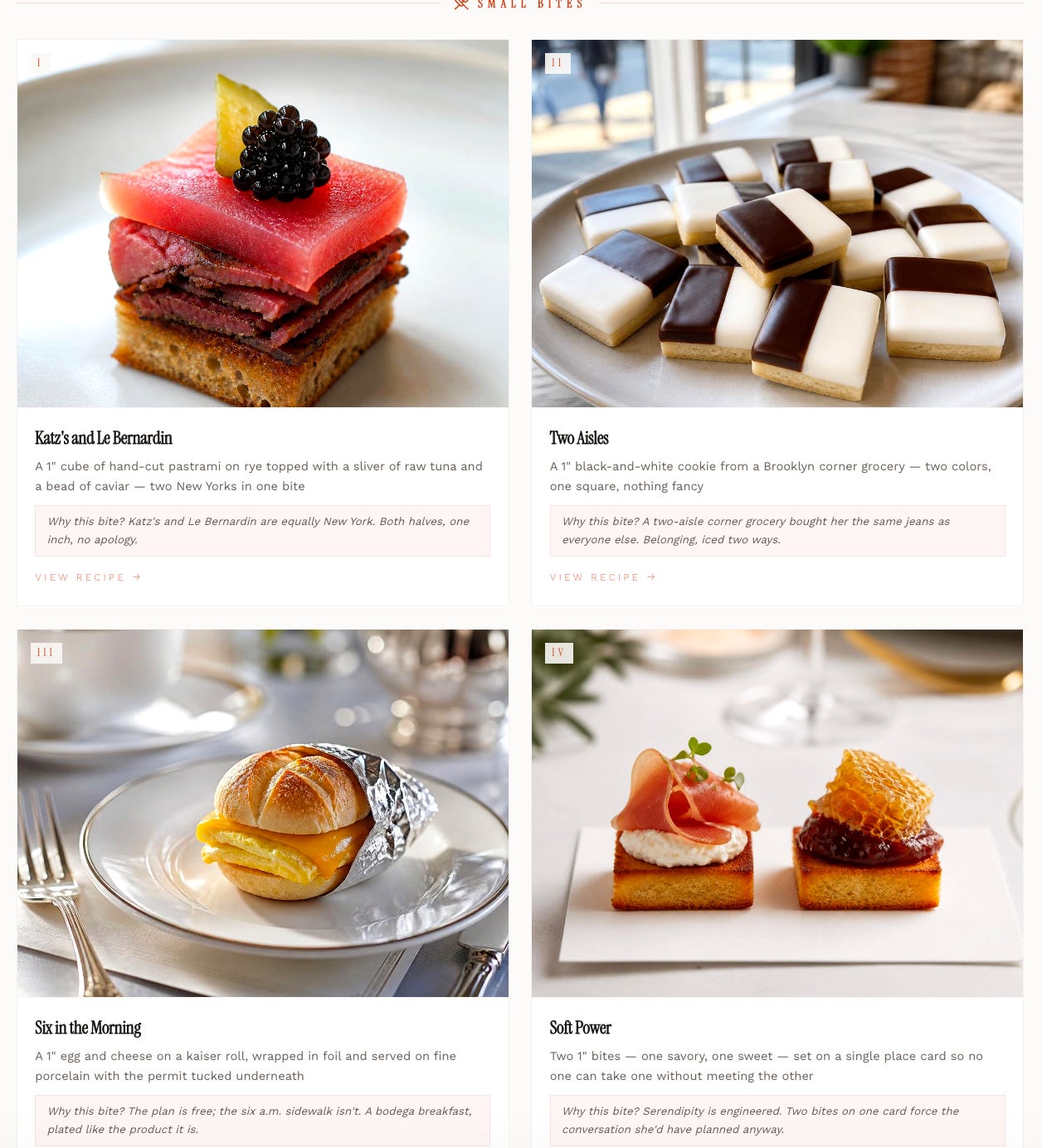
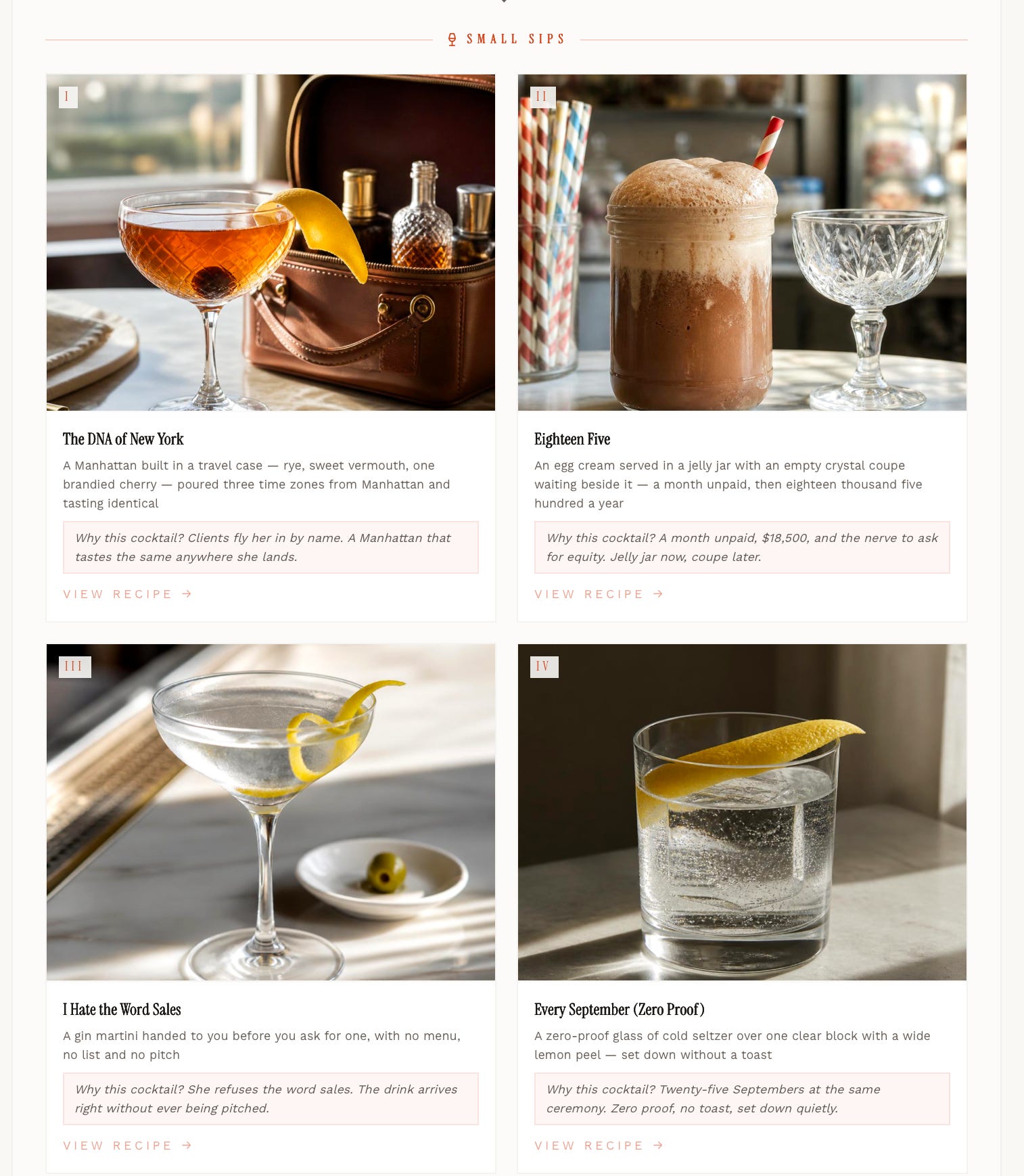
Edible Profile of Jaclyn Bernstein

So well said! How can we clone her? The best! An icon in our industry and NY all the way!!! We love Jaclyn!