

When the World Tightens, the Smartest Organizers Listen
Why the most important meeting right now isn’t your event—it’s the conversations around it

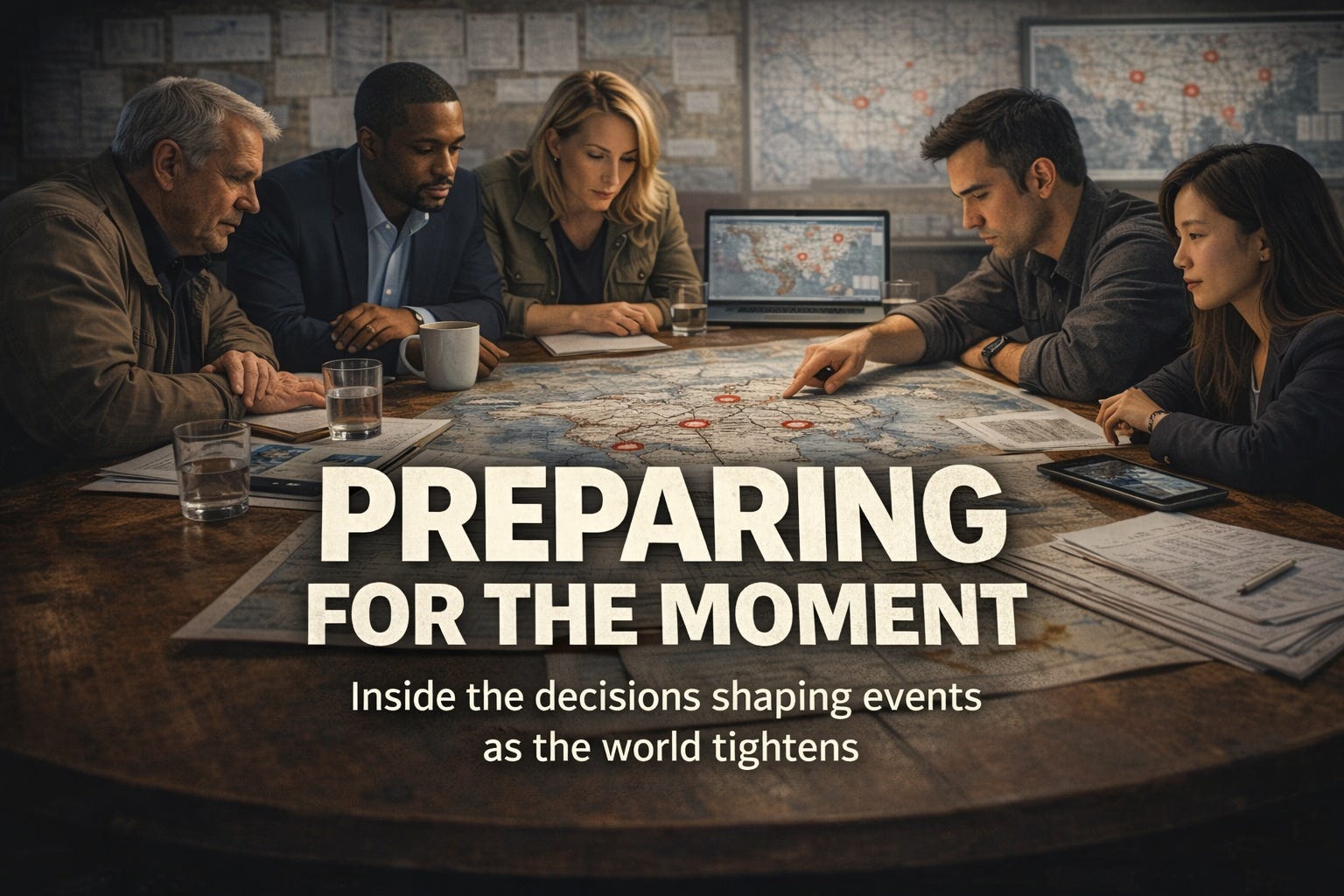
There are moments when the world doesn’t quite break, but it tightens. You feel it first in ways that don’t immediately register as important—a flight that takes longer than it should, a conversation about travel that suddenly requires more explanation, someone who would have said yes without thinking now asking for a day or two to decide. Nothing has officially changed, and yet something clearly has.
That’s where the events business finds itself right now, somewhere between recognition and reaction, where instinct begins to move ahead of information. The headlines are easy enough to find—energy disruptions, geopolitical tension, a region that only recently was being described as the future center of gravity for global events now appearing in a different context—but they are almost beside the point. What matters is how quickly those signals translate into behavior, how they move through the system and show up not in declarations but in quieter adjustments. A different route. A longer layover. A second thought about whether the trip is essential.
If you’ve spent enough time in this business, you learn not to look at the stage first. You look at the seams, at the places where pressure shows up early. Transportation is usually the first to move—prices edging upward, reliability slipping just enough to be noticed, the effort required to get somewhere beginning to factor into the decision itself. Energy sits further back, less visible but just as influential, shaping costs in ways most people don’t track directly. Security rarely declares itself; it enters as a question that sits behind the plan rather than on top of it. And then there is everything else—the economy, the suppliers, the network of people and services that make events feel effortless until, suddenly, they aren’t.
None of these things operate in isolation. They move through each other, intersecting, amplifying, reshaping decisions in ways that rarely get announced but are almost always felt. When they begin to shift at the same time, the effect isn’t dramatic so much as cumulative. You don’t cancel. You adjust.
There is also something harder to quantify that begins to move through the system alongside all of this. Large gatherings have always carried a certain vulnerability, and in moments when headlines begin to lean toward security—when even something as carefully choreographed as the Oscars quietly tightens its perimeter—it settles into the collective awareness without needing to be named directly. It doesn’t stop events from happening. It rarely does. But it changes the internal dialogue. The calculation becomes less about whether something will happen and more about how it will feel to be there, whether the experience will still carry the ease that once made the decision automatic.
At the top of the business, you can already see the adjustments if you know where to look. Not in what’s being said—those messages remain steady, as they have to be—but in what’s being rearranged behind the scenes. Informa, which sits as close to the center of the global exhibitions market as anyone, had just delivered a strong set of results, the kind of earnings announcement that reinforces confidence in the model and the momentum behind it. Under CEO Stephen Carter, the company has leaned heavily into the Middle East, building its presence through partnerships including the Dubai World Trade Centre and a rapidly expanding IMEA portfolio.
And almost immediately, the context shifted.
What had been a moment to signal strength became one that demanded flexibility. The escalation in the region landed right alongside that results release, compressing what would normally be a slower recalibration into a matter of days. You can already see the pattern extending beyond a single company. LEAP has been pushed into late summer. Middle East Energy has moved with it. The Arabian Travel Market has shifted its dates. And in at least one case, the UITP Global Public Transport Summit has stepped away from the region entirely, relocating to Europe.
What’s striking isn’t just the number of changes. It’s the way they’re being handled. Most aren’t cancellations. They’re deferrals. The assumption is not that the event disappears, but that the timing does. Hold the structure. Move the date. Wait for the system to settle.
The signal isn’t confined to business events. You can see the same recalibration playing out across the broader world of gatherings—sport, entertainment, anything that depends on global movement. Travel disruptions ripple outward quickly. Participation becomes uneven. Schedules begin to flex. Whether it’s racing calendars, major sporting events, or large-scale cultural moments, the pattern feels familiar: hesitation first, adjustment next, and, more often than not, a return once the system steadies.
The instinct is familiar now. You move the date before you move the idea. You preserve the continuity of the event even if the calendar has to bend, on the assumption—borne out more often than not—that when the moment clears, the audience will return.
They usually do.
The harder part is managing both realities at once—projecting confidence to the market while making real-time decisions behind the scenes. Dates shift. Messages tighten. Contingencies move from theory to practice. And all of it happens without the luxury of waiting for clarity.
It’s one thing to talk about resilience in hindsight. It’s another to exercise it while everything is still unfolding.
What gives this moment a different kind of weight is where those adjustments are happening. Over the past several years, the industry hasn’t simply expanded into the Middle East; it has leaned into it in a way that feels more like a shift than a strategy. Leadership followed. Investment followed. Attention followed. Stephen Carter’s push into the region through the Dubai World Trade Centre partnership
wasn’t tentative. Doug Emslie’s role in shaping that expansion wasn’t peripheral. Even the industry’s editorial voice moved, with Adam Parry choosing to be there rather than observe it from a distance.
If you wanted to understand where the business was going, you didn’t have to look very far. You just had to spend time there. The pace was different. The alignment between government and operator was different. Events weren’t treated as accessories to growth, but as instruments of it.
Which is why the current moment lands differently.
When something shifts there, it doesn’t feel like a distant disruption. It feels closer to something happening inside the system itself.
And if anything, the early signals suggest that the response will be to lean in, not pull back. The region has spent too much time, and too much capital, positioning itself as a convening hub to step away from that now. When pressure appears, the reaction tends to become more visible rather than less—clearer communication, stronger reassurance, and, when necessary, a willingness to make it easier for people to come. Incentives have always been part of the playbook. In moments like this, they begin to function less as promotion and more as a signal of intent.
Maybe this passes quickly. That wouldn’t be unusual. The system absorbs it, adjusts, and moves on, as it has before. Or maybe it turns out to be one of those periods that only reveals its significance later, when you realize that something had been changing for a while and you were just starting to see it.
The truth is, you don’t really know yet. So you pay attention a little more closely than usual. And if you’ve been through enough cycles, you start talking to people.
One of the first people I called was Kai Hattendorf. For years, running UFI, he had one of the clearest vantage points in the exhibitions world, watching how the industry behaves across markets, across sectors, across the kinds of disruptions that tend to feel singular when you’re inside them and familiar when you step back. He has since moved into a new role at JWC, where that perspective now plays out inside organizations rather than above them—closer to where decisions are made, and where their consequences are felt most directly.
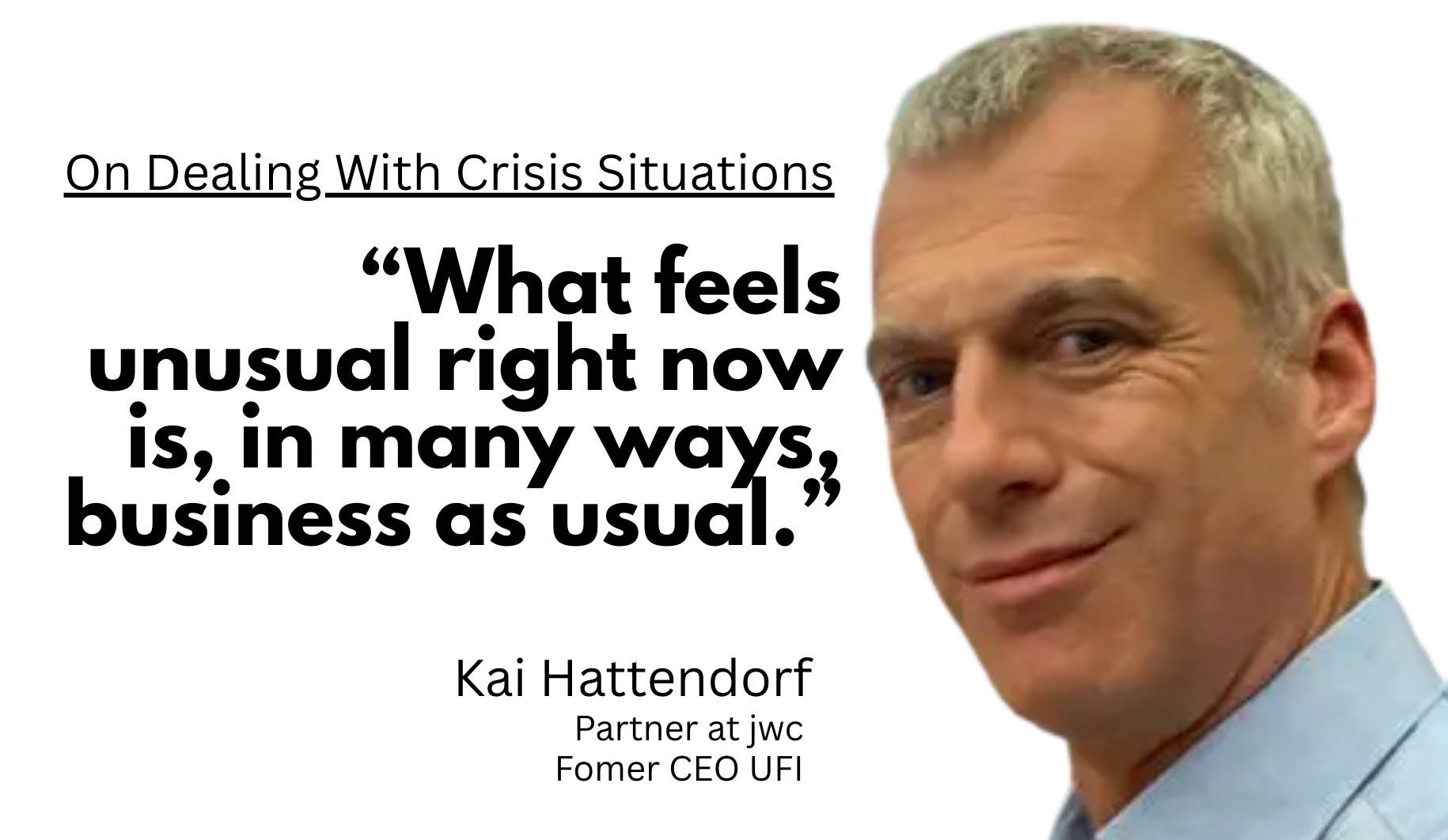
He didn’t sound particularly surprised. “We’ve been talking about crisis for years,” he said. “It’s part of our DNA to think in capital letters—WHAT IF.”
Then he added something that, once you sit with it, explains more than it reassures “The unusualness of this is business as usual.”
It doesn’t feel that way when you’re inside it. It never does. But over time, the list of what this industry has absorbed starts to read less like a series of exceptions and more like a pattern. 9/11. SARS. Financial crises. Weather events that no longer feel particularly rare. A pandemic that stopped everything and then, just as abruptly, brought it all back.
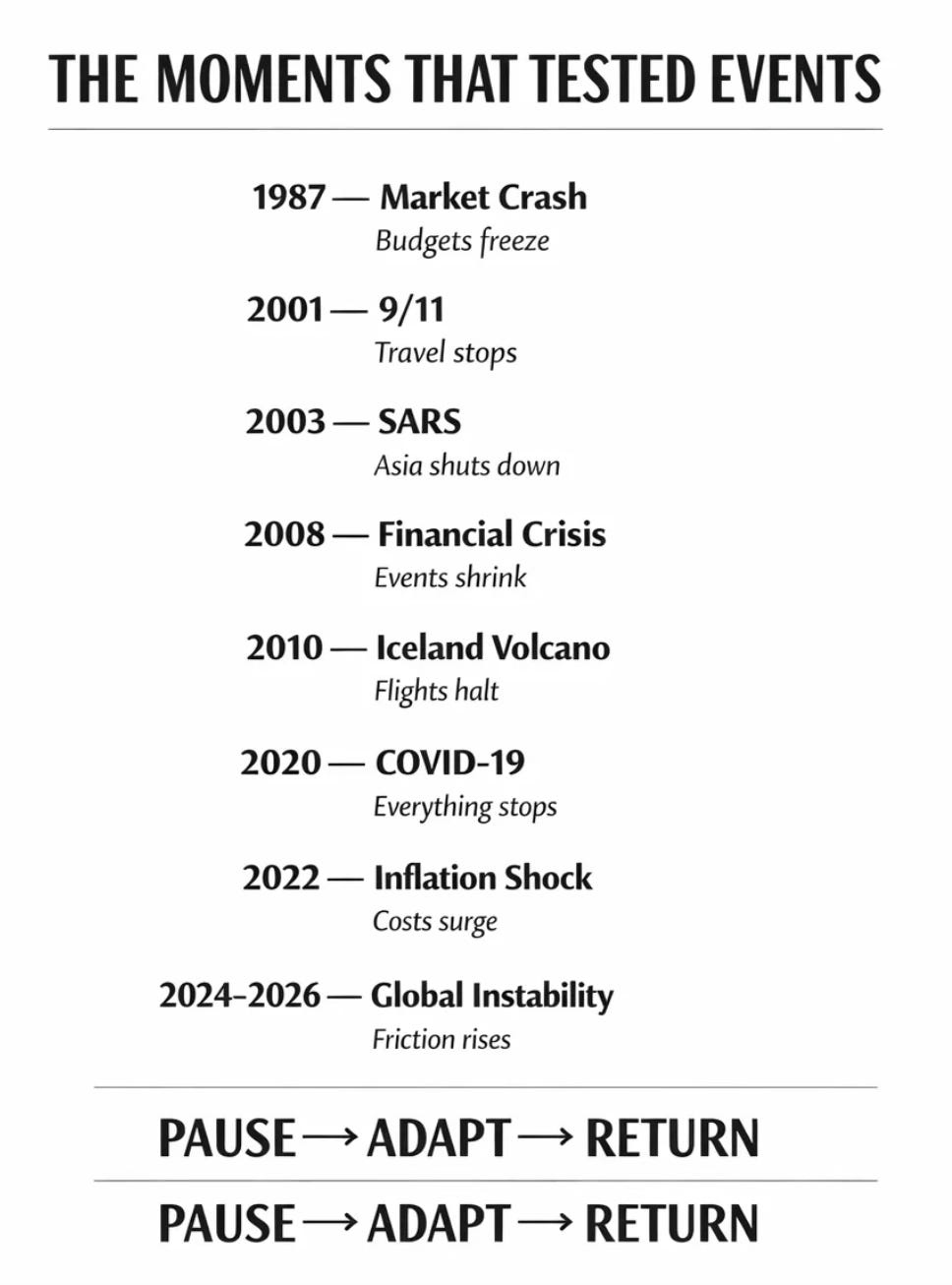
“We’ve come through all of it.” What changes is not whether people gather, but how.
After 9/11, we were set to produce our first BizBash trade show in October. That plan disappeared overnight. The question wasn’t how to execute the event anymore; it was whether it made sense to do it at all. We moved it to December, not because we were certain it would work, but because it felt like the right thing to try.
By any conventional measure, it should have been a risk. Travel was uncertain. The mood was fragile. No one could say with confidence what turnout would look like. And yet when people arrived, the usual markers of success—the program, the production, the details we tend to fixate on—felt secondary. What mattered was that they were in the room, that they had made the effort, that the industry, in its own way, was putting itself back together.
People still talk about that show, and not because of anything we staged.
They remember what it felt like. Moments like that stay with you. They change how you read the next one.
When things tighten, the people who need to be there find a way. What shifts is who makes the trip. “You’ll see fewer people, but more senior people,” Kai said. The trips that felt discretionary start to fall away. The ones that matter still happen. And the room, without announcing it, becomes more focused, more deliberate, sometimes more important than it would have been otherwise.
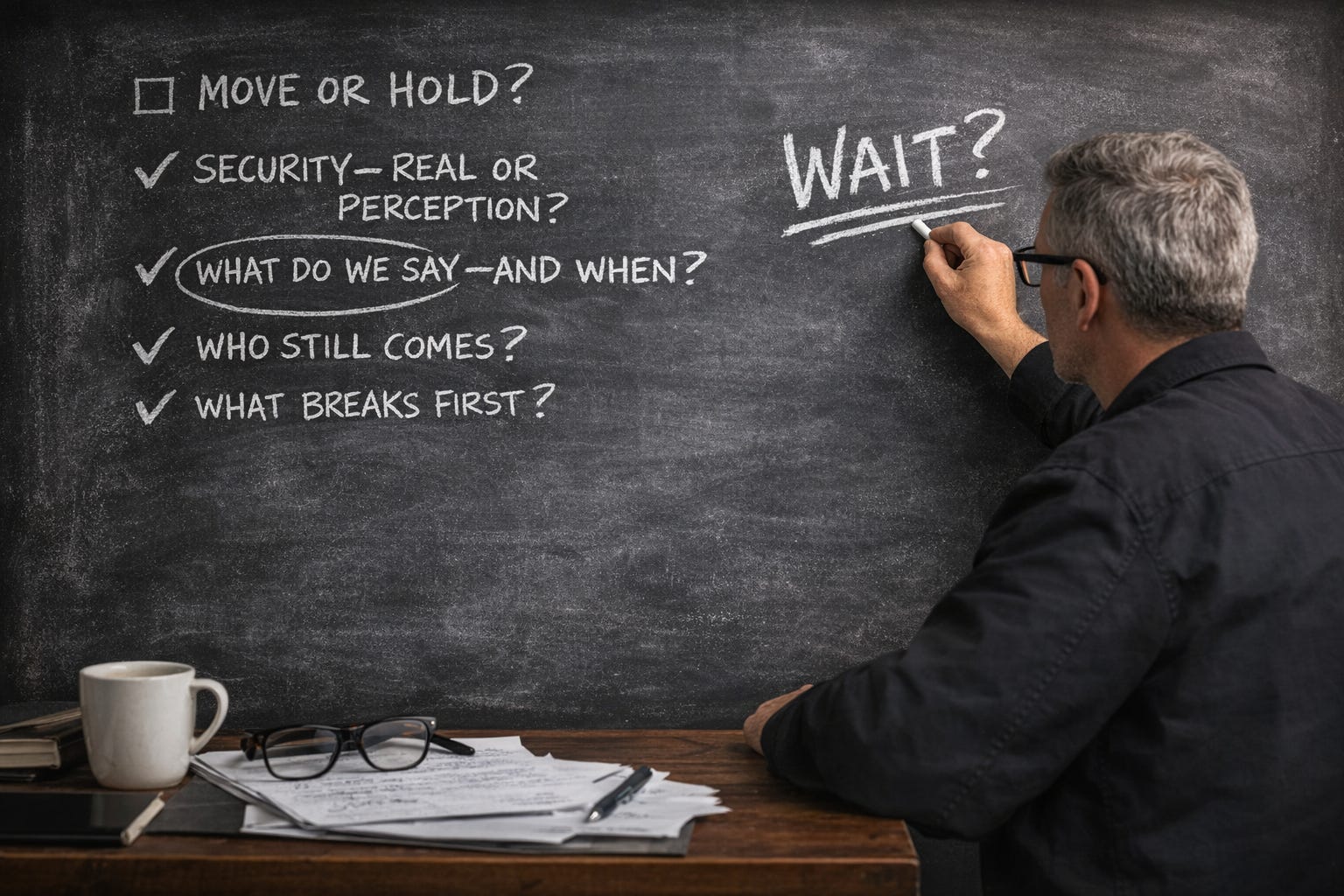
If you sit inside an organization right now, the conversation doesn’t unfold in clean categories. It moves quickly, often in the same breath. The economics come first because they have to. Flights are up, freight is unpredictable, budgets that were locked a quarter ago suddenly feel provisional. You start asking whether the numbers still hold, and if they don’t, what gives.
Almost immediately, that folds into communication. What do you say, and when do you say it? How much do you acknowledge, and how much do you wait to understand? Move too early and you risk overreacting. Move too late and you lose trust. The message becomes less about information and more about tone.
Then there is the operational layer, which rarely gets described but is always felt. Travel patterns shift. Routes change. People arrive at different times, or not at all. You build in buffers where you didn’t need them before. You rely more heavily on local partners, on venues, on anyone who can tell you what’s actually happening on the ground.
And running underneath all of it is something less tangible but just as important—the question of how this will feel for the people you’re asking to show up. Not just whether they can get there, but whether they want to.
None of these decisions sit on their own. They overlap, they compete, they reshape each other in real time. And the challenge isn’t solving one of them.
It’s holding all of them at once without losing your footing.
Somewhere in the middle of that conversation, Kai said something that reframed the way I was thinking about all of this.
The event industry, he suggested, is a bubble. Not in the dismissive sense, but in the practical one. It brings together people who share a context, a language, a reason to be in the same place at the same time. The problem starts when nothing new gets in.
That’s when the bubble hardens. The same assumptions circulate. The same voices reinforce each other. You stop learning and start confirming.
In a moment like this, that’s a risk you can’t afford. Because no one sees the whole picture. Which brings you back to something simple, and surprisingly easy to neglect. You call people.
You ask what they’re seeing, not just what you’re seeing. You compare notes. You test your assumptions against someone else’s reality. You widen the circle instead of closing it.
During the uncertainty of Covid, Kai turned UFI into a global virtual convenor, organising dozens of online sessions for the industry to stay connected around the world, to keep each other up to date, to listen and to share. As a former journalist, he explains, it was a logical thing to do: to gather as many sources and insights as possible.
In the same way, the organizers who navigate moments like this best aren’t the ones with the most elaborate plans.
They’re the ones who are paying attention. Who are listening. Not as a gesture, but as a way of working. Because in a world that doesn’t move in straight lines anymore, listening isn’t soft. It’s structural.
And before anyone walks into a ballroom or a convention center, before the lights come up and the program begins, there is another kind of gathering already underway.
Quieter. Less visible. But no less important.
A series of conversations between people trying to understand what is shifting, deciding what matters, and figuring out—together—what is still worth showing up for.
Right now, that may be the meeting that matters most.