


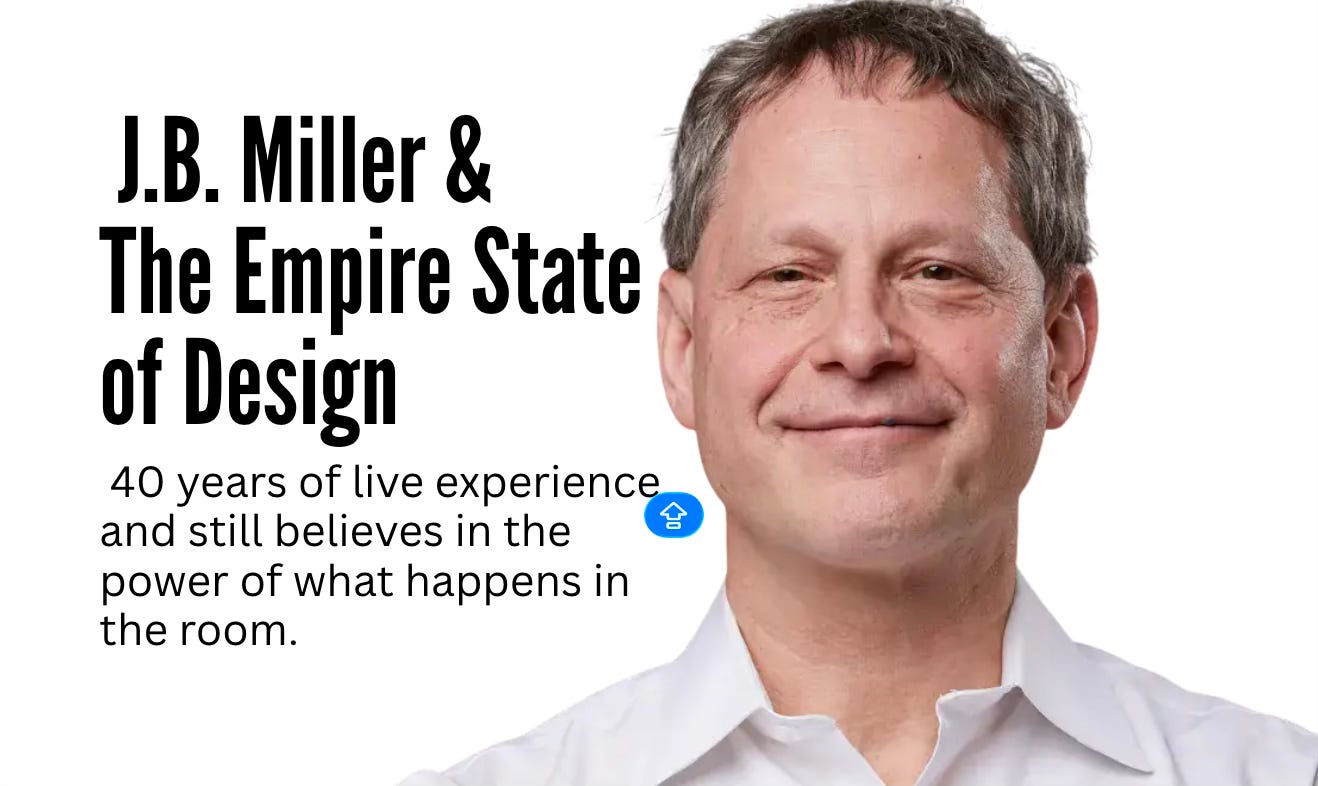
There’s a difference between pulling off an event and holding the moment. J.B. Miller built a company around that difference — and called it Empire.
It started in 1993, after years working in music television, talent booking, and what he now calls the “durable pressure of live everything.” He’d booked talent for MTV, programmed concert venues at Ron Delsener, and shaped major corporate shows at Overland Entertainment for Sony, Estée Lauder, and Time Warner. He knew what moved people. But he also knew what broke moments: over design, panic, ego, bad timing.
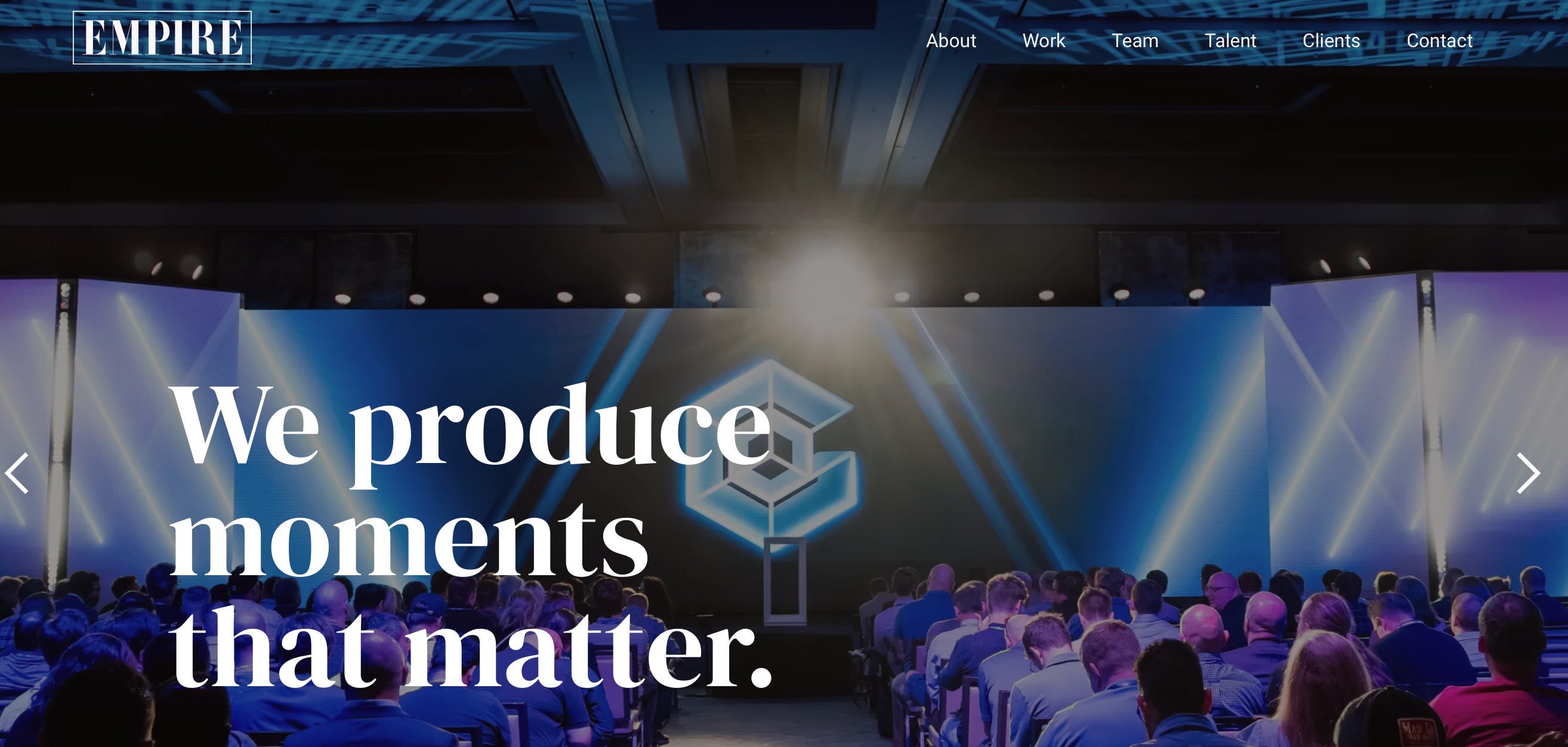
Empire Entertainment became his answer. Not just an event company — a global operating system for live storytelling. Three decades later, it remains one of the most respected, least showy agencies in the business. They’ve produced events across six continents for clients like Time Magazine, the United Nations, The Gates Foundation, Google, Disney, Mercedes-Benz, and PepsiCo. They’ve staged ceremonies for heads of state, staged protest-proof fashion shows, helped open Atlantis on Palm Island in Dubai, and presented speakers ranging from Oprah and Spielberg to the Dalai Lama and President Obama — always with timing that feels like instinct, never force.
“The show starts before anyone realizes it,” Miller says. “If it’s working, the guest thinks the room just… knew what they needed.”
It’s not intuition. It’s planning disguised as atmosphere.
The Party You Didn’t See
At the UN General Assembly’s private reception, held inside the New York Public Library, Empire was tasked with hosting leaders from across the globe — and making it feel effortless. But while everyone else focused on the room, Miller also focused on the street. Specifically, on what happens after the final toast.
If a motorcade is misaligned, if a Head of State walks out and can’t find their car — it’s not just a glitch. It’s a diplomatic embarrassment. So, Miller and his team staged a second event — a controlled reception for the drivers.
No velvet ropes. No drama. Just coordination so precise it looked invisible. World leaders exited in silence and sync, as if it had been choreographed. Because it had.
“Logistics are emotional,” Miller says. “Especially when ego, timing, and global visibility are all in play.”
The Empire Blueprint
Inside Empire, the work doesn’t start and end with the stage. It always includes with what might go wrong.
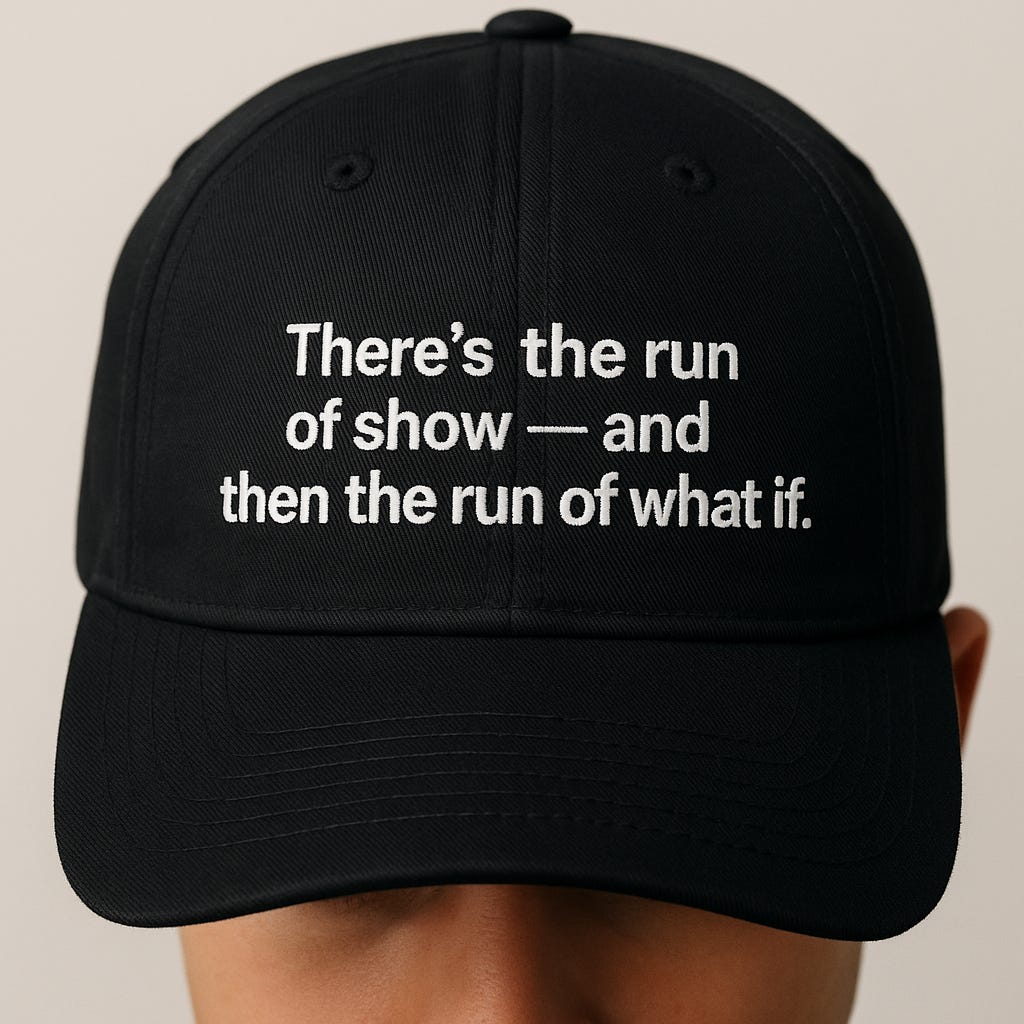
Every event is mapped in layers. There’s the run of show — and then the run of what if. Lighting fails. Speaker cancels. Protest erupts. The audience drifts. The energy drops. For each scenario, a response plan is written, signed off, and often rehearsed. Even the voice-of-God announcement is prewritten.
But planning for disaster isn’t enough. Empire plans for feeling.
In one event, Miller noticed the seating felt off — not in logistics, but in energy. He changed a high-profile placement hours before guests arrived. Not because the layout was wrong — because the story the table was telling didn’t make sense.
That’s not overthinking. That’s what it takes when the audience includes global CEOs, policymakers, ultra-high-net-worth donors, or artists who’ve walked off better-planned stages.
“You don’t wait for something to go wrong,” he says. “You see it coming five minutes early, and you never have to say a word.”
Disruption, Rehearsed
Miller recalls, and shapes his team’s planning, based on observed instances at other company’s events where contingency considerations and pre-positioning made the difference. For one year's Victoria’s Secret fashion show, PETA protesters entered the runway but were promptly escorted away by security personnel. The event continued without interruption.
At Elizabeth Taylor’s wedding at Neverland Ranch, Miller witnessed, a similar incident where a photographer parachuted into the ceremony ended the moment the hit the ground. A security team removed the photographer and the parachute in seconds before the spotlight changed.
And yet, when a protest can be redirected, J.B. often tries. At a sustainability event at Union Station in D.C. featuring a high profile CEO discussing new sustainability initiatives for his company, he advised inviting the protestors in to listen. Their message wasn’t conflict — it was alignment. The client passed. But the offer was real.
That’s Empire’s edge. They don’t panic. They decide.
Tokyo, Whispered
In Tokyo, Empire operates with an entirely different cadence. Their team — more than 40 strong — works at the intersection of luxury, restraint, and immersive design.
For Disney and Star Wars, they staged projection dinners where lightsaber battles played out across the tabletops. Not theme-park loud. Culturally tuned. Seamless. Every detail — from scent to pacing — was calibrated for Japanese hospitality.
Empire doesn’t export. They interpret. They’ve worked in over 100 countries — from Vietnam to Abu Dhabi — not by showing off, but by knowing how to blend precision with listening.
Inside the Company
Empire doesn’t hire showboats. They hire people who prioritize observing and thinking first, and who know not to compete for the spotlight.
Miller is known to ask about your reading habits, how you track a global story, and what kind of silence makes you nervous. He doesn’t only care how many events you’ve run. He wants to know if you can comfortable and confidently walk into a room full of C-suite decision makers, ultra-high net worth attendees, political leaders and artists — and know when not to speak.
Once inside, producers are trained in a system that doesn’t look like production school. It looks more like an MBA program with operational excellence, instinct and elegance layered in: escalation flowcharts, cultural fluency, spatial energy design, guest experience modeling, and when to abandon the script to let something better emerge.
“We’re not here to show how good we are,” one producer says. “We’re here to make sure no one notices the room just changed.”
Personalization, Done Quietly
Miller doesn’t believe in velvet ropes or “VVIP” stickers. The real moment, he says, is the one that doesn’t announce itself.
At one dinner, guests lifted their water glasses and found handwritten notes taped underneath. No branding. No big reveal. Each one sent the guest into a different small interaction — a hidden room, a one-on-one conversation, a choice.
That wasn’t a trick. That was storytelling with a human address on it.
“We call it VVMe,” he says. “Not above the room — inside it. But built for one person.”
At 30, Still Invisible — and Still Essential
Empire has now lasted longer than most agencies with bigger names, more noise, and louder decks. They’ve staged TIME’s 100 Gala, The Webby Awards, the Gotham Awards, the Tribeca Film Festival and The Skoll World Forum. They’ve presented everyone from Sting to Springsteen, Alicia Keys to Andrea Bocelli, Stephen Colbert to His Holiness the Dalai Lama. They’ve done the show. But they’ve stayed in the wings.
That’s their power.
They don’t make the event about themselves. They don’t inflate moments. They don’t need to be seen. They just deliver — again, and again, and again — with timing so precise, you leave wondering how it all felt so natural.
And if you ask how J.B. Miller made it happen?
He already planned for that.
The Song- The Real Job, Reading the Room
WWEEKEND WISDOM BANK TAKEAWAYS: J.B. Miller
Reading the room is the real job. If you can’t feel it shift, you can’t guide what happens next.
Contingency is creative. The best plans include what happens when things don’t go as planned.
The guest should never feel the problem. Empire designs responses to unfold like intentions.
Culture isn’t a layer — it’s the material. In Tokyo or Dubai, planning without cultural fluency isn’t planning. It’s as faux pas waiting to happen.
Surprise is the new status. The moment that wasn’t announced is the one they’ll talk about.
Luxury is attention, not access. VVMe beats VVIP — every time.
You don’t need to show control to have it. The best moment feels spontaneous. That’s because it was rehearsed.
J.B. Miller already planned for that. That’s not a catchphrase. It’s a method.