


The conversation did not begin as a warning.
It began, as these things often do, on the edge of a crowded trade show floor at IMEX earlier this year, where the global meetings industry gathers annually to celebrate itself. Booths glowed. Handshakes multiplied. The narrative was unmistakable: recovery had arrived.
Somewhere between appointments and the hum of sponsorship optimism, Carl Winston leaned in and said something that did not match the mood.
“Programs are down.”
Not dramatically delivered. Not theatrical. Just factual.
Winston, who spent decades building academic legitimacy for meetings at San Diego State University, now serves on the board of a global hospitality education association. From that vantage point, he sees enrollment figures across regions most practitioners never examine.
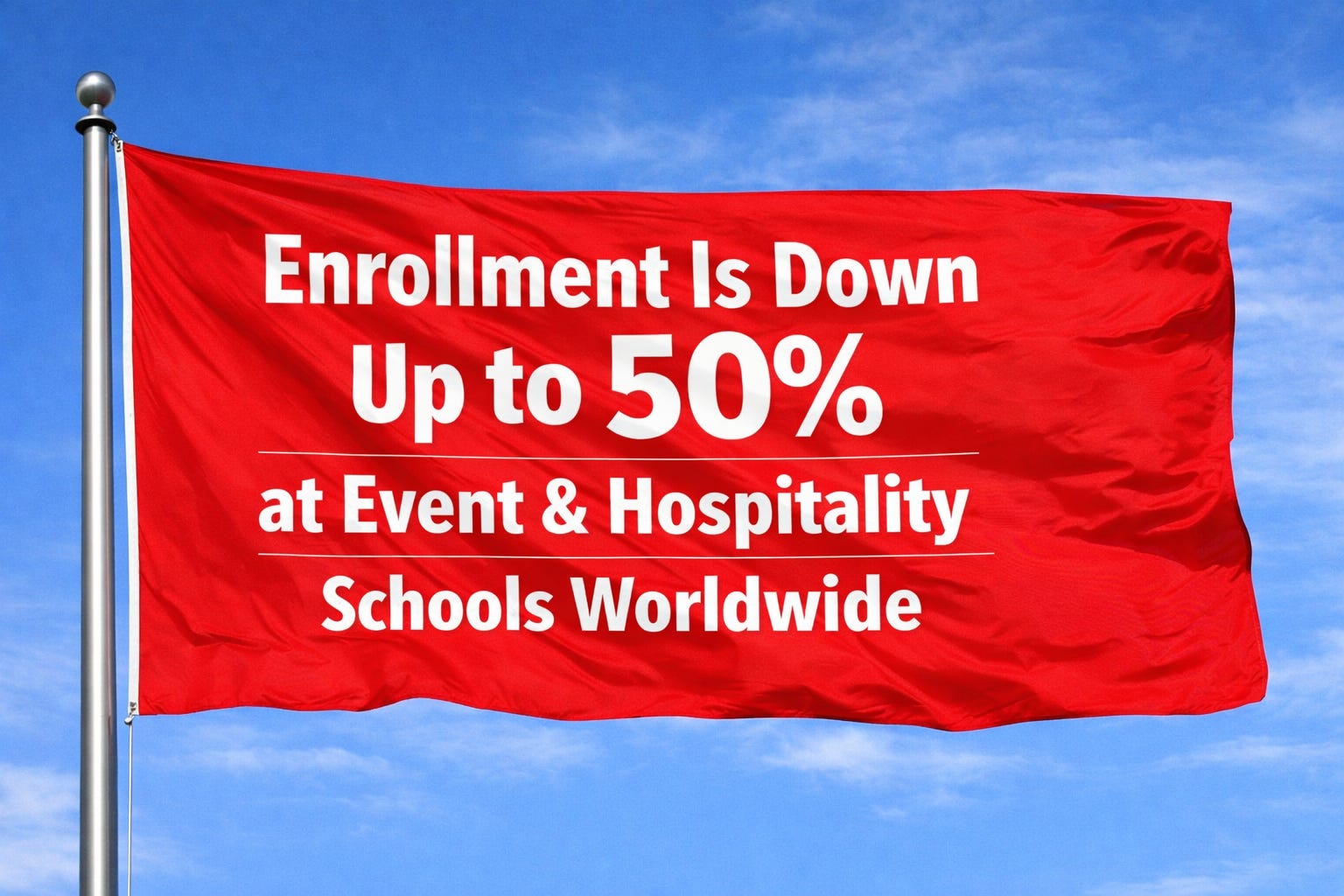
In many places, hospitality and meeting programs have not returned to pre-pandemic levels. Some report declines in the range of twenty to fifty percent. In certain cases, contraction is sharper. The industry’s calendar has filled. The pipeline feeding it has thinned.
The contrast was jarring against the IMEX backdrop.
Ballrooms were booked. Destination pavilions were buzzing. The language of the week was growth.
Yet from the board table — far removed from booth traffic and keynote applause — the data has a different texture.
Universities do not declare crisis easily. Deans speak in careful tones. Enrollment adjustments are framed as recalibrations. Departments merge quietly. Specializations are absorbed into broader business programs. Faculty lines go unfilled.
It does not look like collapse.
It looks like contraction.
The pandemic altered perception in ways revenue cannot instantly repair. Students watched hotels shutter. Conferences evaporate. Restaurants close overnight. Parents recalibrated advice. Stability began to mean distance from physical industries vulnerable to shutdown.
Enrollment follows perception more than press releases.
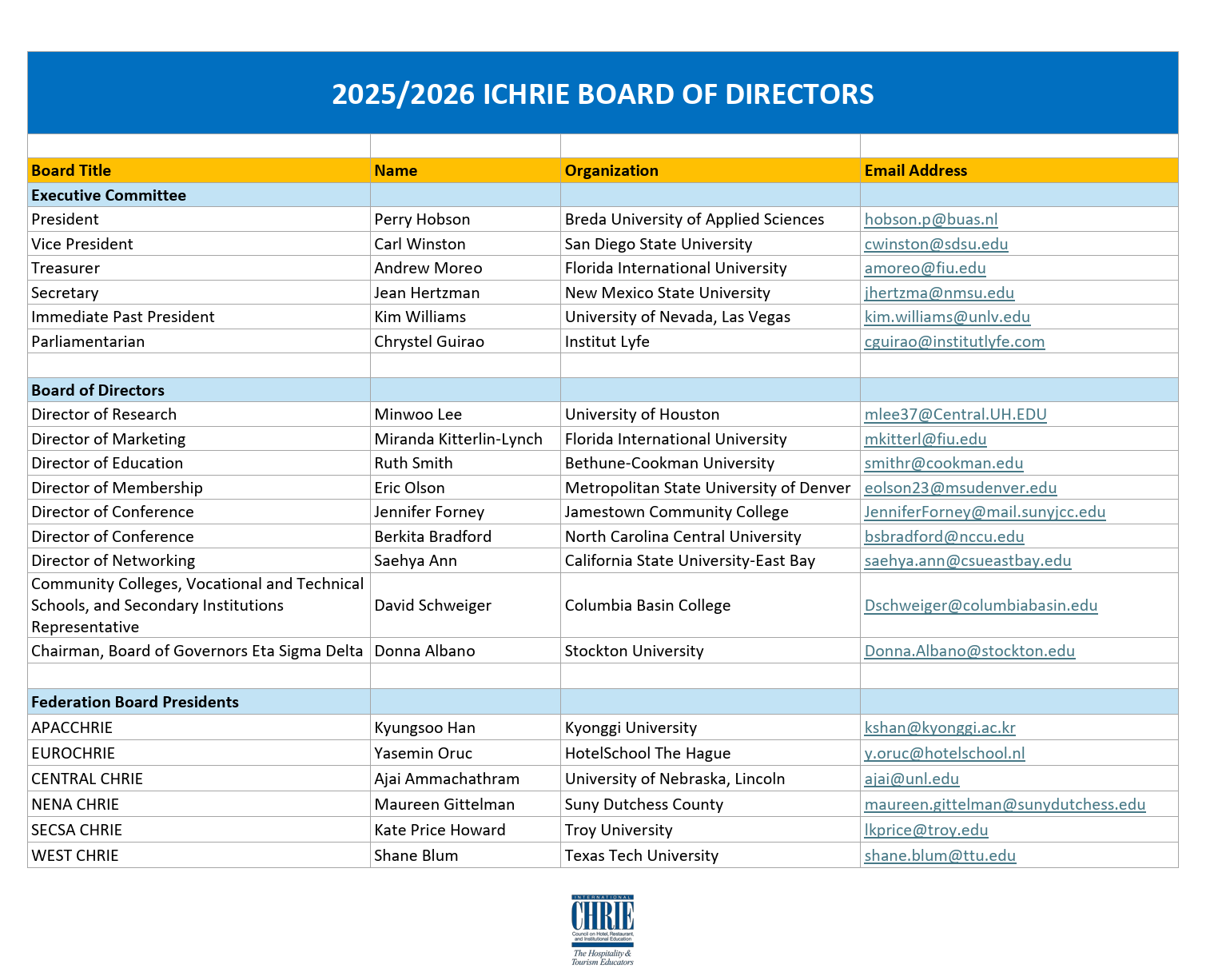
Around the international board table of the International Council on Hotel, Restaurant, and Institutional Education (ICHRIE), regional leaders compare notes. Some programs in Europe have contracted sharply. Parts of North America report similar patterns. Asia presents a mixed picture. The numbers are not uniform, but the direction is consistent enough to register concern. ICHRIE is a non-profit professional association, provides programs and services to continually improve the quality of global education, research, service and business operations in the hospitality and tourism industry.
Winston listens more than he speaks in those rooms. He has lived long enough inside institutions to recognize early signals.
What unsettles him most is not merely the percentage decline. It is the paradox.
During the pandemic, event professionals became connective tissue inside organizations. They aligned departments. They preserved culture. They shaped narrative in shared space — virtual or otherwise. They operated in what diplomats might call soft power territory, influencing cohesion through convening rather than command.
At precisely the moment the strategic weight of meetings became clearer to executives, the formal academic pipeline preparing future leaders in that discipline began thinning in many regions.
That is the 50 percent signal.
Not universal. Not catastrophic. But significant enough to shift how institutions allocate resources.
Winston’s own school at San Diego State has resisted the contraction more effectively than many. Strong alumni networks. Deep industry ties. A cultivated sense of community. Those assets matter.
But he does not confuse resilience with immunity.
From his perspective on the international board, several red flags emerge.
Volatility has been normalized. Hospitality is perceived as shock-prone rather than cyclical. Students weigh that risk differently.
Generational expectations have shifted. Long hours and high-pressure environments compete with industries promising flexibility and insulation.
Universities operate on arithmetic. When enrollment falls, specialization narrows. Legitimacy must justify itself again.
Employers increasingly prize adaptability over formal credentials. Rational in the short term, perhaps — but potentially dilutive over time.
None of this predicts the disappearance of meetings. People will gather. Ballrooms will fill. Trade shows will thrive.
The question is who will be systematically trained to understand the economic, political, and cultural weight inside those rooms.
The conversation at IMEX lasted only minutes. The trade show floor carried on. Deals were struck. Panels convened. Recovery was celebrated.
But the remark lingered. Programs are down.
In industries built on spectacle, it is often the quiet data that matters most.
The ballroom may be full. The classroom tells a more complicated story.