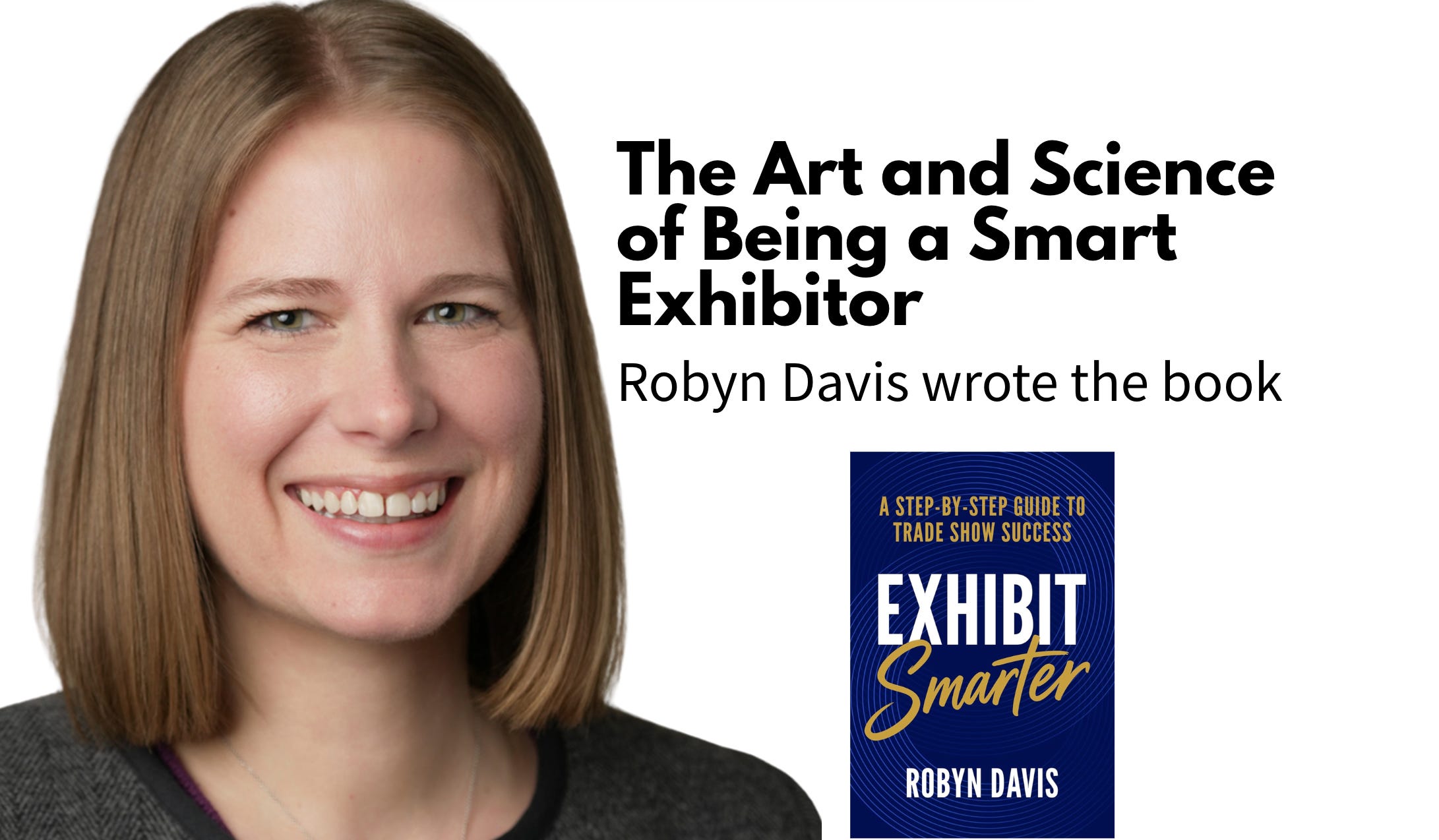
Robyn Davis would like to correct a common assumption about what she does, and the correction turns out to be the most interesting thing about her. She does not work with exhibitors directly anymore. What she does is narrower and, in its way, more ambitious: she builds exhibitor-success programming — speaking, training, consulting — that show organizers commission and gift to their exhibitors, so that the companies filling a hall with their hopes and their budgets have someone teaching them how to do it well. The exhibitors are her subject. The organizers are her clients. She works the whole floor at once, through the people who own it.
That distinction matters to her for a reason that is not pedantic. The organizations that contract her are not obscure, and the shows they run are among the largest in the country: NSSF, which produces the SHOT Show; AEM, behind CONEXPO-CON/AGG; MHI, which runs MODEX; the Association for Manufacturing Technology’s IMTS; plus RE+ and RSNA, the radiology giant. These are organizers buying something they cannot easily build in-house: a single trusted practitioner who can empower a thousand exhibitors without the organizer having to, in her words, hand-hold every one through the process. Her services arrive as a gift to the exhibitor, the organizer’s treat, which is an unusual economic arrangement and a deliberate one. It means the help reaches the startups and small businesses and corporate marketers who would never have found their way to a consultant on their own. That reach is the point. By her own citation of industry data, only about thirty percent of organizers provide any exhibitor education at all, and the exhibitors who most need it are precisely the ones least equipped to go looking.
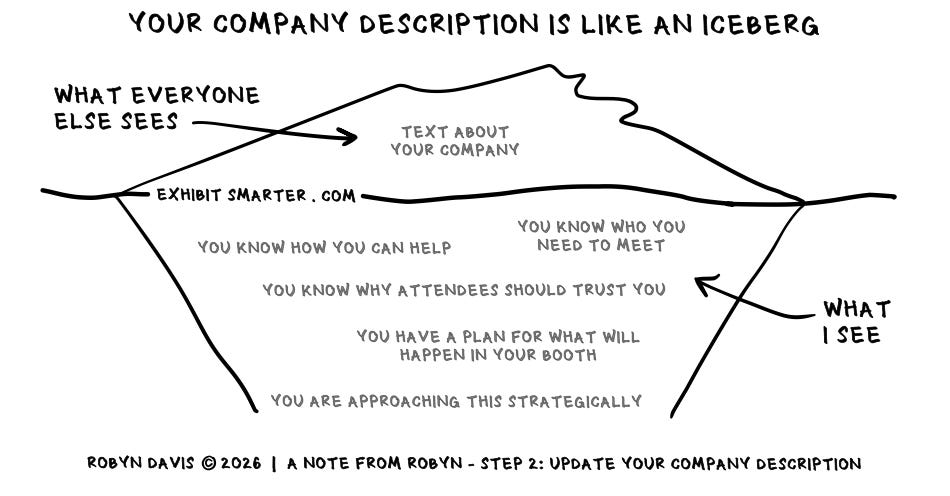
She did not set out to do any of this. By her own account she fell into events — the industry found her before she found it — and what kept her there was less a passion for trade shows than a compulsion to figure out why they worked when they worked and failed when they failed. Her earliest exposure came through temporary work on the experiential side, the kind of on-the-ground assignments a young person takes without imagining they add up to a career. But Davis has the engineer’s reflex of treating a messy situation as a system with a solution hiding in it, and she started keeping track — noticing what moved people through a space and what left a booth stranded, cataloging the patterns until the patterns became frameworks. The frameworks became a company. The temp job became a calling she backed into, which is its own kind of answer to anyone who thinks a career has to be planned to be real.
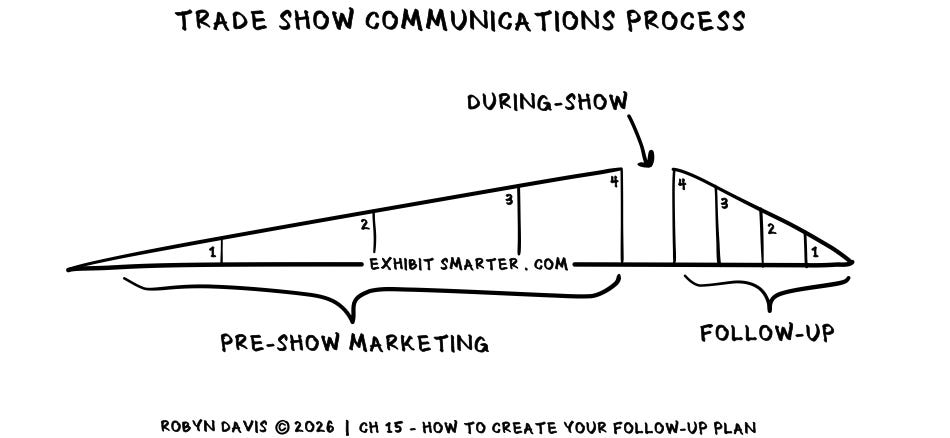
She teaches, in other words, the most overlooked constituency in the gathering economy, and she teaches them on a philosophy that is worth stating plainly because it is the opposite of the usual expert’s posture. Davis does not believe in her way or the highway. The through-line of her training, and of her book, is that exhibiting is an iterative process — that there are better and worse ways to do things, yes, but that the glass is half full rather than half empty, because there is always another show, another chance to improve, more room to grow for anyone who wants it. She works hard to make the material approachable, to meet exhibitors where they actually are rather than where a checklist says they should be. The last thing she wants is for someone to conclude that because they cannot do everything perfectly today, it isn’t worth doing anything at all. Accessibility, she will tell you, is close to a core value. It is the rare trade-show expert whose central message is permission.
The credentials behind the philosophy are not soft. She holds the CEM, the Certified in Exhibition Management designation from the International Association of Exhibitions and Events, earned in October 2023, and the CPTD, the Certified Professional in Talent Development, which is the training profession’s serious credential rather than a weekend certificate. She earned a Bachelor of Science in Aerospace Engineering from the University of Tennessee, Knoxville, with minors in Adolescent Health and Psychology — a combination that, read in hindsight, looks like a blueprint for the teacher she became: systems, human development, behavior. A person who studied how complex things hold together, how people learn, and why they act as they do, and then aimed all three at a discipline almost nobody teaches.
Her standing in the field is a matter of record. In December 2025, at Expo! Expo! in Houston, IAEE awarded her its Distinguished Service Award, presented by awards committee past chair Bob O’Connell — recognition reserved for members who have given extraordinarily to the association and the industry. She came to it by showing up: one hundred and thirteen IAEE events by the association’s count, cross-country travel to support chapters from the Southeast to the Rocky Mountains, service as South Carolina’s State Captain for the Exhibitions & Conferences Alliance Legislative Action Day. As the inaugural chair of IAEE’s Community, Engagement, and Belonging Committee in 2024, she ran the committee’s founding year in the open — a #BuildInPublic approach, in her shorthand — leading more than forty members and setting a transparency standard IAEE later presented nationwide. She does not build behind a curtain, which is itself a form of the accessibility she preaches.
The people who have worked with her tend to describe the same person twice. Her mentor Janet Sperstad, a foundational thinker on event design as a cognitive discipline, calls Davis’s gift for designing a workshop that creates safe, open space while still delivering hard technique unparalleled. Tommy Goodwin of the Exhibitions & Conferences Alliance, who met her at IMEX Las Vegas in 2019, calls her simply a superstar of the business events industry. The recommendations run long and they rhyme: she tailors, she follows up, she makes the room feel welcome without lowering the bar. One former client, asked for a single word, chose phenomenal.
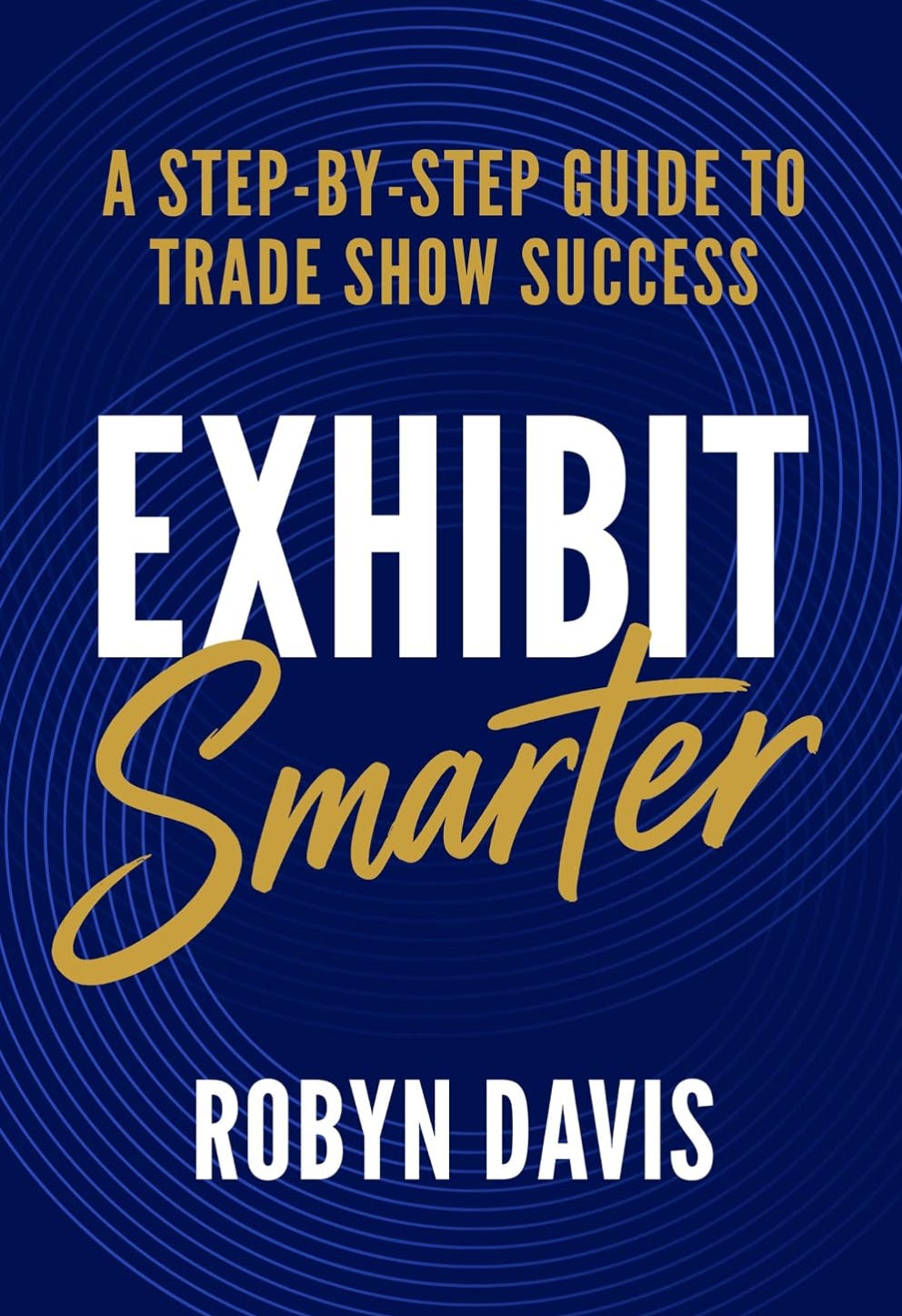
Which brings us to the book, which is the occasion for all of this and, as of this week, a real object in the world.
Exhibit Smarter: A Step-by-Step Guide to Trade Show Success is out now, published by Astro Bunny Press, her own imprint. It is the distillation of nearly seventeen years of advising exhibitors at some of the largest shows in the country — the SHOT Show, CONEXPO-CON/AGG, IMTS among them — and it is built around the framework she has taught for years: five essential steps, running Event Selection, Initial Planning, General Preparations, On-Site Efforts, Follow-Up, and Evaluation. Around that spine she arranges the questions she wants every exhibitor to sit with, the bluntest of them being why anyone should visit your booth instead of doing literally anything else, and the measurement discipline most exhibitors skip entirely — return on investment, return on objectives, net impact, a balanced scorecard. Kirkus, reviewing it, singled out the pencil drawings as engaging and the language as clear and digestible, which is the accessibility she preaches showing up on the page.
The origin detail is the one worth keeping. The first stranger to read the book — the first person who was neither a friend nor someone she was paying — was Gary Shapiro of the Consumer Technology Association, the organization that produces CES, and his encouragement, she says, mattered. She debuted the print edition at Trade Show Executive’s Gold 100 Summit, kept proof copy number one for herself, and handed copies two through two hundred and one to the attendees. For a book about the overlooked, it is a fitting way to enter the world: not through a retailer’s algorithm but hand to hand, in a room full of the people who run the shows.
What the book makes explicit is the thing she has believed all along. Davis spent years arguing that exhibitors are the industry’s most neglected constituency and that the shelf of business books holds almost nothing to help them. Rather than wait for the shelf to fill, she filled it. Her message inside the covers is the same one she brings to the training room — that exhibiting is iterative, that the fundamentals are what most people skip, and that everyone has the opportunity to exhibit smarter if they are willing to keep getting better.
That is the story, and it is a better one than any secret. Not a prodigy, not a next-generation voice — she has worked at this too long and won too much for either frame to fit. Something steadier: a private person who decided to become visible on purpose, for a professional reason she believes in, so that the exhibitors who need the most help and ask for it the least might finally have somewhere to turn.
What Robyn Davis leaves in the vault — the transferable principles, lifted from her practice.
Better beats perfect. Exhibiting is iterative. The goal is never to get it flawless; it’s to get it better than last time, because there’s always another show and another door.
Meet people where they are. Accessibility is a teaching value, not a nicety. The worst outcome is someone deciding that because they can’t do everything right, it isn’t worth doing anything.
The edge is in the fundamentals everyone skips. Most exhibitors reach for the clever and neglect the basic. The basic, done on purpose, is the advantage.
Ask the brutal question. Why should anyone cross the hall to your booth instead of doing literally anything else? If you can’t answer it, you aren’t ready.
Measure what you came for. Not badge scans — return on investment, return on objectives, net impact. Decide the goal before the show, then prove it after.
Reach the people who won’t come looking. The ones who most need help ask for it least. Build the help so it finds them, rather than waiting for them to find it.
A career doesn’t have to be planned to be real. She fell into events and backed into a calling. The engineer’s instinct — treat the mess as a system with a solution hiding in it — did the rest.
If the shelf is empty, fill it. She stopped waiting for someone else to write the book exhibitors needed and wrote it herself.
Sources
Robyn Davis, CPTD, CEM — LinkedIn — biography, credentials, degree, experience, recommendations
Exhibitors WINH LLC — LinkedIn company page — client organizers (NSSF, RE+, AEM, RSNA) and the gift-to-exhibitor model
Robyn Davis Shows How Leadership and Lifting Others Transforms an Industry — IAEE — Distinguished Service Award, CEB Committee, the “why I wrote the book” framing
How Robyn Davis, CPTD, CEM’s New Book Will Help Exhibitors Succeed — Trade Show Executive — Gary Shapiro, the Gold 100 debut, proof copy #1
Rewriting the Trade Show Playbook, with Robyn Davis — “Event Peeps” podcast, Event Marketer — “fell into events,” nearly 17 years, the four strategic questions
Exhibit Smarter — Kirkus Reviews — five-step framework, the pencil drawings, release
Exhibit Smarter — book site — the book’s own description and framework names
SHOT Show Exhibitor Academy — NSSF — her ongoing role facilitating exhibitor education
EXHIBITORLIVE speaker bio — shows she creates programs for (SHOT Show, RE+, CONEXPO-CON/AGG)


Listen to the Song

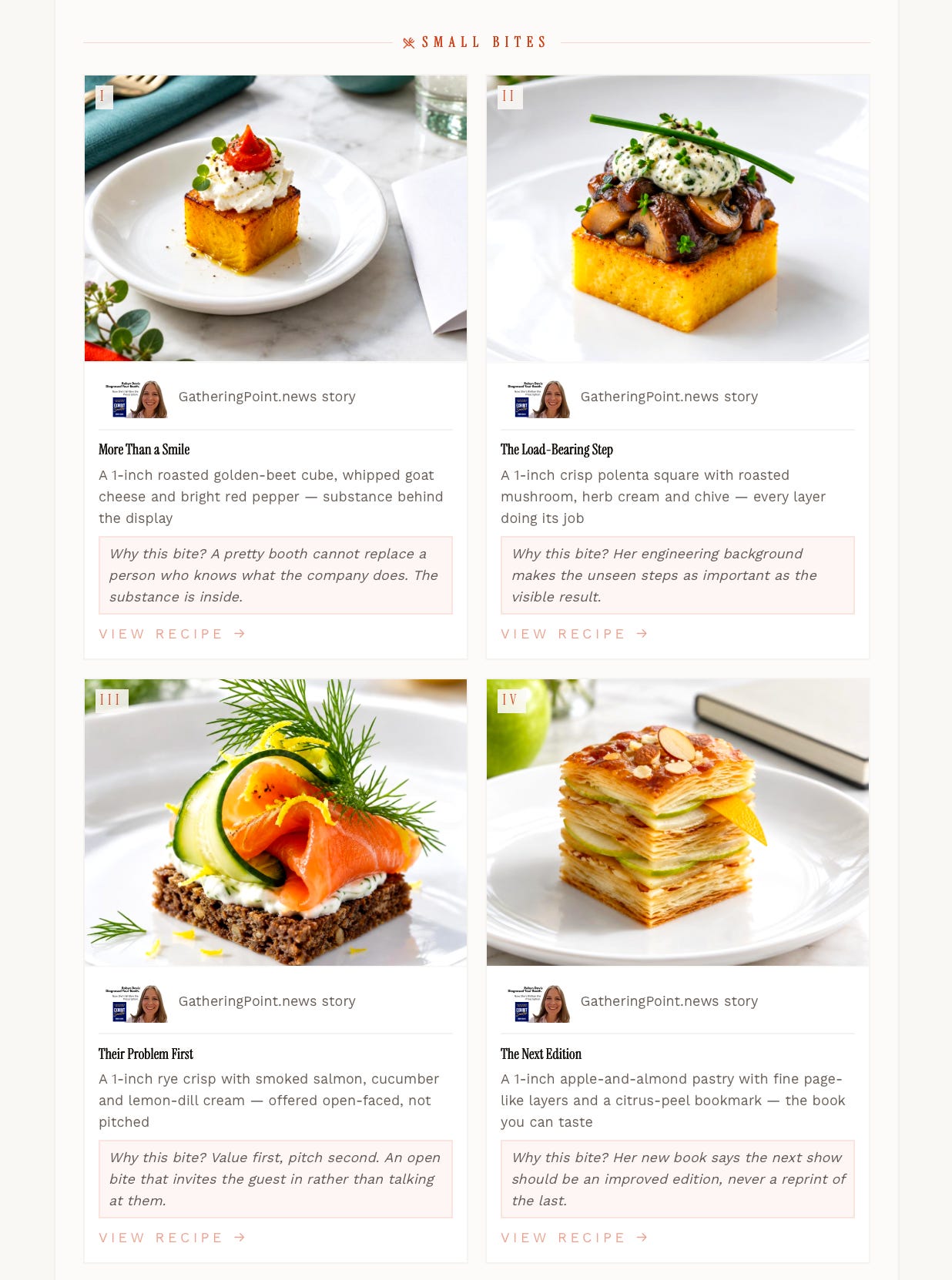
Edible Profile of Robyn Davis