


Here is an idea that our industry needs: What a fight promoter who spent twenty-six years counting movie tickets taught me about the gap at the center of our industry
There was a cage on the South Lawn of the White House recently. Ilia Topuria defended his UFC lightweight title inside it, on federal grounds, in front of a crowd sitting in folding chairs where presidents have walked their dogs and hosted state dinners. Washington was being genuinely strange, even by its current standards.
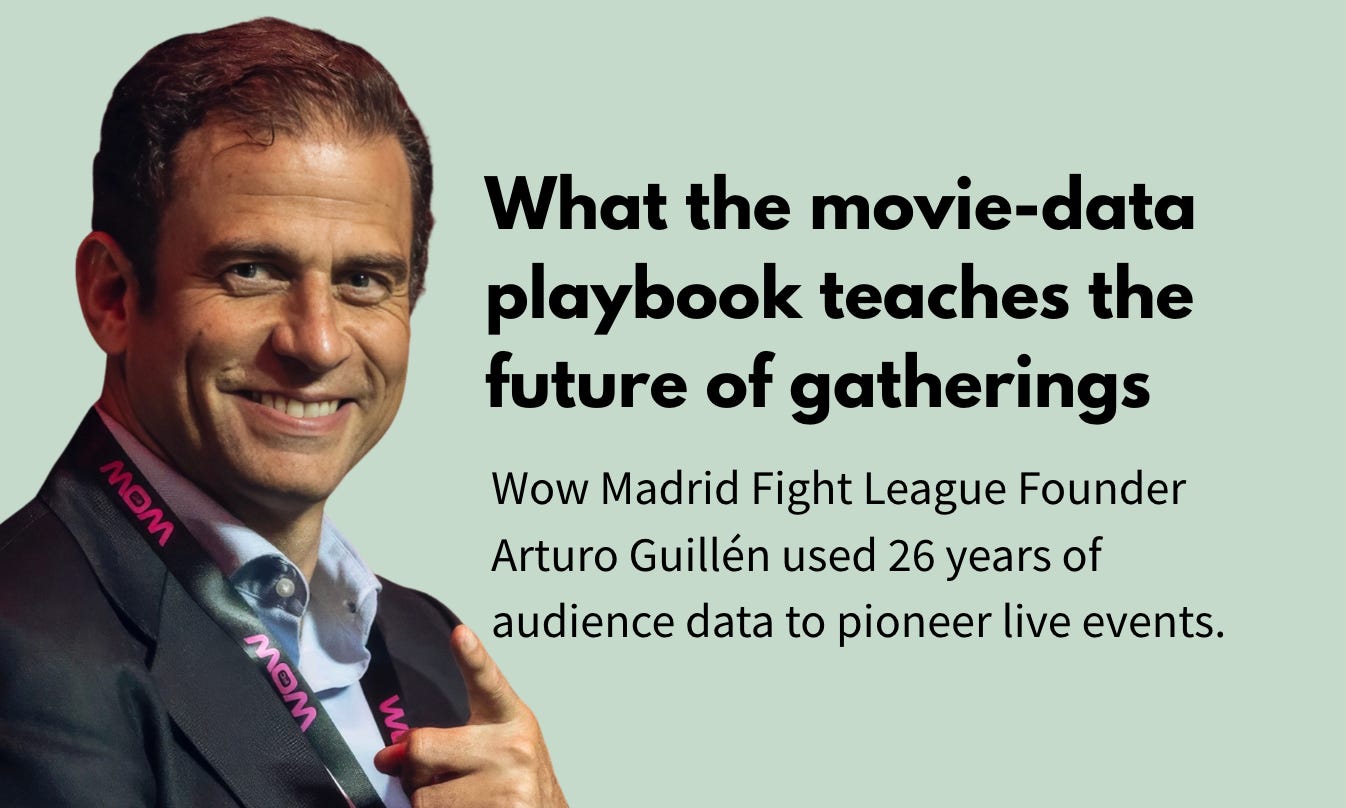
I was not there, and neither was my brother, whose close YPO friend happens to be the man who built the promotion Topuria fights for. That man is Arturo Guillén, the founder of WOW FC, a Madrid-based fight promotion, and I spent time with him recently in Washington. The conversations we had reminded me of an idea I have not been able to let go of, an idea that has nothing to do with cage fighting and everything to do with the business most of the people reading this have spent their careers inside.
Here is the idea, plainly stated: the gathering economy, the trade shows and consumer expos and medical congresses and fan conventions and regional home shows and agricultural fairs and gaming tournaments that collectively represent one of the largest mobilizations of human attention on earth, has no public scoreboard. Every other form of live experience built one years ago. We never did. And I think it is time to talk seriously about what it would take to change that.
The man who spent twenty-six years counting tickets
A case for a neutral scoreboard for the industry?
Arturo Guillén did not come to fighting through fandom. He came to it through data, which is where he came to almost everything. For most of his career he ran the global theatrical box office for what eventually became Comscore Movies , overseeing Europe, the Middle East, and India for an operation that tracked ticket sales across tens of thousands of screens in more than seventy countries. When you buy a movie ticket in a Comscore market, the sale travels down an electronic pipe into a central system almost immediately. By the next morning, before the trades can print the story, the industry knows exactly how many people went to the movies, to which titles, in which territories, and what they spent. Not a survey. Not a model. A near-census of an entire entertainment category, reconciled overnight, every single day.
Who is Arturo Guillén in song. Putting out an idea that should be considered.
He did not stumble into the fight business because he loved violence. He was skeptical of it, by his own account, the way most people are before they actually look. The UFC was a client of his data company, which had been hired to measure attendance for the sport. Arturo went to see what he had been measuring, and what changed his mind was not the fighting. It was the training. Young people in a gym, learning through physical discipline something they had not been able to learn anywhere else, about focus, about pressure, about who they were when things got hard. A data man talked himself out of his own prejudice with evidence, which is a more honest origin story than the usual conversion narrative and considerably more useful, because it means the snobbery that keeps most of the events industry from paying attention to combat sports is something he personally overcame by actually looking.
What he built out of that conversion is instructive in ways that go well beyond the cage. WOW FC ran six years of sold-out events in Spain before Topuria became a world champion, and before Cristiano Ronaldo became a shareholder. The celebrity arrived after the audience. That sequence is not incidental. It is the whole lesson. The name is an accelerant for demand you have already located. It cannot manufacture demand from nothing. Every operator who has ever been told to go get a big name to drive ticket sales should understand that the name is the last move, not the first, and that doing it first is how you lose your shirt on a beach with no tents.
He also understood, from two and a half decades of box office data, that measurement is not an epilogue. It is the precondition. The movie industry does not have a feel for its audience. It has the number, and it has it before the news can print it. That is what an industry looks like when it has decided its audience data is an asset rather than an afterthought.
The sensors are there. The spine is not.
I want to be precise about the gap, because the events industry tends to hear “you need better data” and think it means buying new technology. That is not what I am saying. The technology arrived years ago and the good operators use it: RFID badges that log every session entry, Bluetooth beacons that map floor movement to within a few meters, heat maps that show which aisles ran hot and which booths sat empty by two o’clock on the second day, lead-retrieval systems capturing every exhibitor conversation. The Professional Convention Management Association has tracked nearly a hundred sessions at its own flagship event this way. The sensors exist.
What does not exist is the spine. Comscore’s power was never the turnstile. It was that one reconciled feed covered tens of thousands of screens across seventy countries, every day, in the same format, so a trend in one market was legible against every other. The events industry collects the same class of data and then strands it: a heat map that lives in one exhibitor’s post-show deck, a dwell-time report the venue keeps and the organizer never sees, a registration list that never gets joined to last year’s, three vendors whose systems do not speak. Each show starts its measurement over from zero. Comscore would have been worthless if every theater chain kept its numbers in a different drawer. That is precisely how most event portfolios keep theirs.
The result is an industry that knows its own gate and cannot see the market. Your show knows how it did. It cannot tell you whether consumer shows in your category are growing or contracting nationally. It cannot tell you which niches are heating up in markets three time zones over, or which buyer cohort is starting to surge a full cycle before your competitors notice. It cannot tell you whether the regional home show is gaining ground on the regional garden show, or whether the medical congress in one specialty is pulling attendees that used to go somewhere else. These are not exotic questions. They are the questions that determine where capital should go, which shows deserve investment, and which categories are about to break before anyone can see it coming.
What every other attention economy figured out. Film has Comscore. Music has Pollstar, which has tracked concert grosses since 1981. The Broadway League has published its weekly box office numbers since 1979, every single week, without interruption, so anyone can see what the New York theater market is doing in real time. Sports has a century of public attendance data so deeply embedded in the culture that the numbers are part of how fans talk about whether a franchise deserves to survive.
The gathering economy sits at the center of all of them. It asks more of its audience than any of them, more money, more time, more logistical commitment, more advance planning, more of the finite resource that everyone in live experience is competing for. And it has no equivalent of any of it. No neutral behavioral census. No weekly number. No public scoreboard that lets the whole industry see itself moving at once.
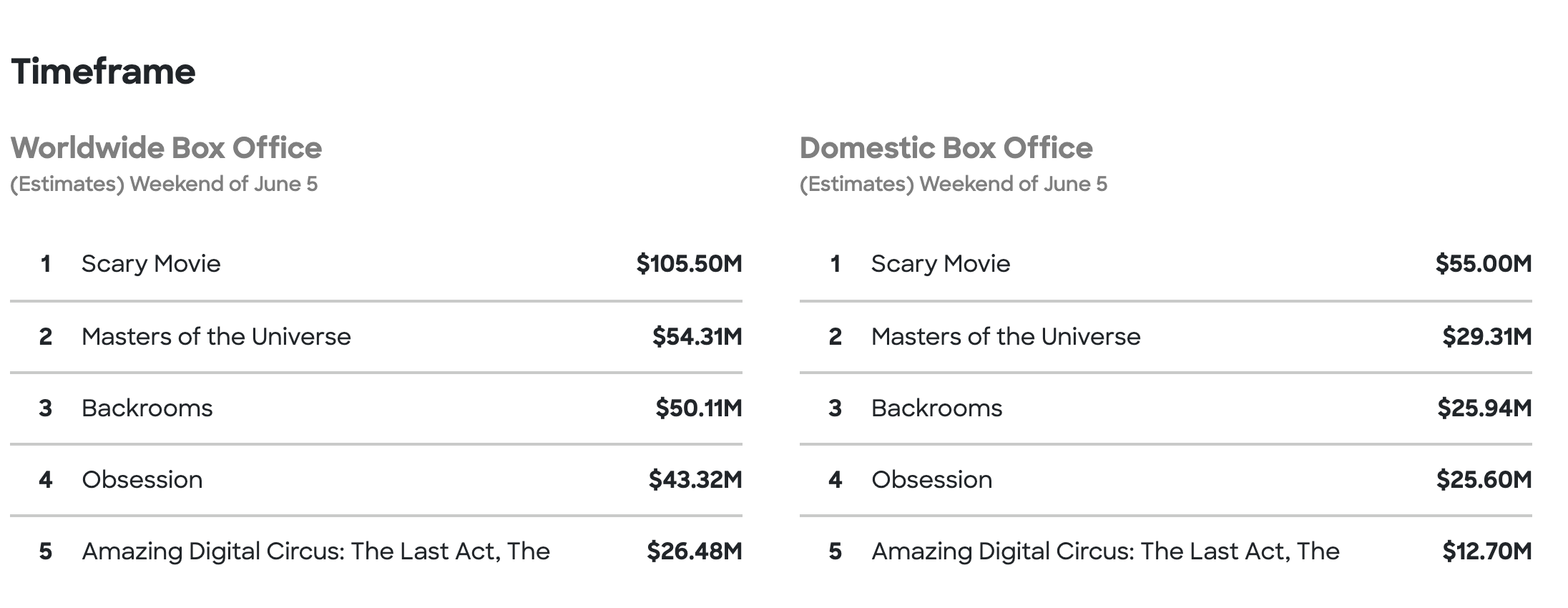
There is a number attached to that seat now, and the timing is almost too neat. Recently a private equity firm called Advaya Capital bought the Comscore box office division outright for about seventy million dollars in cash, restoring its original name, Rentrak. Consider what changed hands. Transaction-level data from roughly thirty-four thousand theaters and more than two hundred thousand screens across seventy-plus countries, covering about ninety-five percent of the global box office and nearly all of North America’s. Studios and exhibitors use it for release strategy, financial settlements, talent compensation, licensing decisions. The buyer called it the gold standard for nearly fifty years and intends to deepen the dataset and build predictive analytics on top of it.
Arturo joins the Rentrak board. Sit with the shape of that. The man who spent twenty-six years counting tickets, then built a fight promotion on what the counting taught him, is now on the board of the counting house itself while fresh capital pours in to expand it. He is on both sides of the line at once, the operator and the scorekeeper.
Now hold that seventy million against our own industry. That is the price of the scoreboard for one entertainment category, a category with fewer venues than we have convention centers and exhibit halls. The gathering economy is larger, more fragmented, and moves more money through more cities, and it has no equivalent asset because no one ever built one. There is nothing to buy. The seat in ours is not just empty. It has never been occupied, which means nobody has ever collected the rent.
CEIR , the Center for Exhibition Industry Research, which operates inside IAEE (https://www.iaee.com/), does real and serious work. I want to be clear about that because CEIR deserves its due and because the distinction matters. But CEIR is deep research, periodic and modeled, built for the B2B exhibition world and not designed to function as a public, real-time census across the full gathering economy. It is closer to an academic journal than a box office report. The industry is fortunate to have it. It is not the same thing as the scoreboard I am describing, and the people who run it know that better than anyone. My first call when this idea started taking shape was to the researcher at IAEE who knows that data landscape as well as anyone alive. She agreed the gap was real.
What the scoreboard would actually show us
Imagine a weekly number. Not one show’s registration count sitting in one organizer’s spreadsheet, but an aggregate read across categories: consumer shows up or down, trade show attendance in manufacturing trending which direction, medical congresses in which specialties drawing bigger rooms, fan conventions in which niches breaking out in which markets. The kind of forward signal that tells an operator, or an investor, or a first-time entrepreneur, where the audience appetite is moving before the rest of the field can see it.
Arturo knew where mixed martial arts was going in Spain years before the mainstream noticed, because he had been reading audience data across the whole entertainment category long enough to recognize a pattern when it was still forming. He built six years of shows on that read before a single global name attached to it. The scoreboard did not make him a genius. It made him legible to himself. It gave him a position in a real market instead of a feeling about a private one.
That is what the gathering economy has never had. Not a feeling. A position. The ability to see your own show against the whole field, your category against the other categories, your market against the markets where something is quietly happening that you are the last to know about.
An open question to this community
I want to be honest about the limits of what I know. I am not announcing a company. I am not presenting a finished architecture. I do not have the full picture of what building this would take, who the right partners would be, or what the governance of a neutral third party would need to look like to earn the trust of an industry that is competitive and protective of its own numbers.
What I do believe is that the dataset I am describing, a public, neutral, behavioral census of the gathering economy that runs weekly and spans categories, is something the market would value and the industry is ready for. Every comparable attention economy built this infrastructure and was valued accordingly once it existed. The gathering economy is the last one that has not.
I will say this plainly. If I were not past seventy I would not be writing about this idea from the outside. I would be leading it. I know enough about what is missing and why it matters to have made that the work. But the person who builds this does not need to be me. They need to understand what Arturo understood, that the neutral party in the middle, the one everyone trusts to hold the number, ends up owning something more durable than any single show. That seat is still empty. Someone in this community should take it.
If others see the gap the same way I do, I am happy to play whatever role makes sense. GatheringPoint is a good place to start that conversation, and this feels like the right moment to open it.
The cage on the South Lawn is gone. The gap in our industry is still there. That is the story I came back from Washington wanting to tell.
GatheringPoint covers the people who build the gatherings. Subscribe at GatheringPoint.news (https://gatheringpoint.news/subscribe).
Yes! Arturo is proof of the saying, 'track it to hack it'! Nice article, David. Well done.