


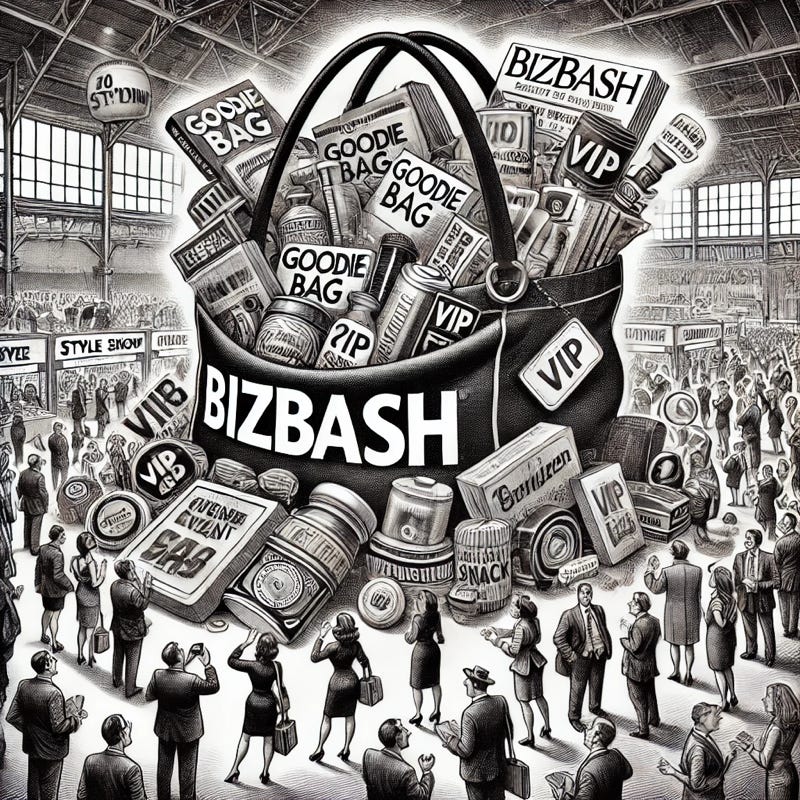
Twenty-five years ago, at the first BizBash Fresh Idea Show, we set out to do something that had never been done before. Events had long relied on goodie bags as a way to extend their brand beyond the ballroom doors, but we wanted to turn that concept into a spectacle.
And so, we created the world’s largest goodie bag—a 30-foot-tall, overstuffed monument to swag that stood at the entrance of the event. People stopped in their tracks to stare at it. They pointed, whispered, speculated about what was inside. The very presence of the bag created an energy that transformed the way people interacted with the event. It wasn’t just about what they were getting—it was about belonging to the moment, about participating in something bigger.
But the real genius of this goodie bag wasn’t just its size. It was what it contained.
Yes, there were tangible items, but what made it truly irresistible were the experiences inside: luxury vacations, catered dinners, exclusive VIP access, and one-of-a-kind event invitations. It was the ultimate anticipation machine, a thirst trap before the term even existed—a way to make attendees crave what was inside before they even knew what it was.
By the time we announced the winner, the anticipation had reached a fever pitch. The winner wasn’t just receiving prizes; they were being celebrated. The audience wanted to see what would happen next. They wanted to be a part of it.
And that’s when it hit me: a goodie bag isn’t just a bag of stuff. It’s a psychological tool, a social currency, a tangible manifestation of an experience. It has the power to turn attendees into loyalists, to create a sense of exclusivity, to make an event stick in someone’s memory long after the chairs are stacked and the stage lights go out.
But just as a great goodie bag can elevate an event, a bad one can be an embarrassment—worse, it can backfire, leaving guests with a negative impression of the event and its organizers.
So what makes the difference? Why do people crave free stuff, and what happens in their brains when they receive it? And as the world of events evolves, does the traditional goodie bag still have a place?
Swag and Belonging: Why We’re Wired to Love It
Swag isn’t just about freebies. It’s about tribalism, identity, and affiliation.
Think about the first time you ever really wanted a branded item. Maybe it was a concert T-shirt, a letterman jacket, or a sports team cap. You didn’t just want the item—you wanted to belong.
In politics, campaign buttons, T-shirts, and hats have long been used as symbols of solidarity. From “I Like Ike” buttons in the 1950s to the MAGA hat in the 2016 election, swag has become a way to publicly align yourself with a movement. Wearing the item isn’t just a fashion statement—it’s a badge of belief, a declaration of identity.
The same principle applies in the corporate world. Employees love branded hoodies, backpacks, and water bottles from their companies because these items signal membership in an exclusive club. Even billion-dollar companies like Google and Facebook put effort into their employee swag, knowing that a simple branded fleece can make someone feel like they’re a part of something important.
The psychology is simple: When we put something on, we absorb its meaning. When we carry something, we carry the experience with us.
A good goodie bag makes attendees feel chosen. A bad goodie bag makes them feel like they were given leftovers.
The Science of Swag: Why Free Stuff Feels So Good
People don’t just like free stuff—they’re wired to love it.
The Dopamine Rush of Anticipation
The act of waiting to receive something, especially if it’s a surprise, triggers a dopamine rush—the same chemical reaction that makes us addicted to Instagram likes and casino games.
This is why the most effective goodie bags aren’t just handed out at the door. Instead, they’re revealed at a key moment in the event, when the crowd’s energy is at its highest.
The Endowment Effect: Why We Overvalue What We Own
Once we own something, our brains assign it more value than it actually has. A simple branded notebook or a sleek event-branded tumbler suddenly feels premium and exclusive simply because it belongs to us.
Reciprocity: The Power of Giving
Dr. Robert Cialdini, in his book Influence: The Psychology of Persuasion, explains that when people receive a gift, they feel compelled to give back.
This is why premium, thoughtful swag isn’t just a giveaway—it’s a tool for deeper engagement.
Final Thought: The Near-Science of a Perfect Goodie Bag
A good goodie bag isn’t just about handing out free stuff—it’s about understanding how people think, feel, and engage with gifts.
A great goodie bag is:
✔ Anticipated – Builds dopamine before it’s even opened.
✔ Exclusive – Makes the recipient feel chosen.
✔ Valuable – Engages the Endowment Effect to increase attachment.
✔ Strategic – Uses Reciprocity to drive brand loyalty.
✔ Tactile & Sensory – Includes food or experiences that trigger emotional connections.
At its best, a swag bag isn’t a throwaway—it’s an event moment. It’s a social currency, a memory anchor, and a reason people will want to come back.
And that’s exactly what we learned 25 years ago with the world’s largest goodie bag. It wasn’t just a massive tote stuffed with items. It was an anticipation machine, an experience generator, and a symbol of everything BizBash stood for: big ideas, bold executions, and unforgettable moments.
The lesson? Swag is more than stuff—it’s science. And when it’s done well, it’s an event element that people won’t just take home—they’ll carry it with them, long after the lights go down.
Let’s talk swag: What’s the best (or worst) goodie bag you’ve ever received? What was inside that made you keep it—or immediately toss it?