
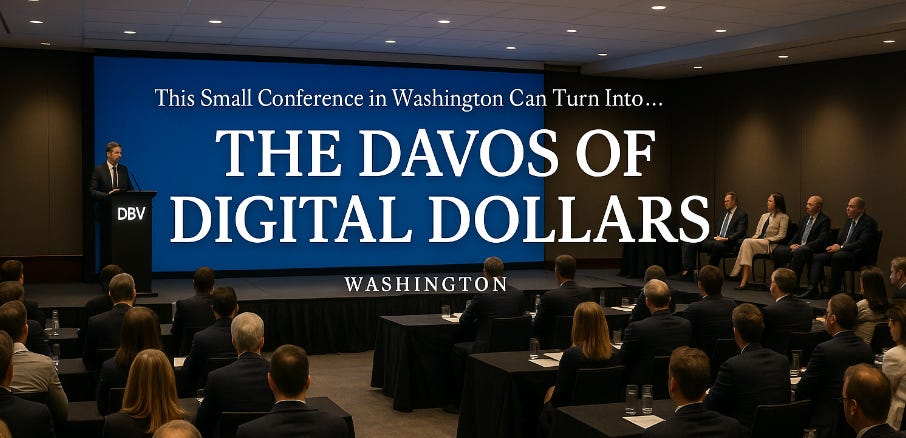
Stablecon: The Little Conference That Could Reprogram the Dollar
A Washington Conference on Stable Coins Just 8 Weeks After The Bill Authorizing This New Approach to Reinventing the Dollar
Washington is used to hosting world-changing meetings. State dinners. Nuclear summits. IMF roundtables. But next month, just off the Beltway, a quietly radical gathering is about to unfold—and it’s not about diplomacy, climate, or tech hype. It’s about the dollar. More precisely, the reinvention of it.
The event is called Stablecon, and on the surface it looks almost provincial: two thousand attendees, a few keynote names from finance and crypto, and no gala, no red carpet, no headlines. But beneath that modest shell lies something rare: a summit where the entire plumbing of global value exchange is being rewritten—legally, technologically, and culturally.
Until a few weeks ago, the world of stablecoins—blockchain-based dollars pegged to fiat and built for speed—was still half outlaw, half experiment. But with the sudden passage of the GENIUS Act in July, the U.S. became the first major government to offer full federal legalization of stablecoins, giving them structure, oversight, and legitimacy. And now, Stablecon finds itself at the center of that story. It didn’t chase the headlines. The headlines are catching up to it.
The real signal is who’s in the room: Circle, Coinbase, PayPal, Visa, Ripple. And regulators not just from the U.S., but from every jurisdiction now trying to decide whether to compete with or copy the American model. Stablecon isn’t a crypto circus. It’s a financial policy rehearsal dressed as a mid-sized industry conference.
Conferences like this are rarely glamorous at the beginning. But they are always where the next age of infrastructure begins. Sundance once premiered streaming. CES once launched smart homes. Dreamforce once previewed the SaaS revolution. Stablecon is playing a quieter game—but one with global stakes. The people gathering here aren’t selling a new coin. They’re reprogramming how payroll, commerce, and credit will work in the next decade—and making sure the dollar doesn’t fall behind as programmable money becomes the global norm.
And that has implications for everyone, especially in industries like events, media, and culture, where value flows fast, across borders, and under pressure. Stablecoins may finally kill the wire transfer. They may make vendor payouts instant. They may let a keynote speaker in São Paulo get paid in real-time after walking off stage in Las Vegas. They may reinvent ticketing, tipping, loyalty, and how cash actually behaves in physical space. If you’ve ever waited three days for an invoice to clear, or paid $45 in international banking fees to book a videographer—this is your moment.
Right now, Stablecon still has that “if you know, you know” feel. It’s not flooded with influencers or branded content lounges. There’s no merch wall. But the people going know exactly what they’re building. And the ones who don’t go will read about it later—in Bloomberg, in Congressional hearings, in the terms and conditions of their next financial app.
In a year, Stablecon could be a major global summit. In five, it may be the credential everyone brags about having attended early. But next month, it’s still small enough that if you’re in the room, you’re not just watching history—you’re helping write it.
Because in Washington, power usually moves through legislation or war rooms. But every so often, it starts in a breakout session no one was watching—until suddenly, everyone was.


