THE GREAT DIVIDE: HOW PCMA’S “20 IN THEIR TWENTIES” CAPTURES THE INDUSTRY’S BEFORE AND AFTER
PCMA’s 2026 honorees, contrasted with the 2019 class, reveal the exact moment the Meetings Industry became the Gathering Economy.
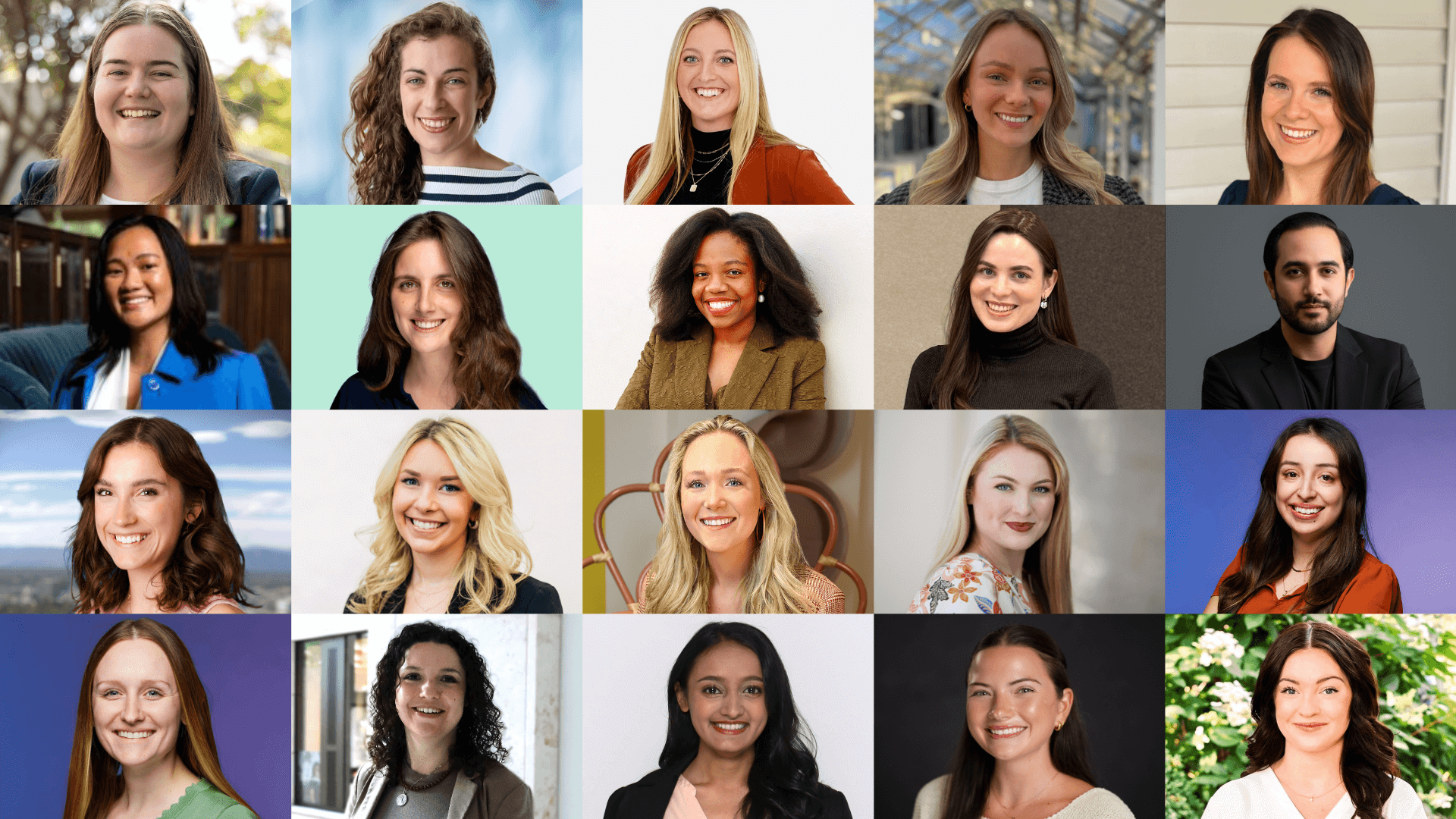
It was announced yesterday, with the polished confidence PCMA brings to these moments, that the organization has selected its “20 in Their Twenties” Class of 2026. On its surface, it appeared to be the familiar ritual of spotlighting emerging talent just ahead of Convening Leaders. Yet the timing—and the composition of the list—landed with an unexpected charge. It became clear almost immediately that this was not simply another cohort being introduced to the industry, but a revealing snapshot of how profoundly the business-events profession has been rewired since the last class chosen before the pandemic.
Intrigued by the contrast, I went back to the 2019 list—the final class curated before the world shut down—and placed it alongside this new one. With all the analytical tools available today, I ran both lists through a deeper comparative lens. Yes, AI was part of that process. Some may find the idea mildly unsettling, but the outcome wasn’t a machine’s verdict; it was a kind of clarity, a way of surfacing patterns that had been hiding in plain sight. And what emerged was a portrait of an industry that has undergone nothing short of a transformation.
The 2019 cohort belonged to a world that still believed in its own stability. Their work unfolded inside associations and medical societies, tourism bureaus, global PCOs, and the well-practiced circuits of convention sales. You could hear the familiar rhythm of the old Meetings Industry in their titles: managing VIP programs, overseeing meeting operations, coordinating international congresses, nurturing tourism pipelines, supporting member education. Names such as Edward Bagsic, Raul Cavazos-Binder, Molly Holt, Kara Hsu, Giulia Ineke Sarri, and Veronika Ivanova carried the imprint of a field focused on logistics, hospitality, and the durable infrastructure of face-to-face convening. They were the last class shaped by the assumption that meetings would continue, largely unchanged, into the foreseeable future.
Then the comparison moves to the Class of 2026, and the contrast feels almost architectural.
You encounter Holly Barnett, forged in the project-management trenches of Touchpoint Meeting Services, operating with the adaptability required in an era defined by shifting expectations and fluid timelines. You meet Anasthassia Bohne-Gattesco, whose role at Messe München places her within the industrial engine of European exhibitions, where events are as much economic networks as they are gatherings. The Freeman imprint appears through Rilee Bradshaw, representing the production and logistics backbone of the business-events world. The geography broadens as Makenzie Brown steps in from the Scottish Event Campus, followed closely by Katharina Fressner at the Austria Center Vienna and Anna Schelling at the German Convention Bureau—young professionals already immersed in the global congress economy.
A different dimension surfaces through Giulia Ferrero of Swapcard, whose work sits at the intersection of behavioral data, audience intelligence, and year-round engagement—an entirely new layer of event architecture that was scarcely visible in 2019.
Yet nothing signifies the shift more clearly than the entrepreneurial presence of Saïda Florexil, arriving not as a rising manager within an established institution but as the CEO and founder of Imanyco. No one in the 2019 cohort held a comparable role. Her inclusion signals a recalibration of what the industry now values: innovation no longer flows only from legacy centers of gravity; it increasingly comes from those willing to build something that didn’t exist before.
The gravitational pull of scientific convening grows stronger with each name that follows. Sadie Noland and Ashlen Rosenbaum emerge from the Pediatric Academic Societies Meeting; Rachel Smith brings the Optica perspective; Blake Waravdekar arrives through the Association of American Medical Colleges; Shimal Jaykant enters from Medical Conference Partners. These roles represent one of the most intellectually demanding arenas of the convening world, where precision, compliance, and content rigor shape the very idea of what an event is supposed to accomplish.
Another thread emerges through civic and economic development, where Hannah Jennings at Visit Denver and Sydney Lowe at Heartland Forward reflect a growing understanding that events are not merely gatherings but instruments of regional identity, investment attraction, and public narrative.
And as the commercial dimension rounds out through Kaitlin Payne at NACS, alongside Abby Melville at BCD Meetings & Events and Juan Pablo Garcia at OZUM Events, the picture becomes unmistakable: this class understands events as marketplaces, platforms, and engines—not simply programs to be executed.
Placed on top of each other, the two cohorts feel as if they belong to different centuries rather than different sides of a pandemic. One reflects the world as it once was: steady, structured, contained. The other reflects the world that has emerged: fluid, global, digitally infused, scientifically rigorous, and increasingly entrepreneurial. The distinction is not in the talent but in the conditions that shaped it. The Class of 2019 entered a profession that rewarded steadiness. The Class of 2026 enters one that demands reinvention. The former learned to run programs; the latter learned to run systems. The former worked within inherited traditions; the latter must continually justify the value of gathering in a world that questions everything.
You can feel the shift not only in what these professionals do, but in what the industry now requires of them.
Which brings everything to the moment of visual reckoning—the side-by-side comparison that allows the transformation to reveal itself without a single line of commentary.
Placed in direct conversation, the graphics reveal something no paragraph can fully articulate: a structure giving way and another rising in its place. If the 2019 cohort stands as the final expression of what the Meetings Industry once was, the 2026 cohort emerges as the foundation of what the Gathering Economy is becoming.
PCMA may not have intended to reveal this transformation, but the lists did. And once seen, it becomes impossible to unsee.
WISDOM BANK TAKEAWAYS
• The talent pipeline has been re-engineered.
What once drew from associations, CVBs, and hotel-side operations now pulls from global venues, scientific convening, digital platforms, and entrepreneurial ventures. The center of gravity has shifted, and the industry is shifting with it.
• The post-pandemic generation is being trained for volatility, not stability.
The Class of 2019 entered an industry that rewarded steadiness; the Class of 2026 enters one that rewards adaptability, fluency, and strategic thinking born in uncertainty.
• Digital intelligence is no longer a specialty — it’s the bloodstream.
Names like Giulia Ferrero signal that behavioral data, platform ecosystems, and year-round engagement now sit at the heart of convening, not at the periphery.
• Scientific convening has become the new proving ground.
The rise of leaders from Optica, AAMC, and the Pediatric Academic Societies Meeting shows that the industry’s most complex, high-stakes work is shaping its future talent.
• Entrepreneurship is finally entering the room.
The presence of Saïda Florexil — a founder, not a functionary — reveals a generational permission to innovate from outside the established structures.
• Global fluency is now the baseline, not the bonus.
From Vienna to Mexico to Scotland, the 2026 class operates in a world where borders blur and convening is inherently international.
• The very purpose of gathering has changed.
Pre-pandemic honorees were stewards of continuity; post-pandemic honorees are architects of meaning, outcomes, and influence. The industry no longer celebrates those who maintain the system — it celebrates those who can redesign it.
• This is the hinge moment.
Viewed together, the 2019 and 2026 classes show the exact place where the Meetings Industry ended and the Gathering Economy began. The line is sharp, visible, and irreversible.