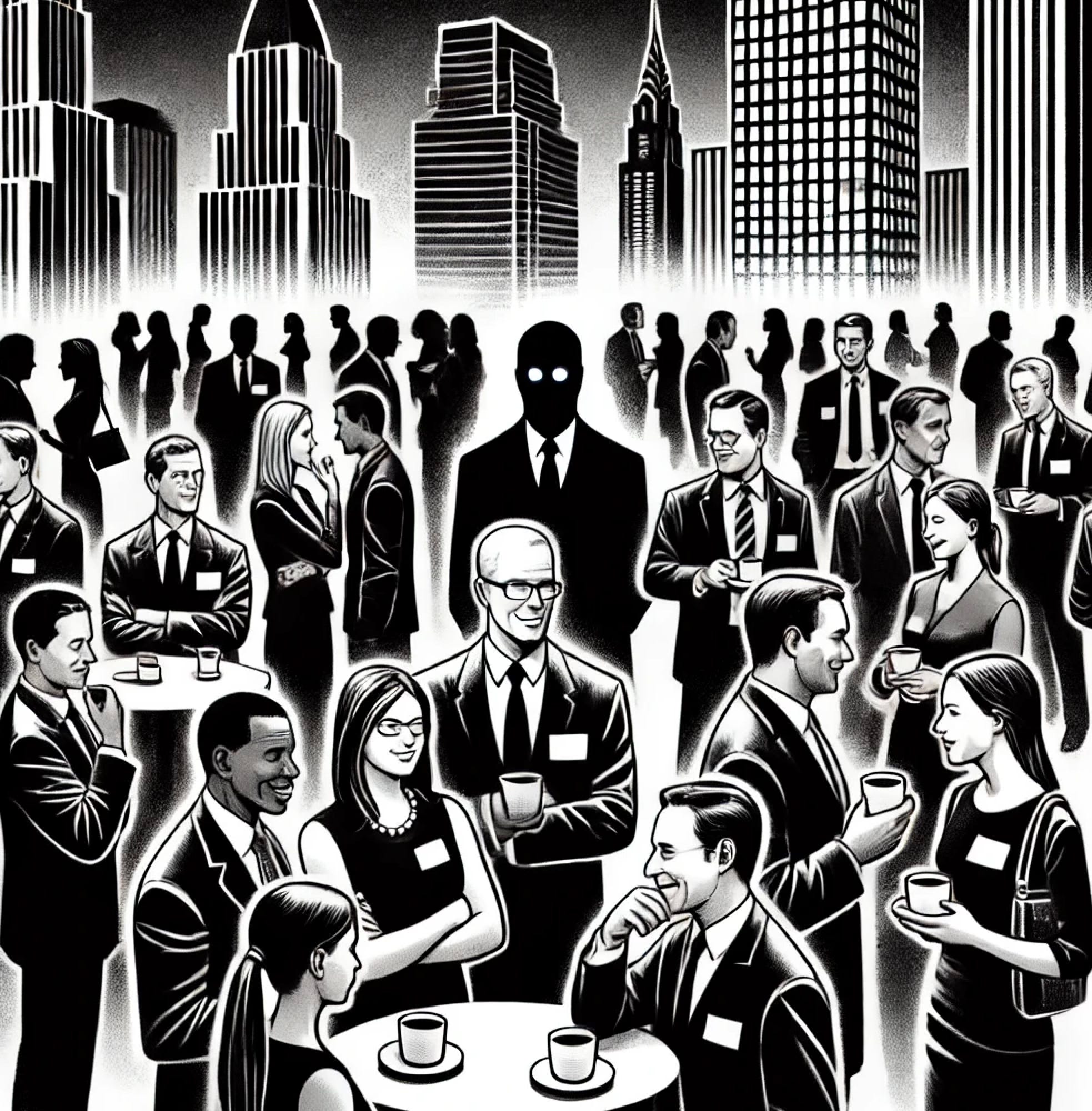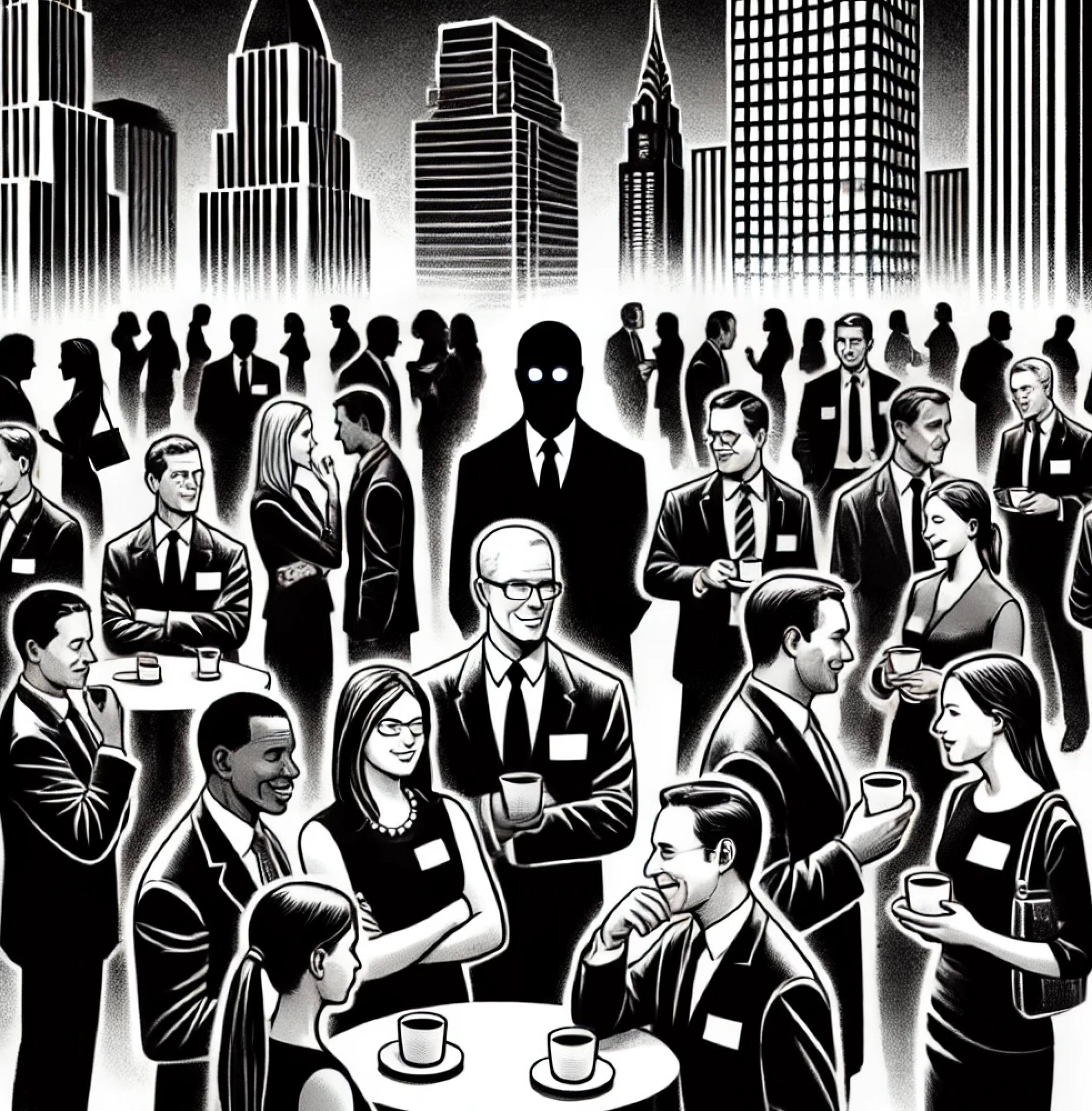
As the founder of [BizBash](https://www.bizbash.com), I've spent decades observing, reporting on, and shaping the events industry. Through countless conversations with planners, vendors, and attendees, I've celebrated the incredible power of events to transform businesses and build communities. But today, I need to address something darker - both the visible and invisible threats at our events. Silence isn't an option anymore – especially not now.
The Current Climate
We're living in an era where the guardrails of professional conduct are being systematically dismantled. Social media amplifies bad actors. Online communities normalize predatory behavior. The lines between professional and personal spaces are increasingly blurred. And in this chaotic environment, predators are finding more ways to operate with impunity.
"What we're seeing today is unprecedented," notes David Perl, Event Security Consultant. "The combination of digital vulnerabilities and in-person threats has created perfect hunting grounds for predators who know how to exploit our industry's natural openness."
The Evidence
According to a 2019 [Women Who Tech](https://womenwhotech.org/) survey, 44% of women in tech have experienced harassment at industry events. Studies of LGBTQ+ professionals reveal similarly alarming patterns - a 2023 survey by [Out in Tech](https://outintech.org/) found that 38% of LGBTQ+ tech professionals reported experiencing harassment or discrimination at industry events, with gay men particularly targeted at after-hours networking functions. The [FBI](https://www.fbi.gov/investigate/violent-crime/human-trafficking) and [Homeland Security](https://www.dhs.gov/topics/human-trafficking) consistently track spikes in trafficking around major conventions, affecting victims across all demographics.
"The statistics we see are just the tip of the iceberg," says Joan Eisenstodt, Industry Consultant and Advocate for Event Safety. "When we ignore patterns of predatory behavior at events, we're not just failing victims – we're enabling future abuse. These aren't isolated incidents; they're calculated patterns that repeat across our industry."
Understanding Predatory Personas: The Bad Actors Among Us
"Predators aren't wearing warning labels," observes Carrie Abernathy, Co-Founder of the Association for Women in Events. "They're often charismatic, well-connected, and use their reputation as a shield."
A Critical Note About These Personas
It's important to understand that these descriptions highlight warning patterns, not blanket condemnations. Our industry thrives on mentorship, networking, and professional relationships. Many industry professionals offer legitimate mentorship opportunities, create valuable networking events, help newcomers navigate the industry, and use their influence to uplift others. The key is recognizing when normal professional behavior transforms into concerning patterns.
A Critical Note About These Personas
It's important to understand that these descriptions highlight warning patterns, not blanket condemnations. Our industry thrives on mentorship, networking, and professional relationships. Many industry professionals offer legitimate mentorship opportunities, create valuable networking events, help newcomers navigate the industry, and use their influence to uplift others. The key is recognizing when normal professional behavior transforms into concerning patterns.
Here are the patterns we must recognize and stop:
1. The Power Harvester
"I can make you successful."
They dangle career opportunities, funding, or high-profile connections—but only if you play by their rules. Their goal? Control, manipulation, and forced dependence.
Warning signs: Overpromising opportunities with no real details, Blurring professional & personal lines, Preying on newcomers or early-career professionals, Using their influence to isolate targets, Creating situations of professional dependency
Real Example: A well-known industry figure offers to "mentor" young professionals, but only through private, off-site meetings. They hint at career-changing opportunities while slowly pushing personal boundaries.
Protection Measures: Establish formal mentorship programs with clear guidelines, Create structured networking environments, Document all professional interactions, Implement buddy systems for new industry members
2. The Serial Boundary-Crosser
"Oh, come on, don't be so uptight."
They push limits—physically, emotionally, socially. They test how much they can get away with and dismiss pushback as "a joke" or "misunderstanding."
Warning signs:Unwanted touching, invading personal space, Pressuring others into uncomfortable situations, Gaslighting people into thinking they're overreacting, Using alcohol to justify inappropriate behavior, Creating hostile environments for those who speak up
Real Example: A regular conference attendee known for "friendly hugs" consistently ignores personal space, makes inappropriate comments, then claims others are "too sensitive" when confronted.
Protection Measures: Zero-tolerance harassment policies with real enforcement, Clear reporting channels with protection from retaliation, Staff training on intervention techniques, Public consequences for violations
3. The Predator in Plain Sight
"Everyone knows, but no one stops them."
"The most dangerous predators are often the ones everyone knows about but no one confronts," notes Steven Adelman, VP of the Event Safety Alliance. "Their status becomes their shield."
They've done this before. People whisper warnings about them. Yet, they keep getting invited back, protected by their status, reputation, or enablers.
Warning signs: Multiple reports, no consequences, Event organizers who brush off concerns, People warning each other privately, Pattern of moving between industry segments, High-profile connections used as protection
Real Example: A prominent speaker known for inappropriate behavior continues to be booked at major conferences despite multiple informal complaints. Event organizers, fearing industry backlash, handle incidents quietly instead of taking public action.
Protection Measures:Create anonymous reporting systems, Establish industry-wide blacklist protocols, Implement zero-tolerance policies regardless of status, Support and protect whistleblowers, Share information between event organizations
4. The Alcohol Opportunist
"Let me get you another drink."
"The intersection of alcohol and networking creates particular vulnerabilities," says Joan London, Event Risk Management Specialist. "Predators know exactly how to exploit these moments."
They use alcohol as a tool—not to enjoy the event, but to weaken boundaries and impair judgment.
Warning signs: Pressuring others to drink more than they want, Targeting intoxicated people for "private conversations", Creating situations where refusing drinks is awkward, Organizing unofficial "VIP" drinking events, Using drink tickets or open bars as leverage
Real Example: A vendor repeatedly organizes "exclusive" after-hours events with unlimited alcohol, specifically inviting junior staff and new industry members, creating pressure to attend for "networking opportunities."
Protection Measures: Limit free alcohol at events, Train bartenders in predatory behavior recognition, Provide safe transportation options, Create alcohol-free networking alternatives, Establish clear policies about unofficial events
5. The Escape Artist
"Nothing ever happens to them."
"These individuals are masters of institutional gaps," observes Rachel Davis, Ethics Committee Chair at [Industry Association]. "They know exactly how to exploit the spaces between different organizations' jurisdictions."
Masters of avoiding consequences, they rely on institutional inertia and the discomfort around confrontation. They count on silence.
Warning signs: Moving between communities after incidents, Using threats or status to avoid consequences, Having a pattern of "misunderstandings", Manipulating bureaucratic processes, Creating complex explanations for simple accusations
Real Example: After facing multiple accusations at corporate events, a serial harasser switches to association events, then to trade shows, each time rebuilding their reputation while counting on lack of communication between sectors.
Protection Measures: Create cross-industry reporting systems, Maintain detailed documentation of incidents, Establish clear escalation procedures, Build networks for information sharing, Implement industry-wide consequence protocols
6. The Digital Stalker
"I saw your presentation earlier..."
"The digital dimension has made predatory behavior both easier to conduct and harder to prove," explains Michelle Bruno, Technology Journalist. "Event apps have become hunting tools in the wrong hands."
They use event apps, social media, and digital tools to track, harass, or manipulate attendees.
Warning signs: Immediately connecting on all social platforms after brief interactions, Using event apps to track session attendance, Finding and referencing personal information not shared at the event, Creating detailed dossiers on targets, Using multiple digital personas to make contact.
Real Example: An attendee uses event app data to track a speaker's entire schedule, shows up at every session, then uses gathered information to contact family members through social media, creating a comprehensive pattern of digital stalking.
Protection Measures: Implement strict privacy controls in event apps, Create opt-out options for attendee directories, Train staff on digital harassment patterns, Monitor unusual app activity patterns, Provide secure communication channels.
7. The Credential Exploiter
"Don't you know who I am?"
"Credentials and access have become weapons," notes Alan Kleinfeld, CMP, CMM. "What's meant to create security often becomes a tool for exploitation."
They weaponize their position, speaker status, or VIP access to gain private access to vulnerable attendees.
Warning signs: Demanding private meetings with junior staff or volunteers, Using speaker/VIP credentials to access restricted areas, Insisting on "exclusive" one-on-one meetings, Threatening to damage careers when denied access, Creating fake or modified credentials.
Real Example: A VIP exhibitor repeatedly uses their access badge to enter staff-only areas, cornering volunteers during setup times, claiming their status gives them special privileges.
Protection Measures: Implement buddy systems for staff and volunteers, Clear protocols for VIP access limitations, Regular security audits of restricted areas, Staff training on credential verification, Emergency response protocols for credential abuse.
8. The Group Infiltrator
"Our after-party is invite-only..."
"Unofficial events are the gray areas where most damage happens," warns Carrie Abernathy. "Predators create spaces just outside our protective reach."
They create or infiltrate seemingly legitimate networking groups or after-hours events to isolate targets.
Warning signs: Creating exclusive "unofficial" event groups, Hosting competing events during official safety breaks, Using legitimate sponsor names without authorization, Building private communication channels, Creating FOMO to pressure attendance.
Real Example: A group creates a fake "Young Professionals Network" that mirrors official industry organizations, using it to organize private events without safety protocols while collecting personal information from members.
Protection Measures: Maintain official event channels only, Partner with vetted local venues, Provide safe transportation options, Clear communication about official versus unofficial events, Monitor unauthorized use of event brands.
9. The "Helper"
"You seem lost, let me show you around..."
"Predators excel at identifying vulnerability," states Dr. Sarah Martinez, Event Security Psychologist. "International events are particularly challenging because cultural and language barriers create natural opportunities for exploitation."
They specifically target newcomers, international attendees, or those appearing vulnerable.
Warning signs: Hovering around registration/information areas, Offering unsolicited assistance to visibly confused attendees, Attempting to separate people from their groups, Claiming to be "unofficial" event staff, Creating unnecessary dependency relationships.
Real Example: An individual routinely positions themselves near the international registration desk, offering to "help" non-English speaking attendees with registration, then using this position to collect personal information and isolate targets.
Protection Measures: Official mentor/ambassador programs with clear identification, Multilingual staff at key locations, Buddy system for first-time attendees, Clear protocols for staff identification, Cultural sensitivity training for all staff.
10. The Digital Threat Evolution
"The rise of event apps and hybrid formats has created new hunting grounds," warns Michelle Bruno, Technology Journalist and Industry Analyst. "Predators have adapted faster than our safety protocols."
Digital Vulnerabilities: Event app exploitation, Social media stalking, Unauthorized recording, Digital credential theft, Location tracking through event platforms,
Protection Strategies: Privacy-first event app design, Opt-out options for all digital features, Regular security audits, Real-time monitoring of digital interactions, Clear protocols for digital harassment
The Trafficking Challenge
"The events industry is uniquely positioned to combat trafficking," states Michelle Guelbart, Director of Private Sector Engagement at [ECPAT-USA](https://www.ecpatusa.org/travel-tourism). "Our venues, our staff, and our systems can either be exploited by traffickers or become a powerful force in stopping them."
Innovation in Action: TraffickCam
[TraffickCam](https://traffickcam.com/) turns every hotel stay into an opportunity to fight trafficking. Event professionals take photos of their hotel rooms, adding to a database that helps law enforcement identify locations in trafficking cases. The meetings industry, with our collective reach across thousands of hotel rooms annually, can dramatically impact this effort.
Implementation Strategy:
Make TraffickCam part of standard hotel check-in procedures
Include trafficking awareness in staff training
Partner with local law enforcement
Create industry-wide reporting networks
Comprehensive Protection Strategies
"Security isn't just about physical safety anymore," notes Alan Kleinfeld, CMP, CMM, Director of Industry Security. "We need integrated approaches that protect attendees across physical, digital, and social spaces."
Digital Safety
Require secure authentication for event apps
Limit personal data sharing in attendee directories
Provide clear opt-out procedures
Monitor digital harassment patterns
Implement real-time threat monitoring
Physical Safety
Implement zone-based credential systems
Partner with local law enforcement
Create safe zones with trained staff
Establish clear evacuation protocols
Regular security audits of all spaces
Social Safety
Official networking programs only
Vetted mentor systems
Safe transportation partnerships
24/7 emergency contact options
Clear chains of command for reporting
Industry Resources & Partnerships
"Creating safe events isn't just about having policies – it's about creating a culture of accountability and support," notes Sarah Soliman Daudin, President and CEO of Soliman Productions and co-founder of [PACT (Professional Advancement and Compliance Training)](https://wearepact.org/). "We need to move beyond reactive measures to proactive prevention."
Leading Organizations:
[PACT](https://wearepact.org/): Setting new standards for harassment prevention and response in the meetings industry
[ECPAT-USA](https://www.ecpatusa.org/travel-tourism): Training programs
[Meeting Professionals Against Human Trafficking](https://mpaht.com/)
[Event Safety Alliance](https://eventsafetyalliance.org/)
[National Center for Spectator Sports Safety and Security](https://ncs4.usm.edu/)
[MPI (Meeting Professionals International)](https://www.mpi.org/)
[PCMA (Professional Convention Management Association)](https://www.pcma.org/)
Key Resources & Training:
PACT's Harassment Prevention Training: Industry-specific certification and education
[Event Safety Access Training](https://eventsafetyalliance.org/training)
[Meetings Industry Sexual Harassment Task Force](https://www.eiseverywhere.com/eshta)
[Safe Meetings Protocol Certification](https://www.eventscouncil.org/)
Report Trafficking:
National Human Trafficking Hotline: 1-888-373-7888
Text "BeFree" (233733)
FBI Tip Line: 1-800-CALL-FBI
The Call to Action
"The biggest mistake we make is thinking 'it won't happen at our event,'" warns Carrie Abernathy. "That kind of thinking is exactly what predators count on."
"Prevention isn't just about having policies – it's about creating a culture of safety," adds Sarah Soliman Daudin of PACT. "Every event professional has the power and responsibility to be part of this change."
The future of our industry depends on our ability to protect our community members. Every time we let predatory behavior slide, we lose talent. We lose trust. We lose the safe, creative spaces that make events powerful.
Take Action Today:
Get PACT-certified for harassment prevention
Implement comprehensive safety protocols
Join industry advocacy groups
Share resources with your team
Speak up when you see concerning behavior
What are you doing to make your events safer? Share your strategies and experiences in the comments below.