Editor’s Note: I have operated BizBash in Canada for more than a decade, long enough to call people like Stacy Wyatt colleagues rather than sources. I am personally appalled by how Canada is being treated right now. My sympathies are with the Canadians who have built this industry in good faith while their neighbors make that harder than it should be.
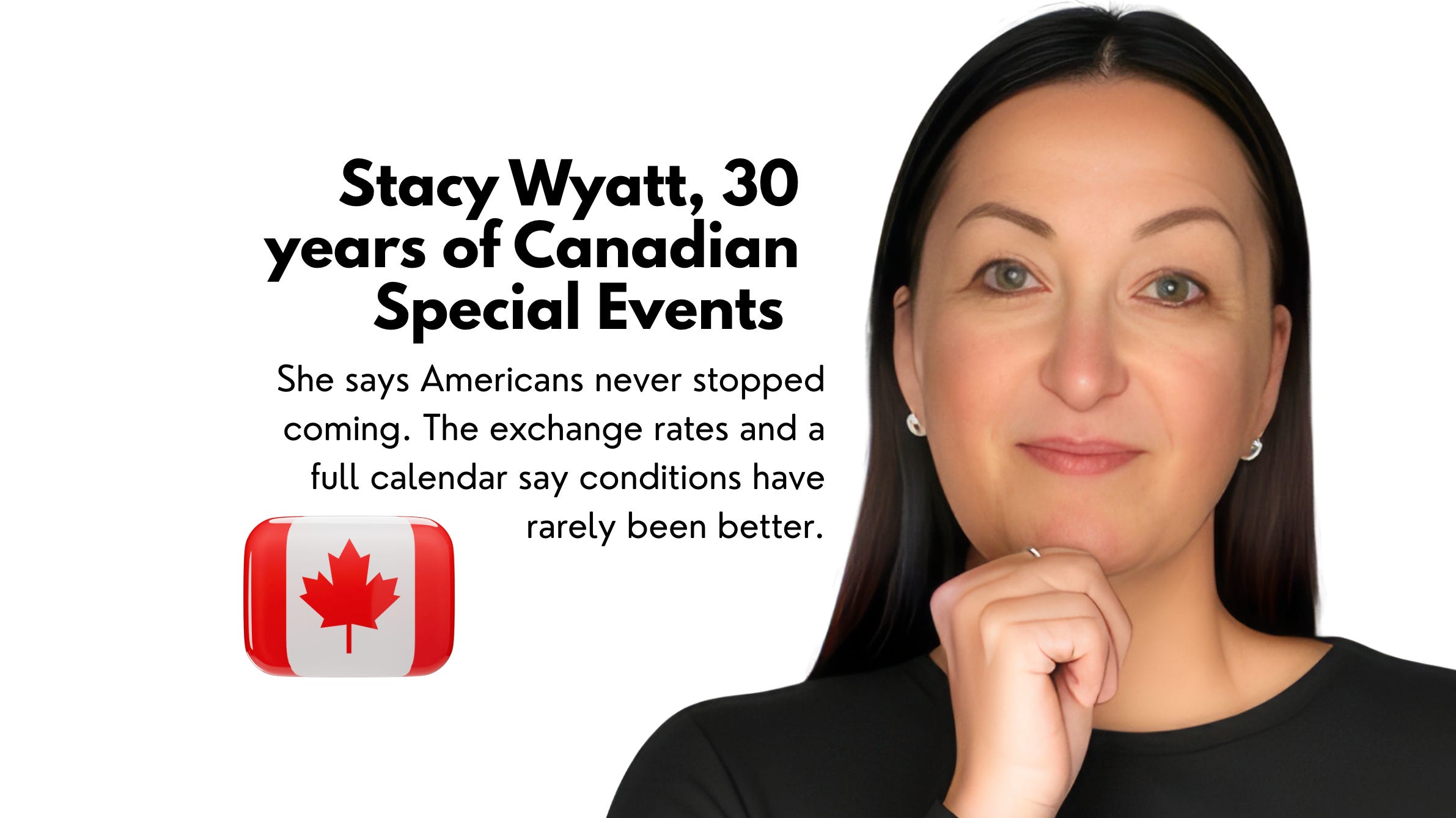
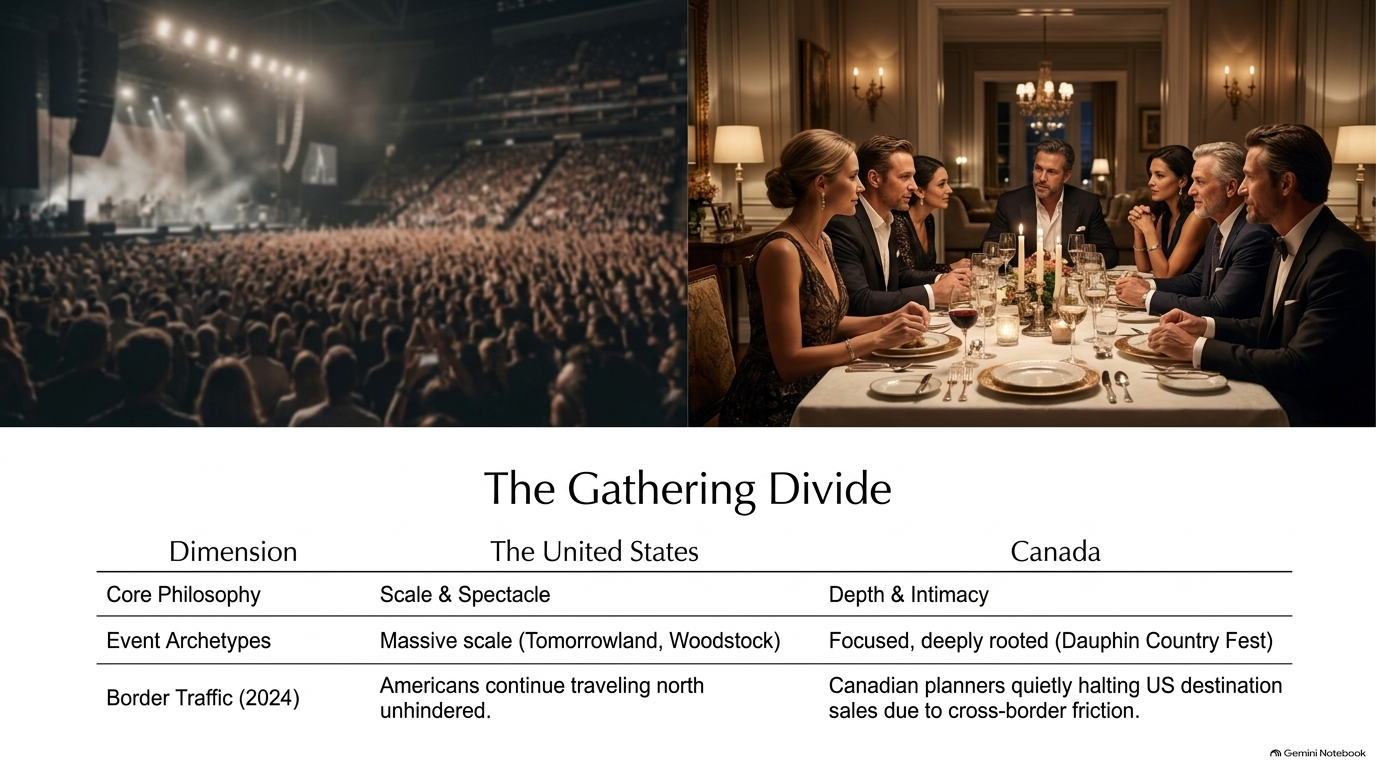
Ask Stacy Wyatt whether the current political chapter has scared American companies away from Canada, and she doesn’t hesitate: no. If anything, a favorable exchange rate has made Canada an easier sell than it was. What has actually shifted, after three decades running the country’s most established gathering of event professionals, is the traffic going the other way. Canadian planners, by her account, have quietly stopped selling American destinations altogether, and individual travelers have grown wary of a border now associated with detentions and immigration scrutiny that has nothing to do with the meetings business and everything to do with the headlines. Americans are still showing up. The invitation just doesn’t run both ways anymore.
That read comes from someone who has earned the right to make it. (the entire incentive week was $4 million; the one party was around $1 million.
The party cost four million dollars. It had a sixty-foot mountain scape and Olympic skaters costumed as salmon and tuna, choreographed to glide across a rink built inside BC Place Stadium for two thousand people. It lost.
Stacy Wyatt and her then-partner Mark Wyatt had flown down to California for the Special Event awards, convinced their Canadiana-themed opening night party, the centrepiece of the largest incentive fam trip British Columbia had ever hosted, would win. Instead, the award went to a party built around a ten-thousand-dollar tax audit, a fraction of the budget, a fraction of the ambition. “We were stunned,” Wyatt says now. On the flight home, still stinging, she and Mark sketched an idea on a napkin: if the Americans weren’t going to recognize what Canadians were building, Canadians would build their own show to do it. That show turns thirty this April.
Wyatt has spent those three decades running Canadian Special Events, known inside the industry simply as CSE, the country’s answer to the Special Event awards. She built it by accident, ran it through a recession, a divorce, a full-time job for several of the lean years and a pandemic, and has spent the last several years deliberately making it smaller. The story of how she got from a million-dollar loss to a boutique, 700-person show she now protects on purpose says something specific about the difference between how Canadians gather and how Americans do, a distinction she has finally, mostly, named.
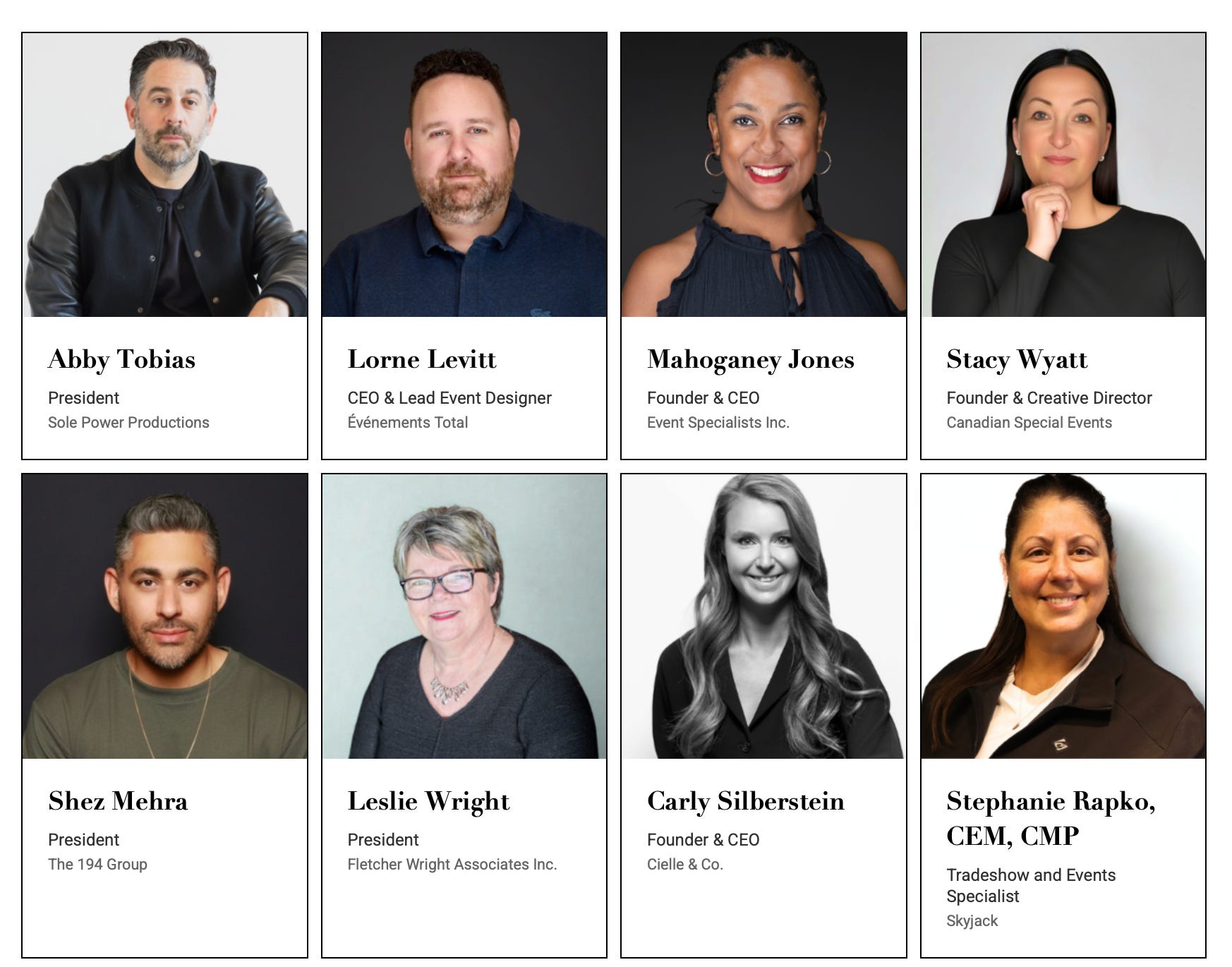
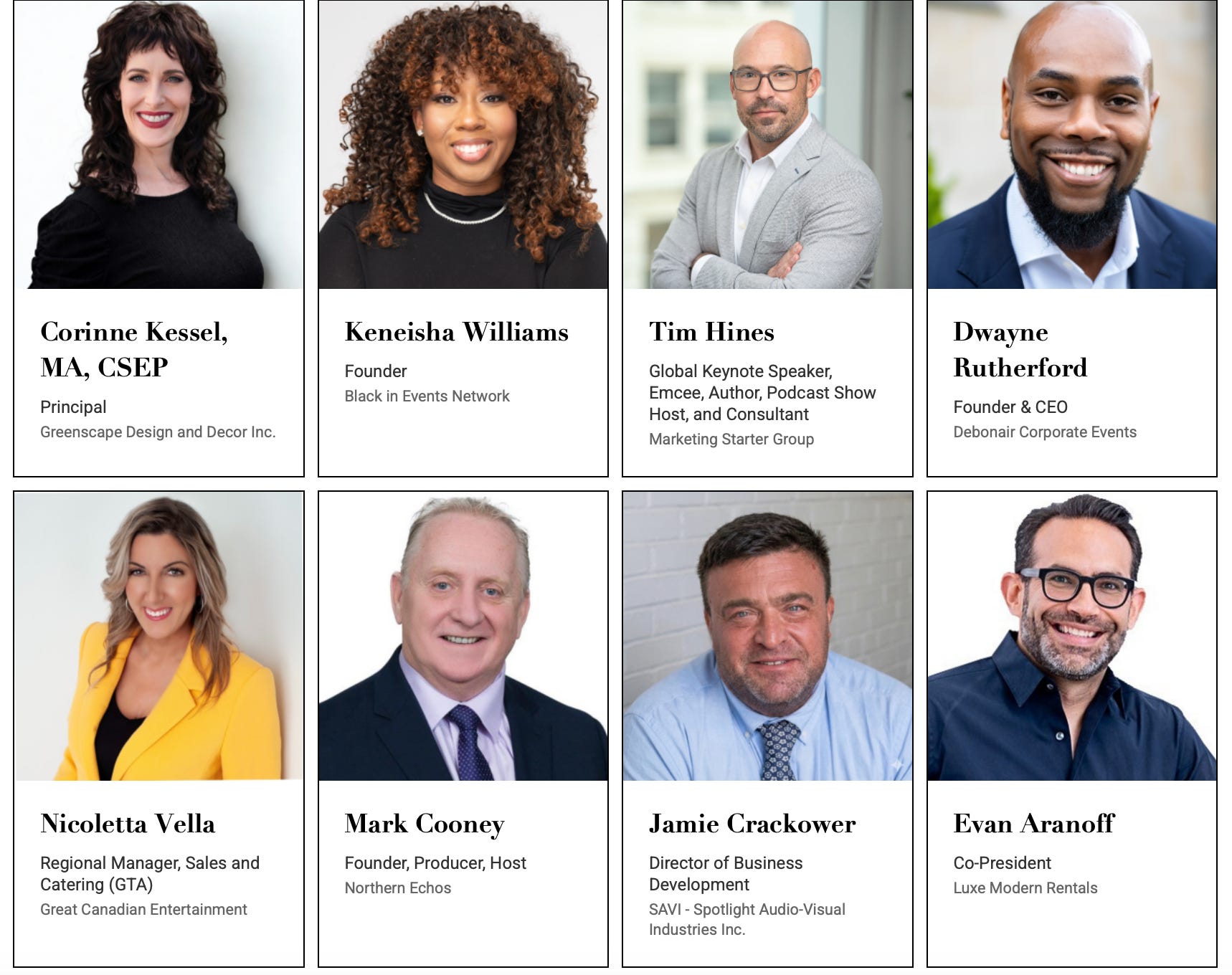
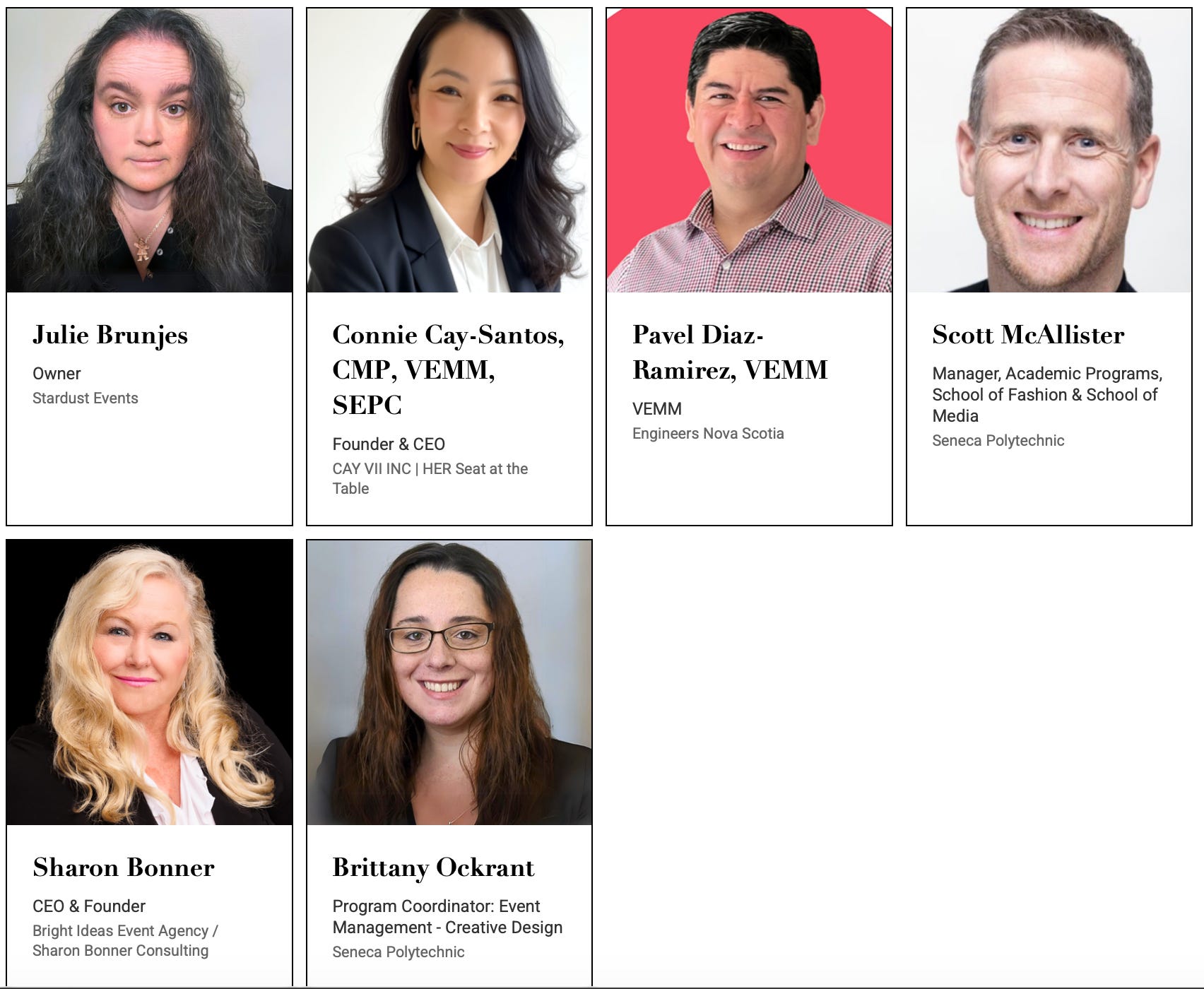
CSE is not one thing. It is a small media and events company built around four connected parts: Canadian Special Events Magazine, the annual trade show and conference called CSE Live, the Canadian Event Awards, and, as of 2024, the Canadian Venue Awards. The Canadian Event Awards is the oldest piece and the one Wyatt built first, established in 1997 as recognition for event and meeting professionals and now considered the industry’s most prestigious night of the year. CSE Live grew up around it later as the trade show and education arm, the one Wyatt has spent the last several years deliberately shrinking back down to the 800 people she actually wants in the room, even as CSE’s own promotional material advertises a bigger number closer to 1,500 for the wider week of programming. The magazine is the through-line I asked about without quite naming it: Wyatt is still, thirty years in, its bylined author, the person who assigns and often writes the coverage of the winning events she also helps judge. Here are last year’s roster of judges representing a cross section of Canadian talent.

The Napkin
Wyatt did not set out to work in events. She was twenty-one, working catering for outdoor festivals in Vancouver, freshly out of university, when she met Mark Wyatt, ten years older and already deep in an industry she says she did not know existed. Mark ran Daiseiko International, an incentive travel company he had built with his partner, Jan Carinci a former quarterback for the BC Lions who had just retired. The two of them had pitched Tourism Vancouver and Tourism BC on a familiarization trip, a bet that Japanese and Asian corporate incentive groups could be brought to British Columbia at scale. The Tourism BC staff, Wyatt says, told them flatly they’d “eat our desk” if the pitch worked.
It worked. Six thousand people from Amway Japan, Ricoh, Charle and Tupperware landed in BC across 1994 and 1995, in what Wyatt calls the largest economic spinoff incentive programs the province had ever seen. Daiseiko needed help with an outdoor event at Jericho Beach not long after, and Wyatt, who specialized in off-premises festival catering, got the job. That was the introduction. “We fell in love, and I went to work with him,” she says. One of the events that came out of that very first fam, for Amway Japan was the Canadiana party at BC Place, which went up for the industry’s top American honour and lost, which is how a napkin sketch on a flight home became the first Canadian Event Awards staged at the Hyatt in Vancouver.
Ten Years, Three Cities, One Divorce
The following year, a competitor already running a smaller, more locally focused special event show in the same market approached the Wyatts about buying them out. They did, and CSE as it exists today, Wyatt says, was built on that combination. The show ran in both Vancouver and Toronto simultaneously for roughly nine years, then briefly added Calgary, a decision Wyatt now describes flatly: “That was not a good idea.” Running three cities nearly broke the company. Calgary was amazing to the show but too small to sustain.
CSE phased out its Vancouver leg the year after the 2010 Winter Olympics, a moment Wyatt describes as an industry-wide reckoning. Event professionals across the province had either made millions on the Games or lost them inside a week, and the entire sector was, in her word, burnt out. The timing lined up with a harder personal fact: she and Mark were separating. “Mark and I were moving apart at that time, and it just made sense to manage just one place, and then we never went back,” she says. Mark Wyatt has been out of the company entirely since. He has spent the last fifteen years in the fire service and is now, Wyatt says, the fire chief in Rankin Inlet, Nunavut, a role she says suits him
An Introvert Runs the Room
Ask Wyatt what drew her to an industry built on charisma and she does not hesitate: it wasn’t the people. “I am so introverted,” she says. “I can schmooze with the best of them and turn it on, but imposter syndrome for me is a real thing. What she loves, by her own account, is the architecture underneath the party: the lists, the logistics, the contingency plan for the contingency plan. She is not, by her own description, the typical schmoozy social butterfly this industry tends to recruit. Whatever pulls most people toward a room full of strangers for a living, it was never the thing that pulled her.
I have a working theory about that, sharpened across three decades of doing interviews like this one: people don’t change much between who they were at ten and who they are running a company thirty years later, whatever else shifts around them.
I asked Wyatt directly what she was like as a kid, whether she was the one behind the scenes running the clubs and the committees, looking for the DNA of the adult in the child. She didn’t hesitate either. “I think I was a little control freak baby,” she says. “I needed to be in control of everything. She is the youngest of what became a blended family of five siblings after her mother remarried when Wyatt was nineteen, the baby of the family who nonetheless needed to run things, a natural worrier for whom backup plans were, in her word, “my thing.”
That temperament collides directly with the job once a year, at CSE’s gala, which she describes as the most stressful night of her calendar. A room of five hundred people she genuinely knows, whose kids’ names she can recall, creates a specific kind of pressure that a company CEO hosting an annual conference never has to manage: everyone in that room deserves a genuine conversation, which Wyatt wants to have but there is no way to have five hundred real conversations in one evening. “It’s so uncomfortable because I feel so bad, because they’re here for that conversation,” she says. “They’re here to be seen, and you can’t see everyone.” She is not afraid of public speaking, she is careful to clarify. She simply hates it, does five minutes at the gala and no more, and hands opening remarks to trusted colleagues whenever she can.
Old Home Week
Pressed to name what makes Canadian gatherings different from American ones, a question she says she has turned over for years without fully answering, Wyatt lands on intimacy over scale. “I think that Canadians are much deeper in the way we communicate,” she says. “There’s always a desire for intimacy; there’s always a desire for deep connections.” Massive gatherings like Tomorrowland or Woodstock, she notes, simply do not take root in Canada the way they do in the United States, population size aside. The closest domestic equivalent she points to, The Monteal Jazz Fest, still runs on a fraction of the scale.
The phrase she has used for thirty years to describe what CSE is actually for is Old Home Week, language she never formalized into strategy but says has run underneath everything the company has built: bring the community together to reconnect, to be introduced, to be mentored, to see and be seen. “If I were to say one sentence that was woven through everything we did over the last thirty years,” she says, “it was building a community of like-minded people who just really wanted to be in a room together.”Old Home Week
The Size of the Room
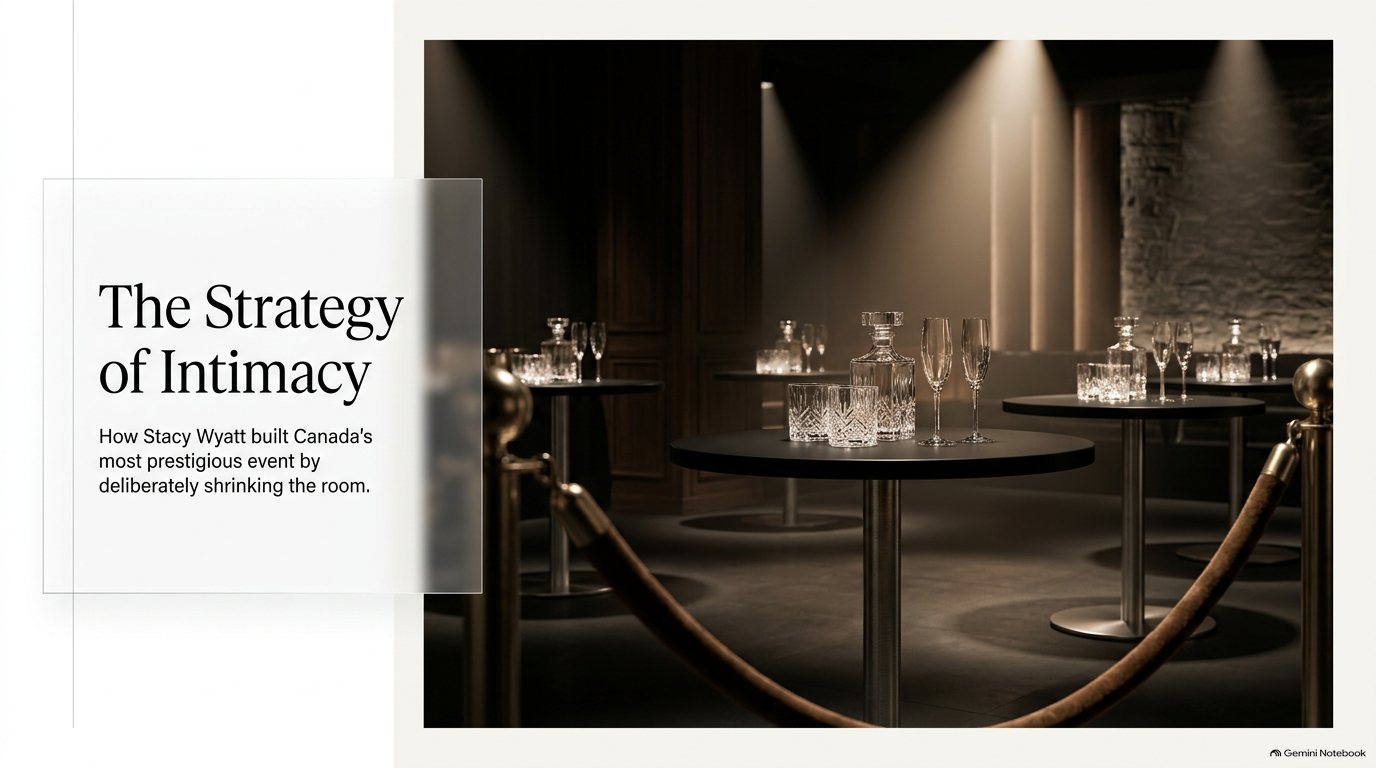
To understand why Wyatt’s choice to stay small is a choice and not a limitation, it helps to see the industry she is choosing to be small inside of. Canada hosted roughly 2,555 business events in 2024, drawing about 1.2 million delegates and generating an estimated $47 billion in direct economic impact, supporting more than 240,000 jobs nationally, according to Destination Canada’s most recent published figures. An earlier global ranking from the Events Industry Council placed Canada sixth in the world for direct economic impact from business events, ahead of countries with several times its population[VA1]
.
Ask most Canadians what event represents the country, and the list is short and specific. The Calgary Stampede, running since 1886 and still billing itself as the Greatest Outdoor Show on Earth, drew 1.4 million visitors over ten days in 2026 and generated $721 million in economic output across Alberta, a third more than the same kind of study measured in 2019. Toronto’s Caribbean Carnival, still known to most people by its old name, Caribana, has run since 1967 and now draws well over a million visitors of its own, with organizers putting its annual contribution to the Canadian economy above $460 million. The Toronto International Film Festival, founded in 1976 as the Toronto Festival of Festivals and now a fixture of the fall awards calendar, draws hundreds of thousands of filmgoers each September and generates an estimated $240 million in annual economic impact. C2 Montreal, founded by the agency Sid Lee and Cirque du Soleil in 2012, built its reputation as one of the most forward-thinking business conferences in the world by turning a corporate summit into something closer to a festival, drawing thousands of decisionmakers each spring. Not every marquee name survives intact: Montreal’s Just for Laughs, the festival that once defined the city’s comedy identity, filed for bankruptcy protection in 2024 and had to be bought and relaunched at a smaller scale by a different operator that same summer.
BizBash, the trade publication I founded and ran for two decades before selling it, used to publish an annual Top 100 Events in Canada list, and the churn on it says as much about the industry’s actual size as the dollar figures do. Back in 2011, the list crowned the Toronto International Film Festival its top Entertainment Industry Event, the year TIFF screened 339 films from its new downtown home at the TIFF Lightbox. The 2017 edition crowned the Rogers Cup tennis tournament its top sports property and the B.C. Cancer Foundation’s gala its top benefit, at more than three million dollars raised in a single night. A year later, Toronto’s jazz festival had climbed to the top slot on 165 free concerts, the Grey Cup had jumped the rankings because Edmonton was hosting it, and Drake’s OVO Fest had quietly disappeared from the list entirely after nine consecutive years. Big, in other words, moves. CSE, at 700 to 800 people in a room it built on purpose, was never trying to compete on that list. It was trying to be the kind of event nobody drops off, because everyone in the room already knows why they’re there.
Finding Its Place
That philosophy now has a physical shape. CSE has spent three years at Great Canadian Casino Resort in Vaughan, Ontario, working across five venues with partners including Peter and Paul’s, deliberately staying out of the Toronto convention center where CME (formerly Incentive Works) runs its larger, more travel-and-hospitality-focused show. CSE draws 700 to 800 people, runs a single day instead of two, and has largely done away with rows of trade show booths in favor of forty-by-forty activation spaces built to function as their own small events, complete with entertainment and catering. “If I had it my way, we would have no booths,” Wyatt says. “It’s just a solid annual event where we bring the community together, and we’re not blowing our brains out anymore trying to be something that we’re not.”
Getting there took thirty years of trying, by her own account, to be everything to everybody, in venue after venue and format after format, before she let the sho[VA1] w settle into what it is Inclusion isn’t a late addition at CSE—it’s how we were built from the ground up. By working alongside organizations like Black in Events, South Asian and Asian event-planning communities, and LGBTQ+ event-planners, Wyatt emphasizes that our goal is always about growing genuine, lasting relationships instead of simply checking boxes
The Border, and the Room That Won’t Let Grief In
The specifics behind that read are more granular than the top-line claim suggests. She estimates that in any given Canadian delegation, a quarter to a third of attendees could face complications reentering the country if they are not fully naturalized, a risk calculation that has quietly reshaped where Canadian organizations choose to meet. I told her, half-joking, that I hoped the current chapter would pass soon, “because we got a nutcase running the world here.” Wyatt didn’t disagree. “Your lips to God’s ears,” she said.
Closer to home, CSE is absorbing a loss that is only a week old at the time of this interview. Jammi Gunnerson, given CSE’s Emerging Leader Award last April, died in her sleep the week of this conversation, at 28, with seventeen events booked for the company she was working for through the end of the year. A week after the interview, Reid Hubick another young star with e=mc2 events also passed away. Wyatt connects the losses directly to a shift she is navigating in real time: attendees increasingly ask her to fold formal wellness and mental health programming into CSE Live itself, and so far, she has been saying no, not out of dismissal but because the ask keeps arriving faster than she can figure out how to do it right inside the main show.
What she has built instead runs just outside it. This past April 27, the Monday before CSE Live opened, Wyatt and three co-founders, Carly Silberstein, Connie Cay-Santos, and Samantha Mele, launched SANCTUARY, a single day of reflection and leadership work for event professionals, deliberately capped in size to keep the room small. “As event professionals, we spend so much of our time building experiences for others that we rarely pause to invest in ourselves,” the founders wrote in announcing it. It ran again this spring, and the group says they intend to keep building it. What she can point to without hesitation is the informal version that has always run underneath both: the check-ins, the messages, the running tally of roughly fifteen people she stays in daily contact with across the year. “It’s my community. It’s my world that I live in,” she says of the roughly two to three thousand people she considers her real network inside Canadian events.
Thirty Years of Spirit
CSE’s flagship individual honor, now called the Leslee Bell Spirit of the Industry Award, was renamed in memory of Leslee Bell, founder of Decor & More Inc, a figure the awards program itself describes as embodying the qualities the honor now looks for: leadership, mentorship, and integrity. The winners on record, going back as far as CSE’s own public archive reaches, read like a partial roll call of the people Wyatt has spent thirty years building a room around:
· 2023: Rennie Colelli, bbBlanc Audio Visual
· 2022: Keri Miller, CSEP, e=mc² events, Calgary (the inaugural winner under the Leslee Bell name)
CSE introduced a second lifetime-style honor, the ICON Award, in 2025. Its first-ever recipient was Joel Hock, recognized for what the program called his visionary leadership and lasting impact on the evolution of live events in Canada. Other individual awards from CSE’s more recent years add names to the same list: Jody Litvack of Jet Entertainment was named Event Professional of the Year in 2022; Julie Danylov of Cirque Revolution won Event Industry Volunteer of the Year in 2023; Spencer Croft of MKEM won the Emerging Leader Award in 2023, followed Luisa Alvarez, Reveal Events Group 2024, and Samantha Patrick, The Gathering, Calgary, AB in 2025
Handing Off the Napkin
CSE’s 30th anniversary runs April 26-28, 2027, and Wyatt is building it around memory rather than spectacle. She is pulling old photographs for a walk-down history: Raviv K of R5 Events at 22 Chad Brincheski at his first award ceremony wearing what she remembers as a genuinely funky hat, Corey Mandell at twenty-one presiding over a trade-show-floor hot tub with his all-black-clad AV crew. She wants to bring back every living winner of CSE’s Spirit of the Industry Award for a roundtable, and beyond that, she wants something closer to a stunt: competitors who have spent thirty years duking it out for the same clients, on the same stage, talking honestly about where the industry has been and where it’s going. “I love a stage packed with people that no one would ever imagine on the same stage,” she says. “it’s fun because it’s so disruptive.”
The harder problem is the generation arriving underneath all of it. Wyatt describes a widening gap between the veterans who came up through the Special Event era, some of whom she says are making millions and have zero interest in the industry’s association scene, and the Gen Z professionals now filling her show’s younger seats. What she has learned, slowly and by her own admission incompletely, is that this generation does not want to be marketed to. They want to be told specifically why they were invited. “I literally get emails saying ‘why me,’” she says. “They don’t want to be be marketed to. They wanna be invited to an intentional event because it’s them, not because they have a generation attached to their name or their birth year.” That takes individual attention at a scale mass marketing was built to avoid, and Wyatt says plainly she does not yet have it figured out.
Thirty years ago, a twenty-one-year-old festival caterer flew to California, lost to a party a quarter the size of the one she’d helped build, and sketched a napkin on the way home rather than accept the verdict. The show that came out of that napkin now tops out at 800 people on purpose, runs one day instead of two, and has no interest in ever being the biggest room in the building again. Wyatt calls that finding her place. Thirty years in, it reads more like she finally got to set the terms.
GatheringPoint covers the people who build the gatherings. Subscribe at GatheringPoint.news.

1. On why she stayed thirty years:
“It’s all I’ve known for so long. Not all I’ve known, but it’s inside me. It’s ingrained in me.”
2. On the temperament underneath the job:
“I am so introverted. I can schmooze with the best of them and turn it on, but imposter syndrome inside me is screaming.”
3. On what a gala actually costs the host:
“They’re here to be seen, and you can’t see everyone.”
4. On what makes Canadian gatherings different:
“I think that Canadians are much deeper in the way we communicate. There’s always a desire for intimacy, there’s always a desire for deep connections.”
5. On the one idea that runs under thirty years of programming:
“If I were to say one sentence that was woven through everything we did over the last thirty years, it was building a community of like-minded people who just really wanted to be in a room together.”
6. On choosing to stay small:
“If I had it my way, we would have no booths. It’s just an annual community event where we bring the people together, and we’re not blowing our brains out anymore trying to be something that we’re not.”
7. On what Gen Z wants from an invitation:
“They don’t wanna be marketed to. They wanna be invited to an intentional event because it’s them, not because they have a generation attached to their name or their birth year.”
8. On the board member too afraid to be filmed, and her advice to him:
“Why are you continuing to do film year after year? How about we just don’t do it? We can say no. No one’s going to die.”
[VA1]I changed this so it didnt read as though diversity was a strategy rather a deliberate move to alignment

Edible Profile of Stacy Wyatt