


November 2, 2026- Tomorrow night, in hotel ballrooms and campaign offices across the USA, event organizers will run a party whose ending nobody knows. I have a great deal of sympathy for them. They have to build the room for a victory and the room for a loss at the same time. The balloons still have to be rigged, the screens still have to work, the bar still has to be stocked, the staff still have to be fed, and the candidate still has to be walked in or out. They need a plan for every scenario, including the one where the night has no result at 2 a.m. and the crowd won’t go home. Nobody applauds the contingency. If it works, no one sees it.
You are the organizer, and doors are at seven. You’ve planned the victory celebration. The ballroom is booked, the band is hired, and you’ve decided what falls from the ceiling. What you can’t decide is which night you’re hosting. The answer arrives state by state, and each number changes what the room needs from you.
Three people have sat in your chair.
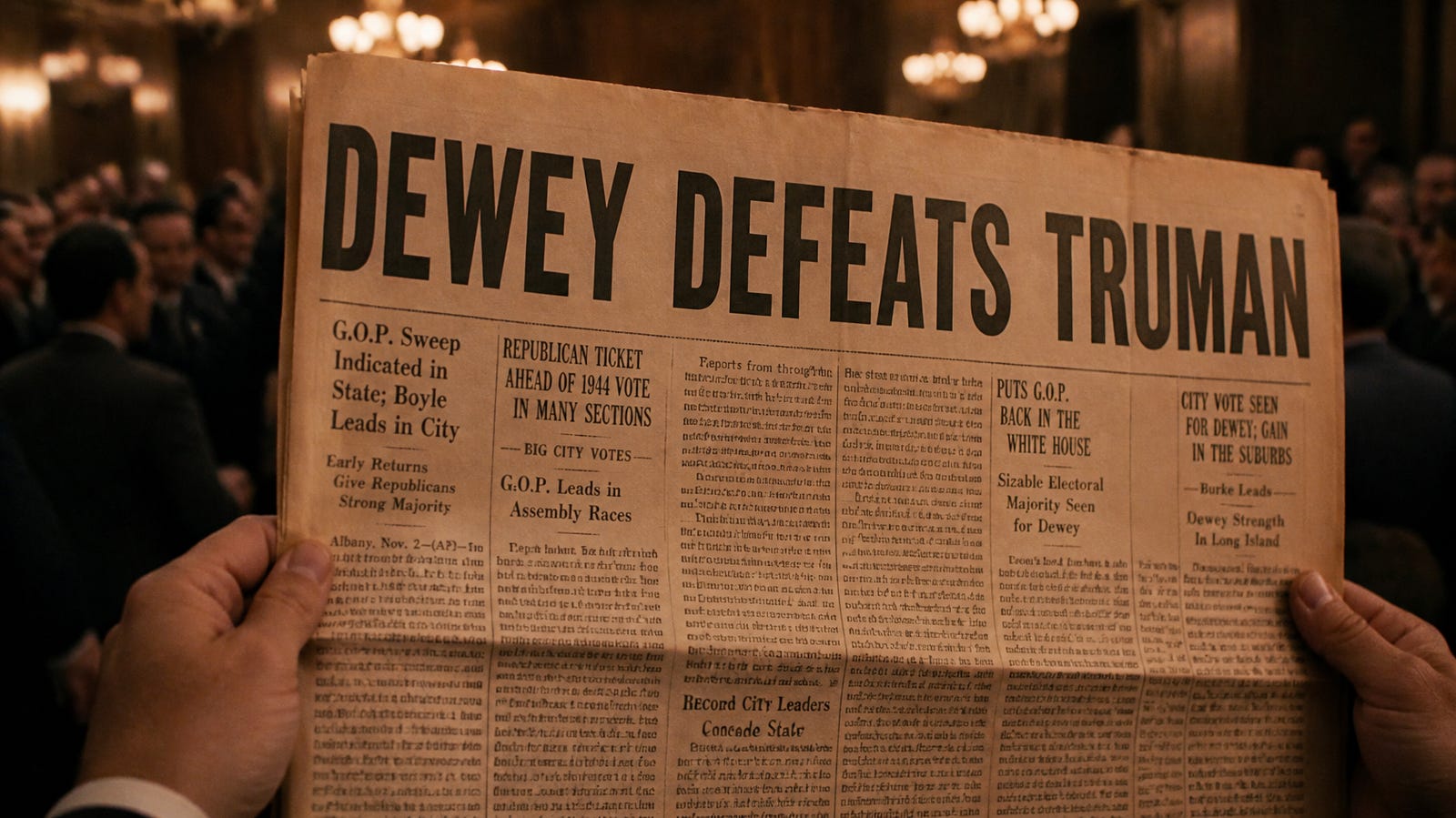
1948, Dewey’s supporters filled the Hotel Roosevelt in tuxedos and gowns while reporters congratulated the new president before the returns were in. NBC had built a cardboard White House with two elephants set to pop out and no donkeys.
In 2012, Mitt Romney had written one speech, a victory speech, and a barge of fireworks was waiting in Boston Harbor.
In 2016, the Clinton campaign hung a glass ceiling over the Javits Center and loaded cannons with green confetti meant to look like shattered glass. Afterward, the cannons were emptied into boxes, unused.
We found no public sign that any of the three had a second version of the night ready. But the bigger problem was the live data. The returns arrived state by state, and no one in the room had the standing to change the music while it played.
The Organizer Becomes a Conductor
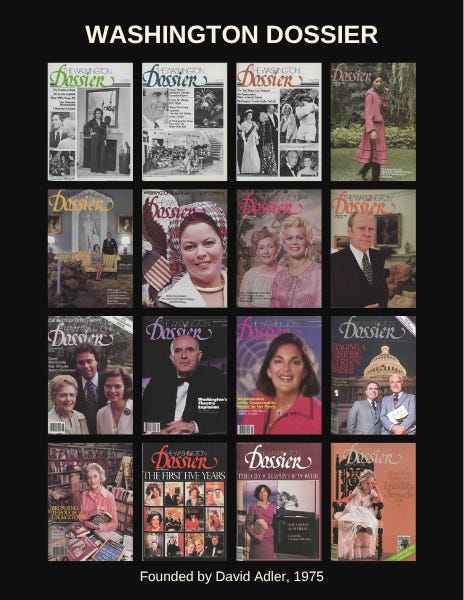
I grew up in Washington, and at 21 I started a society magazine, Washington Dossier, which put me out every night among politicians and society people, in the rooms where Washington does its business. What I learned is how much of their craft is ours. They understand invitations, retention, and community building. They know how to run a party, an event, a conference. And they become experts at reading a room because their work happens in real time: a crowd that turns mid-speech doesn’t wait for a memo. A campaign is an event business with a ballot at the end, and the people who run it have been conducting from the first rally to the last call of the night.
Technology is now handing the regular event organizer what the politician has always had: data that arrives live and that you can act on. Heat maps, dwell times, sentiment readings, registration and app activity. For the first time at this scale, the organizer in a hotel ballroom can watch the room the way a campaign watches the returns, and change course while the night is still happening.
You don’t need an election to live this. Every night you run an event, the room is changing in real time. The keynote runs long, the bar line backs up, the second session empties out, the crowd that was loud at eight goes quiet at nine. Election night just makes it impossible to ignore, because the numbers arrive on television. At your event, the numbers arrive as faces, and now, increasingly, as data.
The oldest version of this job
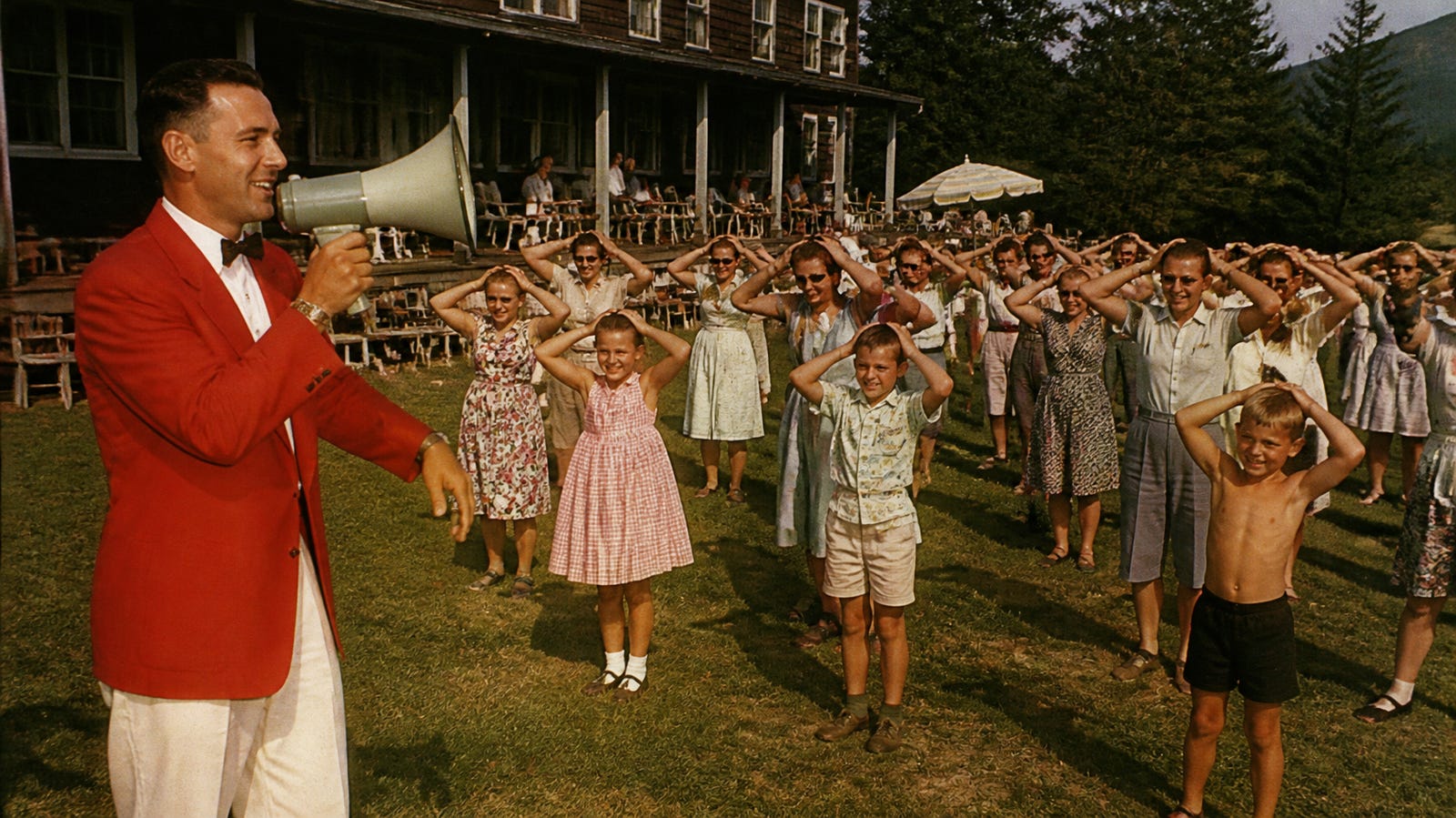
The skill is not new. In the Catskills resorts of the Borscht Belt, a boisterous jack-of-all-trades social director called a tummler, from the Yiddish for one who makes a racket, led the games, told the jokes, and served as resident master of ceremonies, according to Britannica. He was part comic, part activities director, part hotel cheerleader. Lou Goldstein ran most of the daytime activities at Grossinger’s from 1948 until it closed in 1986, nearly four decades of reading strangers by the minute with no dashboard. The audiences were as demanding as they were generous: when an act fell flat, the crowd began leaving the hall, not one by one but in waves. That was the data stream. It just arrived as backs.
The new instruments
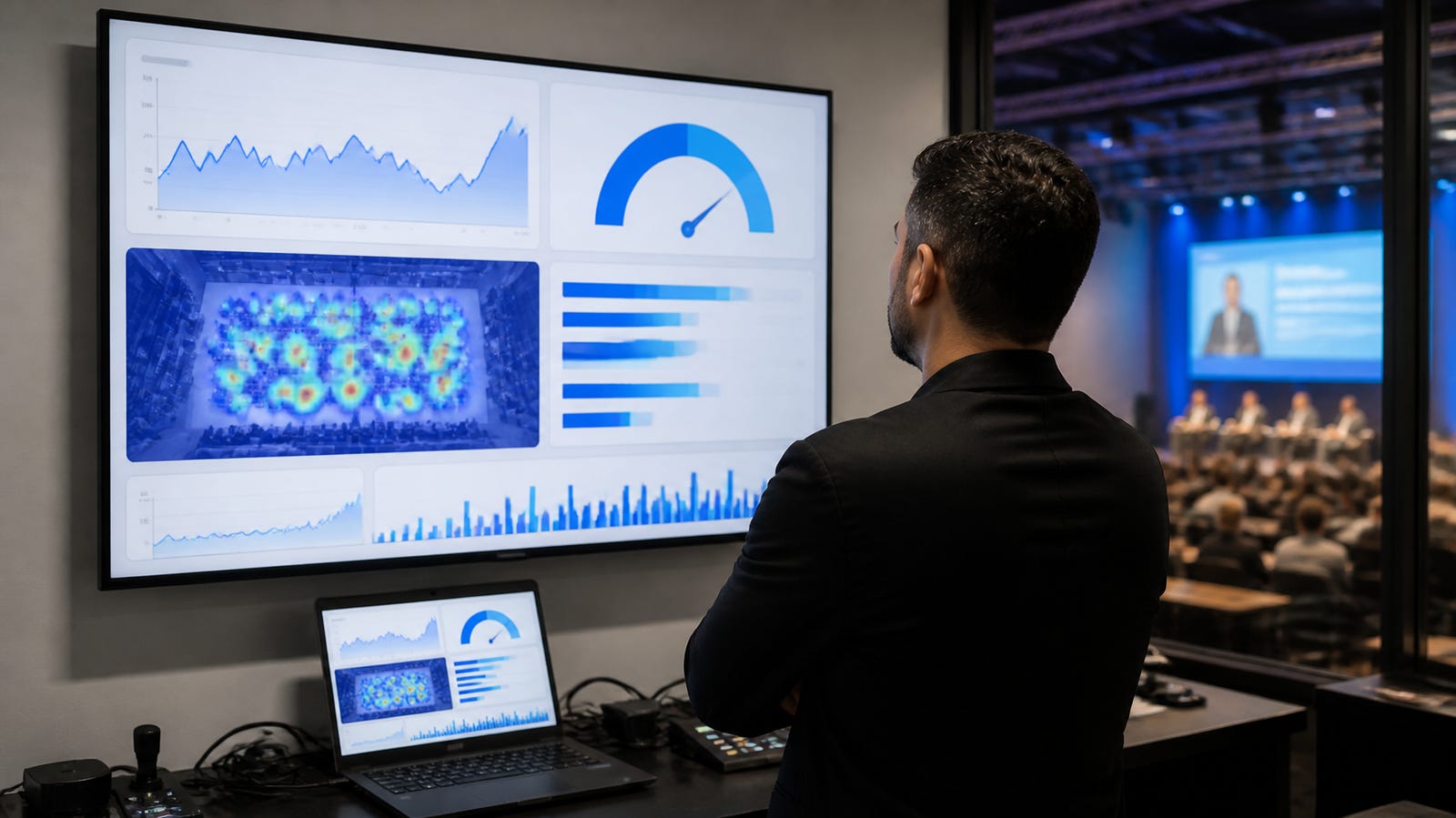
Today the waves can be counted. Organizers monitor live crowd density through wristband scans, sensors, and overhead cameras feeding dashboards with heat maps, according to event-technology vendors. Zenus, a sentiment-analysis company, has measured group mood, traffic, and dwell time at IMEX Frankfurt, IMEX America, and PCMA Convening Leaders. At one PCMA event its analysts gave sponsors daily briefs, including a recommendation to move the cupcakes to the other side of the counter because they were blocking the entrance. High dwell time with low sentiment, one practitioner told A Media Operator, is a bottleneck.
Treat the readings with care. Zenus’s own founder told PCMA it is very hard to read people, especially complex emotions. The technology has drawn criticism over privacy, and the EU AI Act bans inferring emotions from biometric data in workplaces and schools. The instruments tell you where to look. They don’t tell you what you’re seeing.
The eyes that came first
The best designers have read rooms for decades without any of it. Bryan Rafanelli’s composure under pressure is what clients notice first: problems are addressed and adjustments made, but the temperature of the room does not rise with them. David Stark says the ultimate goal of an event is usually a launch or a donation, not fun, so the room must drive the idea home. Preston Bailey frames a luxury event as what happens when guests walk in, and then what happens again thirty minutes later. None of them used the word conductor. The skill is the same.
Six things a conductor does
This section is our reasoning, not research.
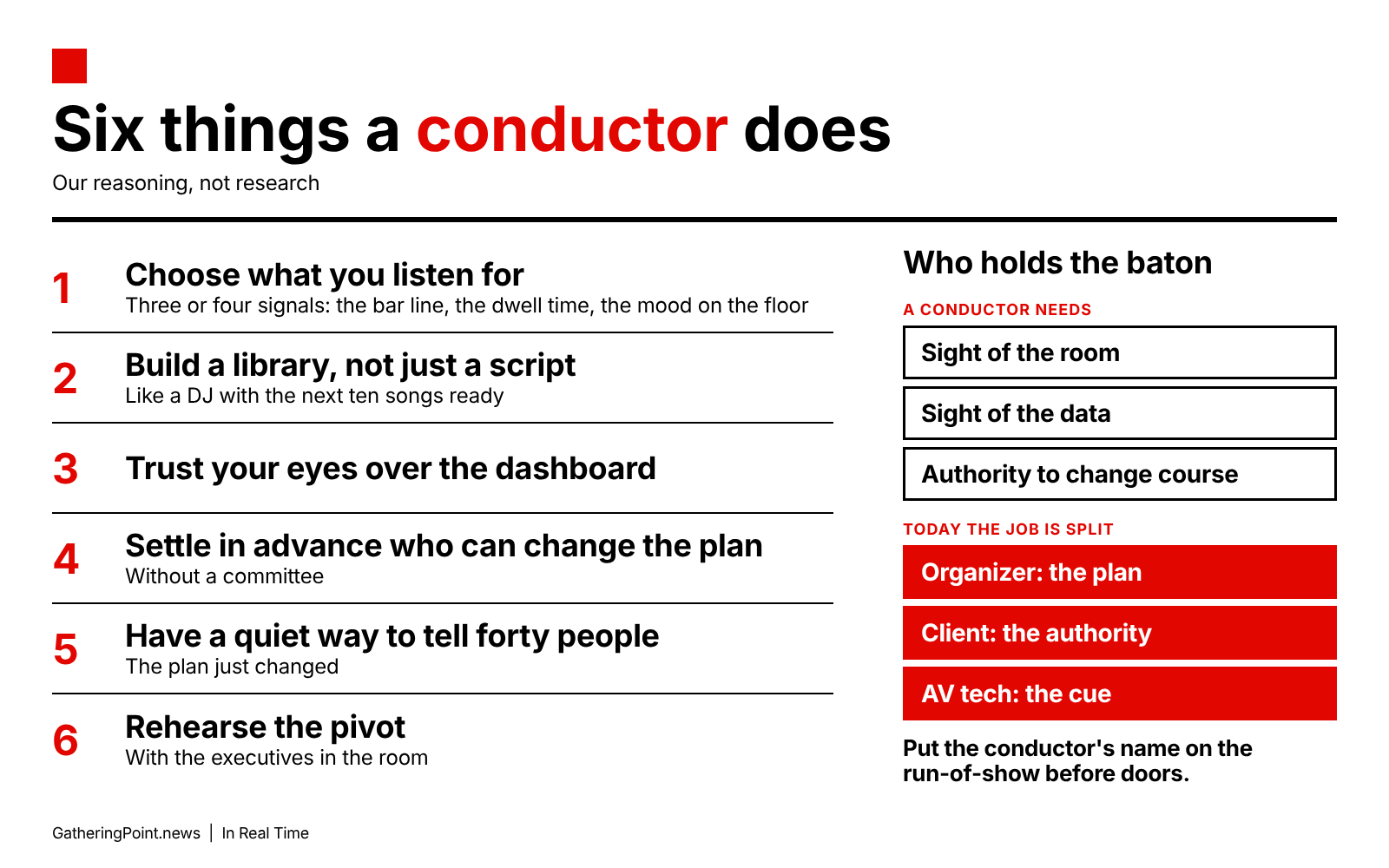
First, choose what you are listening for: three or four signals, the bar line, the dwell time, the mood on the floor. Ignore the rest. Second, build a library, not just a script, the way a DJ has the next ten songs ready. Third, trust your eyes over the dashboard. Fourth, settle in advance who may change the plan without a committee. Fifth, have a quiet way to tell forty people the plan just changed. Sixth, rehearse the pivot, with the executives in the room.
Who holds the baton
Most events split the three things a conductor needs: sight of the room, sight of the data, and the authority to change course. The organizer has the plan, the client has the authority, and the AV tech has the cue. Industry sources already call the show caller the conductor, the person who calls every cue and adapts when a speaker runs long. Our argument is that the job is outgrowing the stage and moving to the whole event. Put the conductor’s name on the run-of-show before doors.
The conundrum
The better the instruments, the more tempting it is to follow the screen and not the room. Sometimes the best moment of the night is the uncomfortable one, which a sentiment score would read as a failure.