


Send your questions to David@gatheringpoint.news.
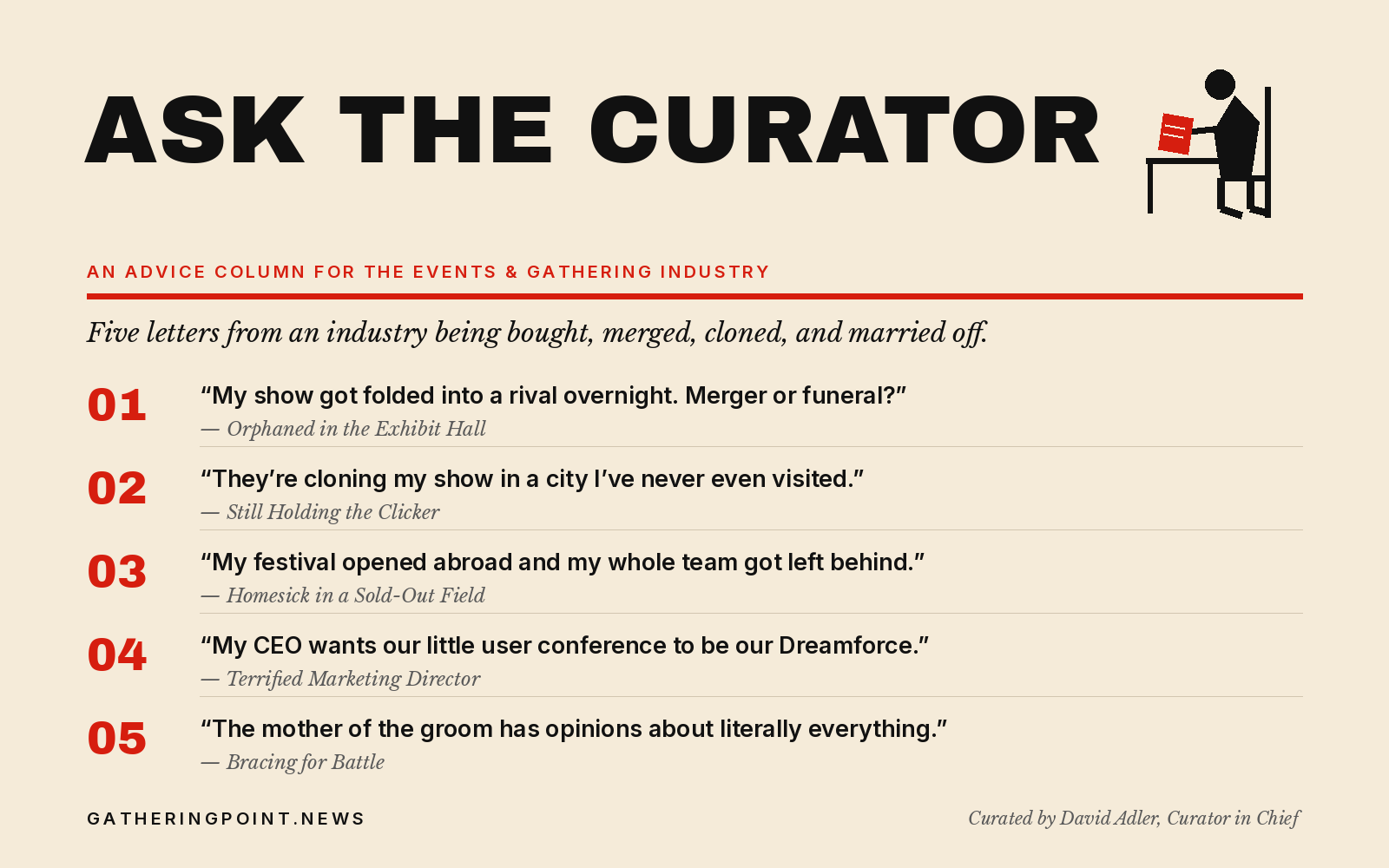
A note from the Curator: I’m experimenting with something here. The events and gathering industry mostly gets covered in trade-press paragraphs full of deal sizes and platform strategy, accurate but unreadable unless you already speak private equity. So this issue borrows the oldest trick in the business, the advice column, the same device Dear Abby and Ann Landers used for decades to make the news of the day feel like a conversation instead of a briefing. Five people, five letters, five real situations in this industry right now, answered honestly. If it works, you’ll see more of it.
Nobody in this business writes a memo that says “we are consolidating your show to protect our exit multiple.” They write a press release about synergy. So the letters kept arriving, and we kept answering them the way an advice column answers everything: honestly, and with the receipts.
The One Who Got Folded
Dear Curator,
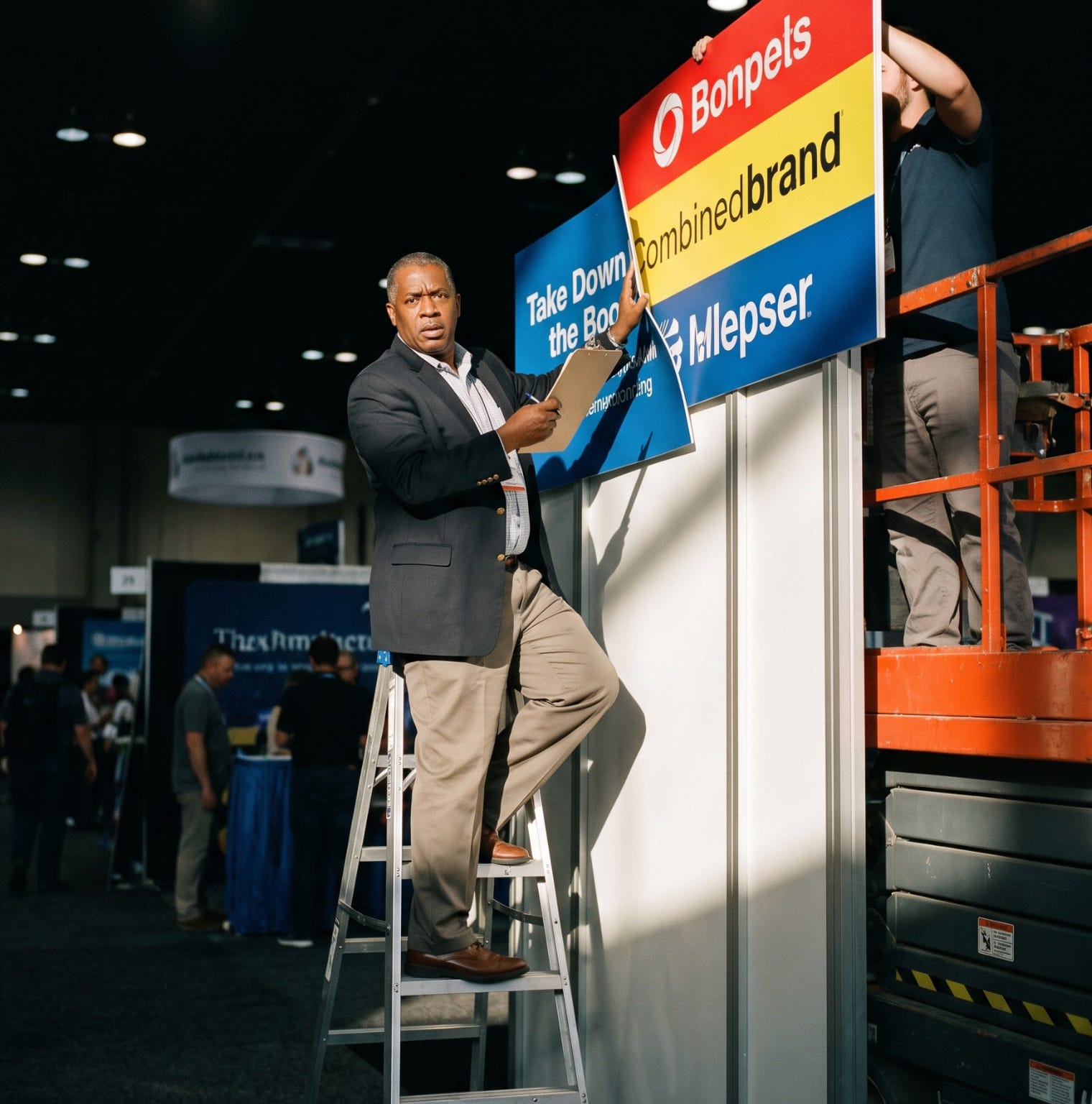
My show has run for eleven years. Good crowd, loyal exhibitors, nothing fancy. Last month our parent company folded us into a sister brand we used to consider a rival. New combined name, same floor, and nobody asked us. Is this a merger or a funeral?
— Orphaned in the Exhibit Hall
Dear Orphaned,
It’s neither. It’s a spreadsheet. Somewhere a finance team is sitting on a portfolio of shows selling booths to the same few hundred exhibitors across two separate registration systems, two separate marketing budgets, and two separate sales teams, and asking why. One combined show sells the same booths at a bigger badge price with half the overhead. That’s the whole memo, dressed up in a new logo.

You are not the first. Catersource and The Special Event, two shows that had run side by side under Informa for years, were folded this year into a single brand called Cater+Event, its first full edition set for New Orleans in March 2027. Informa’s own numbers explain the appetite: the company’s B2B events division posted eight percent underlying revenue growth in the first half of 2026, with more than four and a half billion dollars already committed or visible for the full year. Fashion by Informa ran the identical play, combining MAGIC, COTERIE, SOURCING, PROJECT, and OFFPRICE under one roof in Las Vegas and again in New York, nearly nine hundred brands under a single badge instead of five separate ones.
You didn’t lose a rivalry. You became a rounding error that got rounded the profitable direction. The tell is always in the timing. These moves land during growth years, not down years, because a company only bothers optimizing a portfolio it plans to keep showing to a buyer.

The One About to Be Cloned
Dear Curator,
We sold our conference to a strategic buyer three years ago. Good deal, we stayed on to run it. Last week the parent company announced they’re launching a version of our show in the Middle East, same format, same name, with a local partner we’ve never met. They called it exciting news. It didn’t feel like news I was part of.
— Still Holding the Clicker
Dear Still Holding,
You’ve just met the word the industry uses for what happened to you: geo-cloning. It means taking a proven show and stamping the format onto a new city with a local partner, and it has become, in the words of one trade publication, a go-to growth strategy for exhibition organizers looking to expand internationally, with less risk than building a brand new launch from nothing.
Hyve Group put a name on it in their own language: geo-cloning our strongest brands to meet global customer demand, Shoptalk into the Middle East, Fintech Meetup into Europe, Breakbulk into Asia, Bett into the USA. They opened Shoptalk Luxe in Abu Dhabi this past January, four editions deep into a brand that started as one show in Las Vegas.
Providence Equity and Searchlight Capital took Hyve private in 2023 for a little under half a billion pounds, and the cloning worked so well that this June a deal was announced to sell Hyve again, this time to Hellman & Friedman for a reported $1.9 Billion, roughly triple the 2023 price. Not every organizer even wants the word for it. dmg events, which runs more than eighty events across twenty five countries, prefers geo-adaption, a version of the same idea with the local market’s fingerprints left on it rather than erased.
Here’s what nobody tells the founder who stayed on: the clone doesn’t need you in the room . It needs your format, your run sheet, your session titles, and a local partner who knows which government office issues the permits. You built something reproducible. That was the whole point of selling it.

The One Watching His Festival Go Abroad
Dear Curator,
I’ve produced the same music festival for nine years. Small, weird, ours. We got acquired by a major promoter two years ago and last month they announced a European edition using our name and none of our programming team. My inbox is full of congratulations. I don’t know what I’m being congratulated for.
— Homesick in a Sold-Out Field
Dear Homesick,
You’re being congratulated for becoming infrastructure. It happened to Lollapalooza the same way. Perry Farrell’s traveling festival became a fixed Chicago event in 2005, Live Nation bought a controlling stake in its parent company C3 Presents in 2014, and the brand has since opened in Santiago, São Paulo, Berlin, Paris, and Stockholm, each one produced with a local promoter and the same headliner-driven format stretched across a new city’s park. C3 alone gave Live Nation what was, at the time of the deal, the largest festival platform in the world, more than sixty five events when combined with its European arm Festival Republic, and the footprint has only grown since.
The mechanism is not evil, it’s just not about you anymore. A publicly traded roll-up doesn’t need the founder’s instincts once the format is proven. It needs the format, a stage plot, a sponsorship deck, and a city with a park big enough. What you built stopped being a festival and started being a template the moment someone else could run it without you in the room.
Ask for the thing that’s actually yours to ask for now: money for the use of your name, or a real seat in how the new editions get programmed. The nostalgia won’t get you either one. The contract might.

The One Building the Corporate Super Bowl
Dear Curator,
My CEO wants our small annual user conference turned into, quote, our Dreamforce. Bigger, louder, a whole city taken over. I don’t have Salesforce’s budget or their forty five thousand attendees. Am I being set up to fail?
— Terrified Marketing Director
Dear Terrified,
Your one of the few letter this week whose company isn’t for sale, and that changes everything about your problem. Dreamforce gets called the Super Bowl of corporate events for a reason: it’s not a trade show trying to attract exhibitors, it’s owned media that happens to have a keynote stage. Gainsight’s own flagship conference, Pulse, reportedly generates seventy five percent of the company’s annual sales pipeline in a single event. Nobody at Salesforce is optimizing Dreamforce for an exit multiple. They’re optimizing it as a revenue engine that never stops running, because the smaller touring formats built off it, Agentforce World Tours, TDX, Tableau Conference, all stay tethered to the mothership brand instead of spinning off as their own companies.
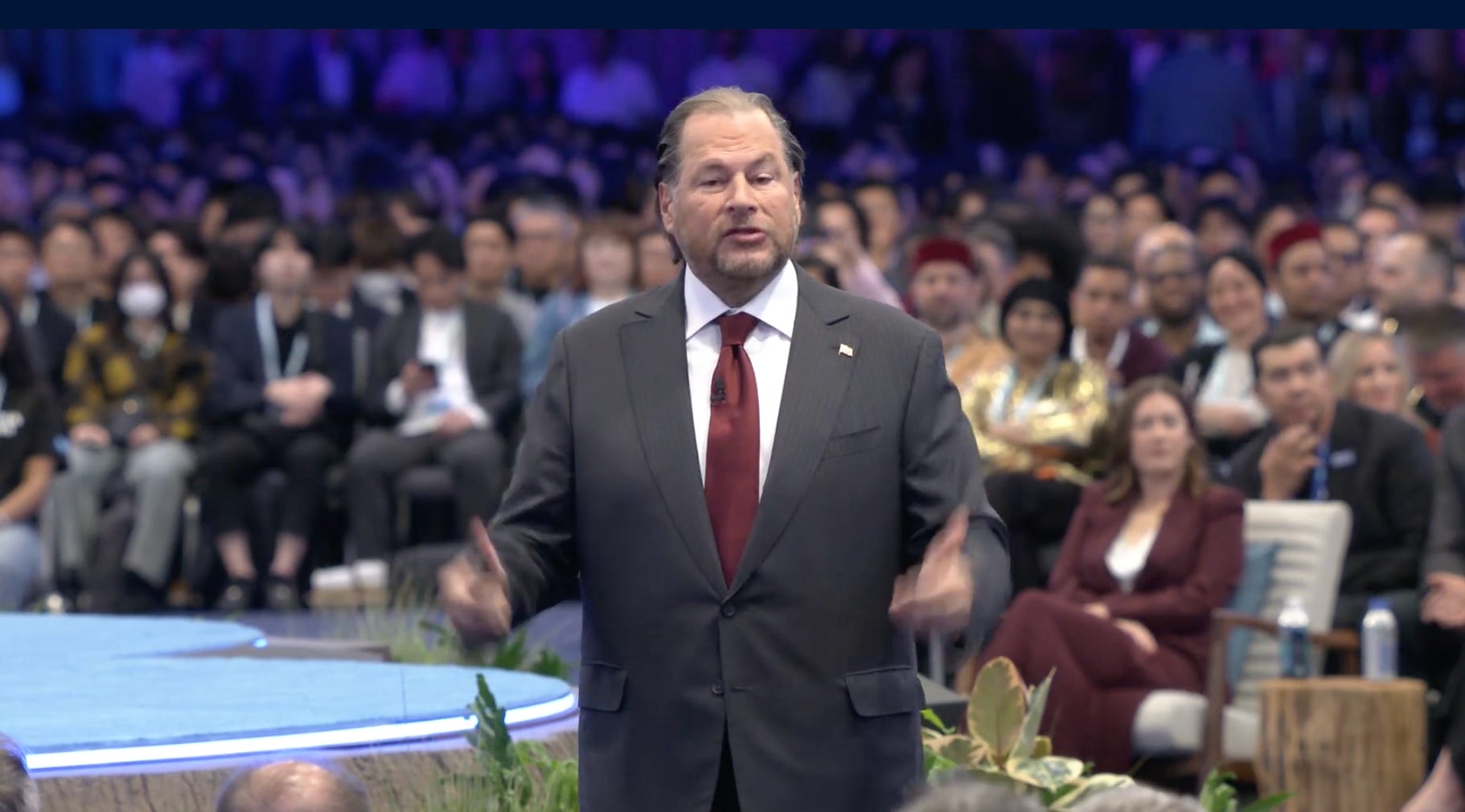
That’s actually good news for you. You don’t need forty five thousand people or a city takeover. You need the one thing every flagship event actually shares underneath the spectacle: every touchpoint, from the keynote sequencing to the follow up email, connects to a measurable business outcome instead of existing for its own sake. Your CEO watched the fireworks and missed the wiring behind them.
Build the wiring first. The fireworks are optional.

The One Bracing for the Mother of the Groom
Dear Curator,
I’m planning a wedding and the groom’s mother has opinions about the guest list, the seating chart, the florist, and a dress code nobody asked her to weigh in on. Every planner on my team warns me before we walk into a meeting with her, like it’s a known thing. Is this really as universal a problem as everyone keeps making it sound?
— Bracing for Battle
Dear Bracing,
It is, and it isn’t really about her personality. It’s about a seating chart she has no seat at.
Wedding tradition built its entire formal structure around the bride’s family. For generations the bride’s side was solely responsible for hosting the wedding and the engagement party, which meant the bride’s side also made the decisions, since the one hosting has always been the one deciding. The groom’s family got one assignment: the rehearsal dinner. That’s it. That’s the whole traditional job description for the woman who spent eighteen-plus years raising the groom and now gets a toast, maybe, if the timeline allows.
Opinions are what happens when someone who cares that much gets that little formal say. She isn’t overstepping a boundary. She’s finding the only door tradition left unlocked, and she’s going to keep finding doors until one of you hands her a real one.
This isn’t a secret in the industry either. Every planner who came up through Engage! (Engaging Summits) has a version of the same story: the pre-pandemic year Mindy Weiss stood on stage and gave a talk with a title that needed no subtitle, Beware the Mother of the Groom. A speaker of her standing does not build an entire session around a personality quirk. She builds it around a pattern every planner in the room already recognizes on sight.
You already know the first fix: redirect every question back to the couple, warmly and without negotiation. The fix most planners skip is the second one, which is giving her a lane that’s actually hers before she goes looking for one that isn’t. The rehearsal dinner, a toast, a family reading, the welcome bags, something with her name on it in the program that a guest can actually see. People who feel structurally excluded do not calm down when you tell them no. They calm down when you hand them a yes that’s real.
The couples who hire you to referee a fight over florists are usually hiring you to solve a smaller problem than the one actually in the room. The florist was never the issue. The seat at the table was.
Five letters, four different machines and one that isn’t a machine at all. The trade show and the festival exist to be sold, so they get consolidated or cloned depending on whether the parent company owns one brand too many or one brand too few. The corporate flagship exists to sell something else entirely, so it never gets cloned into a franchise, it gets tightened into an engine. And the wedding was never a business in the first place, no matter how much it costs, though it still runs on the same question as every letter above it: who gets a real seat at the table, and who gets handed a door that only looks locked. Know which room you’re standing in before you take the congratulations personally.
Ask the Curator runs at GatheringPoint.news, where David Adler, Curator in Chief, answers what the events industry is actually asking. Subscribe at GatheringPoint.news. Send your letters to David@gatheringpoint.news